US eases restrictions on China’s Huawei to keep networks, phones operating

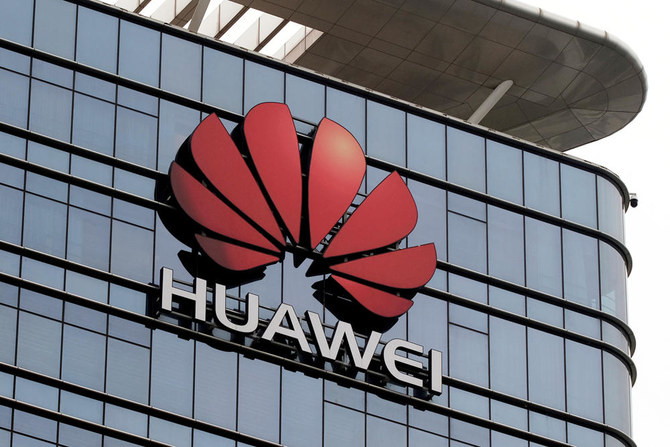
The Huawei logo is pictured outside its Huawei's factory campus in Dongguan, Guangdong province, China. (REUTERS/Tyrone Siu/File Photo)
Updated 21 May 2019
Follow

US eases restrictions on China’s Huawei to keep networks, phones operating

  • The company is still prohibited from buying American parts and components to manufacture new products without license approvals
  • Out of $70 billion Huawei spent buying components in 2018, some $11 billion went to US firms

WASHINGTON: The US government on Monday temporarily eased some trade restrictions imposed last week on China’s Huawei, a move that sought to minimize disruption for the telecom company’s customers around the world.
The US Commerce Department will allow Huawei Technologies Co. Ltd. to purchase American-made goods in order to maintain existing networks and provide software updates to existing Huawei handsets.
The company is still prohibited from buying American parts and components to manufacture new products without license approvals that likely will be denied.
The US government said it imposed the restrictions because of Huawei’s involvement in activities contrary to national security or foreign policy interests.
The new authorization is intended to give telecommunications operators that rely on Huawei equipment time to make other arrangements, US Secretary of Commerce Wilbur Ross said in a statement.
“In short, this license will allow operations to continue for existing Huawei mobile phone users and rural broadband networks,” Ross added.
The license, which is in effect until Aug. 19, suggests changes to Huawei’s supply chain may have immediate, far-reaching and unintended consequences for its customers.
“The goal seems to be to prevent Internet, computer and cell phone systems from crashing,” said Washington lawyer Kevin Wolf, a former Commerce Department official. “This is not a capitulation. This is housekeeping.”
Huawei, the world’s largest telecommunications equipment maker, declined to comment.
The Commerce Department said it will evaluate whether to extend the exemptions beyond 90 days.
On Thursday, the US Commerce Department added Huawei and 68 entities to an export blacklist that makes it nearly impossible for the Chinese company to purchase goods made in the United States.
The government tied Huawei’s addition to the “entity list” to a pending case accusing the company of engaging in bank fraud to obtain embargoed US goods and services in Iran and move money out of the country via the international banking system. Huawei has pleaded not guilty.
Reuters reported Friday that the department was considering a temporary easing, citing a government spokeswoman.
The temporary license also allows disclosures of security vulnerabilities and for Huawei to engage in the development of standards for future 5G networks.
Reuters reported Sunday that Alphabet Inc’s Google suspended business with Huawei that requires the transfer of hardware, software and technical services except those publicly available via open source licensing, citing a source familiar with the matter.
Google did not immediately respond to a request for comment on the new authorization.
Out of $70 billion Huawei spent buying components in 2018, some $11 billion went to US firms including Qualcomm Inc. , Intel Corp. and Micron Technology Inc.
“I think this is a reality check,” said Washington trade lawyer Douglas Jacobson. “It shows how pervasive Huawei goods and technology are around the globe and if the US imposes restrictions, that has impacts.”
Jacobson said the effort to keep existing networks operating appeared aimed at telecom providers in Europe and other countries where Huawei equipment is pervasive.
The move also could assist mobile service providers in thinly populated areas of the United States, such as Wyoming and eastern Oregon, that purchased network equipment from Huawei in recent years.
John Neuffer, the president of the Semiconductor Industry Association, which represents US chipmakers and designers, said in a statement that the association wants the government would ease the restrictions further.
“We hope to work with the administration to broaden the scope of the license,” he said, so that it advances US security goals but does not undermine the industry’s ability to compete globally and remain technology leaders.
A report on Monday on the potential impact of stringent export controls on technologies found that US firms could lose up to $56.3 billion in export sales over five years.
The report, from the Information Technology & Innovation Foundation, said the missed opportunities threatened as many as 74,000 jobs.
Wolf, the former Commerce official, said the Huawei reprieve was similar to action taken by the department in July to prevent systems from crashing after the US banned China’s ZTE Corp, a smaller Huawei rival, from buying American-made components in April.
The US trade ban on ZTE wreaked havoc at wireless carriers in Europe and South Asia, sources told Reuters at the time.
The ban on ZTE was lifted July 13 after the company struck an agreement with the Commerce Department that included a $1 billion fine plus $400 million in escrow and replacement of its board of directors and senior management. ZTE, which had ceased major operations as a result of the ban, then resumed business.
(Reporting by Karen Freifeld in New York and David Shepardson in Washington; Additional reporting by Diane Bartz in Washington and Angela Moon; Editing by Lisa Shumaker and Cynthia Osterman)


How mining can transform Saudi Arabia’s economy

Updated 07 March 2026
Follow

How mining can transform Saudi Arabia’s economy

  • Kingdom’s mineral wealth valued at $2.5tn, positioning mining as a third pillar of the national economy

RIYADH: Saudi Arabia is accelerating its push into mining as part of its economic transformation under Vision 2030, amid the growing importance of critical minerals and rare earths.

The Kingdom’s mineral wealth is valued at $2.5 trillion, positioning mining as a third pillar of the national economy alongside hydrocarbons.

The mining industry could give Saudi Arabia an edge in transition minerals and supply chains by expanding extraction, processing and the logistics needed to move materials to market, according to economists and industry specialists.

Saudi Arabia is home to more than 45 identified minerals, including gold, copper and uranium, according to the Vision 2030 strategy.

Momentum has been supported by measures aimed at making mining easier to invest in and faster to scale, including updated regulations, digital licensing platforms, specialized mining services, and new transport and rail links to mining areas.

Vision 2030 aims to raise mining’s contribution to gross domestic product to SR240 billion ($63 billion) by 2030, create 200,000 direct and indirect jobs, and attract $27 billion in new investment, according to published government targets.

Signs of progress are starting to show in the mining sector in terms of exploration activity, licensing and new discoveries.

“The mining strategy shows it’s working very well, evidenced by the rapid rise in exploration and industrial licenses, and major new mineral discoveries,” Talat Hafiz, an economist and financial analyst, told Arab News.

Saudi Arabia is undertaking the world’s largest geological survey, covering about 700,000 sq. km of the Arabian Shield for $1.5 billion, he said. 

The number of mining licenses issued exceeds 2,000, according to official data, and the Kingdom’s mineral wealth is valued at 90 percent higher than it was in 2016 when Vision 2030 was rolled out.

A key milestone highlighted in Vision 2030’s mining strategy was the introduction of a new mining investment law, which reduced the tax rate to 20 percent from 45 percent to spur investment and align the sector with global standards.

The Kingdom’s mining resources position it well to be a critical supplier of raw materials that are integral to energy transition as clean-energy technologies require large volumes of mined materials.

Copper is central to electrification and power networks, while battery supply chains rely on minerals such as nickel and lithium. Phosphate is a key industrial input with wider economic value.

Reliable supplies of metals and minerals used in power grids, batteries and electric vehicles can attract investment and support downstream industry in the Kingdom.

Saudi Arabia’s Jabal Sayid site, northeast of Jeddah, ranks among the world’s top four resources for rare earth elements, Khalid Al-Mudaifer, vice minister of industry and mineral resources for mining affairs, recently told Al Eqtisadiah.

It will help meet Saudi Arabia’s needs for minerals used in magnet manufacturing, EVs and wind energy, while also supporting global supply, including the US market, he said.

Mining can also catalyze investment in the Kingdom, widen supply-chain employment, and boost non-oil exports and private-sector growth, according to economists and policymakers.

Mines, processing plants and the infrastructure around them require large upfront capital spending, creating a pipeline of work across construction, equipment, utilities and logistics. 

The mining industry could give Saudi Arabia an edge in transition minerals and supply chains by expanding extraction, processing and the logistics needed to move materials to market. (Shutterstock)

“When a mining sector scales, the economic footprint extends well beyond extraction,” said Turki Al-Nahari, vice president of global mining at Ecolab, told Arab News. “Growth typically occurs across engineering services, industrial water management, logistics, laboratory testing, equipment reliability, environmental services and digital performance systems.

“That shift creates demand for skilled engineers, technicians, data analysts and operational specialists,” he added.

In 2025, Saudi Arabia’s mining exploration budget increased 600 percent to $146 million from $21 million in 2022.

“This growth is driven by ongoing geological surveys, technological advancements and higher exploitation budgets, all of which signal stability and opportunity, attracting foreign investment,” Manraj Lamba, a mining economics analyst at S&P Global, said in a recent report.

Mining projects are easier to finance when the size and quality of the deposit are clear, costs are competitive, and rules and taxes are stable, Abdullah Al-Harbi, an economist familiar with the industry, told Arab News.

Investors want solid feasibility work, credible timelines and evidence a project can stay profitable through swings in commodity prices, Al-Harbi said.

Saudi Arabia’s pipeline includes 24 exploration-stage projects and 17 more advanced developments, according to S&P Global.

“Its proactive approach to geological surveys and resource assessment has uncovered significant potential across gold, copper, phosphate and bauxite,” Lamba said.

Large projects also tend to generate employment across a wider industrial supply chain, including contractors, maintenance, laboratories, transport and a range of operational services.

To boost employment and support hiring and training, Saudi Arabia has moved to standardize job roles and skills for the mining industry. 

HIGHLIGHT

Vision 2030 aims to raise mining’s contribution to gross domestic product to SR240 billion ($63 billion) by 2030, create 200,000 direct and indirect jobs, and attract $27 billion in new investment.

The Kingdom rolled out a framework related to employment and skills in the mining industry in January at the Global Labor Market Conference.

The framework is “a tool which ensures clear definitions of occupations and their required skills,” the Kingdom’s Minister of Industry and Mineral Resources Bandar Al-Khorayef said. It will cover more than 500 job roles, detail the necessary skills, responsibilities and titles, he added.

Exports from the sector are already rising in tandem with investments to develop the industry and create jobs.

Saudi Arabia exported 5.7 million tonnes of phosphate fertilizer in 2024, up about 6 percent from 2023, according to a GASTAT report.

As the energy transition accelerates, Saudi Arabia’s advantage may be strongest beyond extraction alone.

“Saudi Arabia’s most realistic advantage in the accelerating energy transition lies in combining selective mining with strong processing and refining capabilities, supported by its emerging role as a logistics and supply-chain hub,” Hafiz said.

The Kingdom’s position between Africa, Europe, and Asia favors downstream processing and value-added industries, he added.

“Saudi Arabia is prioritizing minerals that are both financeable and strategically aligned with emerging industries such as electric vehicles and clean energy technologies, where markets are clear, and demand is scalable,” Hafiz said.

Aluminum, phosphate, and similar commodities remain a key focus to support local manufacturing, infrastructure development and downstream industries while strengthening export capacity, he said.

“Once construction concludes, the priority shifts to operational stability and performance optimization,” Al-Nahari said.

“Small efficiency gains, applied consistently across large-scale operations, compound materially over time,” influencing cost as well as uptime and competitiveness over the life of a mine, he added.

As the global race toward electrification and decarbonization accelerates, the Kingdom is effectively positioning itself beyond its oil legacy with its strategic commitment to the minerals sector, which will play a critical role in powering the future.

Its investment in exploration, infrastructure, and downstream processing anchor it as a pivotal supplier in the critical minerals and rare earths value chain in the era of energy transition.