ISLAMABAD: Officials from the Pakistan Muslim League-Nawaz (PMLN) opposition party will meet on Monday to plan an anti-government protest campaign, a senior party leader said on Friday, following instructions from their jailed leader former prime minister Nawaz Sharif to launch an agitation against the administration of Prime Minister Imran Khan over a ballooning economic crisis.
Sharif is currently serving a seven-year sentence imposed last year for failing to disclose the source of income that allowed him to acquire the Al-Azizia Steel Mills in Saudi Arabia. He has appealed. He was let out of prison in March on medical bail but landed back in jail last week after the court refused to extend the bail period.
On Thursday, Sharif met his daughter Maryam Nawaz Sharif and other family members and party leaders at Lahore’s Kot Lakhpat Jail and according to local media reports instructed them to plan an anti-government protest movement after Eid Al-Fitr, the religious festival that marks the end of the holy month of Ramadan. Economic deterioration, high inflation and unemployment will be the main pillars of the agitation, media said.
“PMLN has summoned a party meeting on Monday,” senior PMLN leader Pervaiz Rashid told Arab News. “The purpose of this call [to protest] is to highlight people’s hardships,” he added, saying he would share details of what the party was planning once Monday’s meeting had taken place.
Inflation at its highest in more than five years has shocked many Pakistanis who voted for PM Khan and his promise to eradicate poverty, create jobs and build an Islamic welfare state. On Thursday, the Pakistani rupee hit an all-time low, ending the day in the interbank market at 146.52 against the US dollar, compared to the previous day’s close of 141.40. The crash has followed the signing of a $6 billion bailout deal with the International Monetary Fund, which insists that a “market-determined” exchange rate would help Pakistan’s financial sector.
Rashid said Monday’s meeting would be chaired by PMLN Senior Vice President Shahid Khaqan Abbasi and Chairman Raja Zafar-ul-Haq “to discuss the mechanism for the protest.”
Responding to a question about whether Sharif had asked his party to intensify contact with other opposition parties so they could put up a joint front against the government, Rashid said no contact had been made with other parties as yet.
Earlier this week, the chairperson of the opposition Pakistan Peoples Party party, Asif Ali Zardari, also hinted that his party would launch a street protest against the government after Eid.
Special Assistant to Prime Minister on Information and Broadcasting, Dr. Firdous Ashiq Awan, said the PMLN had no justification for launching a movement against the economy, accusing the party of stunting growth during its five-year term from 2013-2018.
“After leading the funeral of the economy, they now want to extract more oil from the people,” she said in a tweet on Friday. In another post, she said: “After wrecking the economy, with what face are they talking about going to the people?”
On Friday, Pakistan’s Dawn newspaper reported that Maryam Nawaz Sharif would attend an ‘important’ party meeting on May 20 to discuss whether or not to launch a protest drive against the government of Prime Minister Imran Khan, struggling to cope with a ballooning economic crisis. Maryam was recently appointed vice president of the party, a move met with opposition by many party old-hands.
In a tweet on Thursday, Maryam also hinted at launching a protest campaign against the government, saying about her meeting with her father: “He said the PML-N must respond to the aspirations of the masses, stand with them & become their voice.”


![]()

Meeting Monday to plan anti-government agitation, Nawaz Sharif’s party says
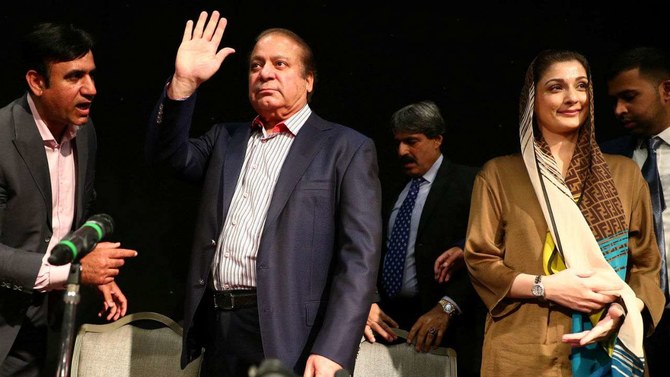
Meeting Monday to plan anti-government agitation, Nawaz Sharif’s party says
- PMLN’s protest movement will highlight “people’s hardships” in light of Pakistan economic crisis, Pervez Rashid said
- PM’s assistant on information says PMLN wrecked economy, has no justification for protesting
Latest updates


© 2026 SAUDI RESEARCH & PUBLISHING COMPANY, All Rights Reserved And subject to Terms of Use Agreement.