CARACAS, Venezuela: The Venezuelan government and opposition have sent envoys to Norway to attend talks on ways of ending the South American country's crisis, though their mutual mistrust and differences on key issues are likely to slow chances of progress.
The development reported by officials Wednesday appeared to reflect a recognition that neither side had been able to prevail in the struggle for power, leaving Venezuela in a state of paralysis after years of hyperinflation and shortages of food and medicine.
It was also a policy reversal for the opposition, which has accused President Nicolás Maduro of using previous negotiations to play for time.
Senior members of both sides will be involved in the exploratory discussions in Oslo, said members of Venezuela's opposition-controlled congress who spoke on condition of anonymity because of the sensitivity of the talks. Delegations from the two opposing camps had received separate invitations from a group of Norwegians, one official said.
The representatives include Information Minister Jorge Rodríguez on the government side and Stalin González, a leading member of the National Assembly, the officials said.
Maduro did not directly comment on the talks during televised remarks, but he said Rodríguez was on a "very important" mission outside Venezuela.
The planned talks seemed likely to dampen speculation that the United States, the main backer of the Venezuelan opposition, might be considering military action as a way to end the crisis in the near term. US officials have previously said they are focusing on diplomatic and economic measures to force out Maduro, though opposition leader Juan Guaidó said his Washington envoy will meet with the head of the US Southern Command on Monday.
The two sides are currently far apart on many issues. The opposition has insisted that Maduro was illegitimately elected last year and that he must step aside to make way for elections. Maduro, in turn, accuses the opposition of being US stooges intent on illegally seizing power.
The Norway dialogue comes as a mostly European group of nations prepares to send a high-level delegation to Venezuela to propose solutions to the country's protracted crisis. The International Contact Group consists of eight European countries, the European Union and four Latin American countries.
The group formed after Guaidó, the head of the National Assembly, declared himself Venezuela's interim president early this year in a direct challenge to the rule of Maduro, who says his government champions the socialist principles of his predecessor, Hugo Chávez.
The opposition, which is backed by the United States and about 50 other nations, says Venezuela's dire economic state is the result of years of corruption and mismanagement. Maduro blames the country's problems on US sanctions that were imposed more recently.
Also Wednesday, the United States suspended all commercial passenger and cargo flights between the US and Venezuela, saying the political unrest and tensions there pose a risk to flights.
The announcement by the Department of Homeland Security affected a dwindling number of flights between the two countries, since US airlines no longer fly to Venezuela. The measure reflected the increasingly sour relationship between the Venezuelan government and the US
Conditions in Venezuela "threaten the safety and security of passengers, aircraft, and crew," the department said. It said the flight suspension will continue indefinitely, though the decision will be reviewed if the situation in Venezuela changes.
Maduro criticized the suspension of flights, saying the measure was an attack on freedom of movement.
American Airlines stopped its flights in mid-March after union leaders told pilots not to go there due to safety concerns. Some other international airlines quit flying to Venezuela years ago because of the country's deteriorating economy.
Some Venezuelan airlines had been operating commercial flights to and from Miami, though those were already affected by the upheaval in the South American country, including after a failed call for a military uprising by the opposition on April 30.


![]()

Venezuelan government, opposition head to talks in Norway
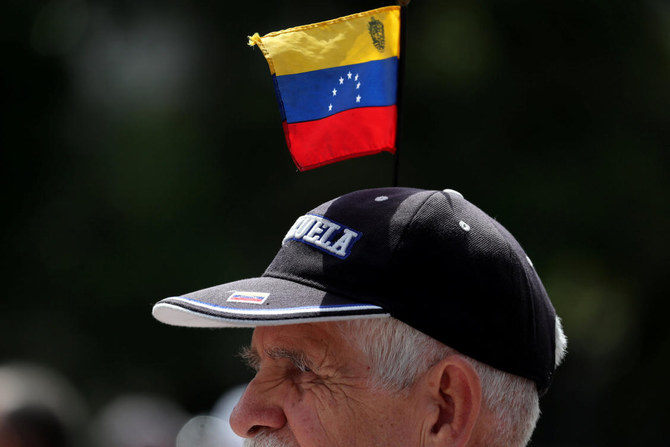
Venezuelan government, opposition head to talks in Norway
- Senior members of both sides will be involved in the exploratory discussions in Oslo
- The planned talks seemed likely to dampen speculation that the United States, the main backer of the Venezuelan opposition


Latest updates





© 2026 SAUDI RESEARCH & PUBLISHING COMPANY, All Rights Reserved And subject to Terms of Use Agreement.