

At Cannes, Syrian docu filmmaker highlights Assad regime’s continuing attacks on hospitals 

1 / 6
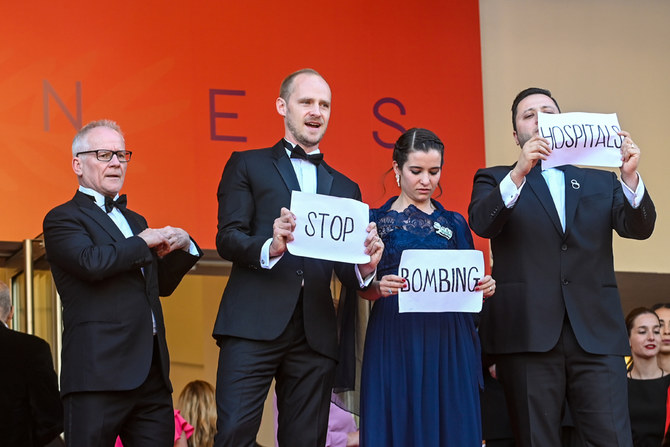
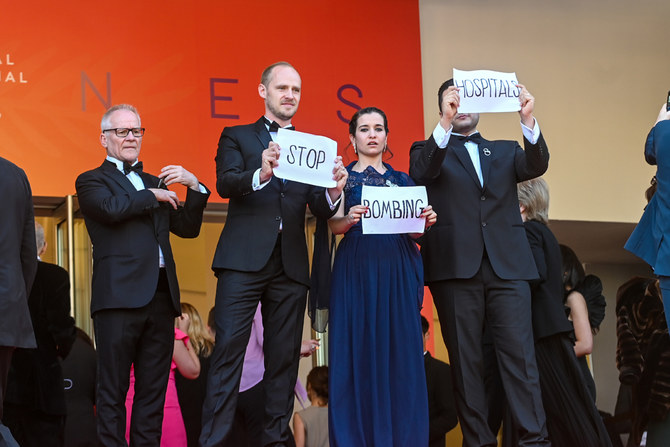
Waad Al-Kateab and her colleagues stage a poster protest against the Syrian regime's excesses on the sidelines of the Cannes Film Festival in Cannes, France, on Wednesday. (Ammar Abd Rabboo/Arab News)
2 / 6
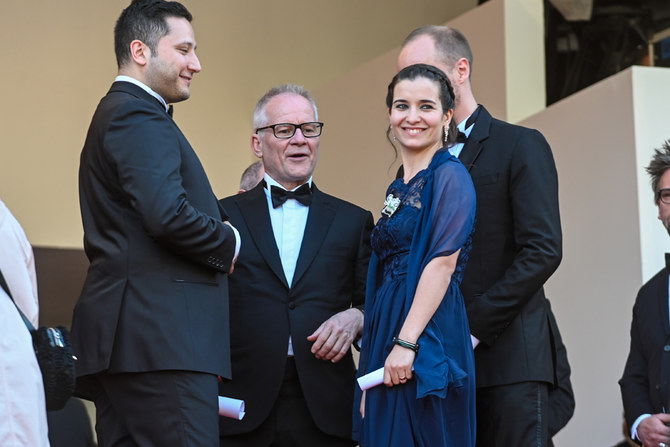
Waad Al-Kateab and her colleagues stage a poster protest against the Syrian regime's excesses on the sidelines of the Cannes Film Festival in Cannes, France, on Wednesday. (Ammar Abd Rabboo/Arab News)
3 / 6
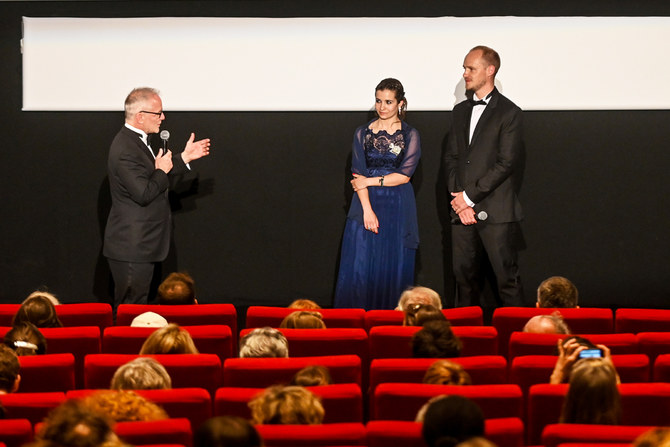
Waad Al-Kateab and her colleagues stage a poster protest against the Syrian regime's excesses on the sidelines of the Cannes Film Festival in Cannes, France, on Wednesday. (Ammar Abd Rabboo/Arab News)
4 / 6
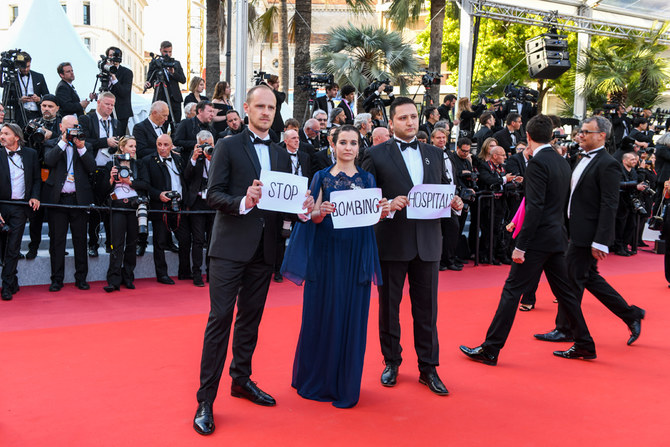
Waad Al-Kateab and her colleagues stage a poster protest against the Syrian regime's excesses on the sidelines of the Cannes Film Festival in Cannes, France, on Wednesday. (Ammar Abd Rabboo/Arab News)
5 / 6
Waad Al-Kateab and her colleagues stage a poster protest against the Syrian regime's excesses on the sidelines of the Cannes Film Festival in Cannes, France, on Wednesday. (Ammar Abd Rabboo/Arab News)
6 / 6
Waad Al-Kateab and her colleagues stage a poster protest against the Syrian regime's excesses on the sidelines of the Cannes Film Festival in Cannes, France, on Wednesday. (Ammar Abd Rabboo/Arab News)
Updated 16 May 2019
Follow

At Cannes, Syrian docu filmmaker highlights Assad regime’s continuing attacks on hospitals 

  • Syrian docu film maker highlights systematic destruction of hospitals by Assad regime at Cannes
  • Waad Al-Kateab documentary film "For Sama" is considered among the "rising stars" to watch for at the annual film festival

JEDDAH: Arab documentary maker Waad Al-Kateab led a protest on the sidelines of the Cannes Film Festival Wednesday to highlight the Assad regime's continuing attacks on hospitals in Syria.
The film director and her colleagues posed with protest posters on the red carpet calling on the Syrian regime to stop its systematic destruction of medical facilities in opposition-held areas.
"Stop bombing hospitals," the posters screamed.
Al-Kateab is in Cannes where her documentary film "For Sama" is considered among the "rising stars" to watch for at the annual film festival.
“For Sama” records five years of Al-Kateab’s own life as an aspiring journalist in her besieged hometown of Aleppo, marrying one of the last doctors in the city and giving birth to her daughter, to whom the film is dedicated.
The documentary is a kind of letter to the little girl, explaining how she was born into the conflict and what happened to her home.
Al-Kateab, who now lives in London, won an Emmy award in 2017 for her films from inside Aleppo for Britain’s Channel 4 News, which are believed to be the most watched of any reports from the war.
Her shocking footage of the struggle to save babies and children in the city’s final hospital — in which she ended up living — brought home the horror inflicted on civilians.
The Syrian government had been accused of attacking hospitals starting in 2012 as the "Arab Spring" style peaceful protests, which began in 2011, degenerated into a civil war after dictator Bashir Al-Assad opted to fight it to cling to power.
Amnesty International documented "more than 300 attacks on medical facilities by Syrian and Russian forces" in 2015 alone.
In 2016, the Syrian American Medical Society recorded 252 attacks on Syrian health care centers, among them a facility run by the Medicins Sans Frontieres (Doctors Without Borders), which was hit in an airstrike in the morning of February 15, leaving 25 people dead, including nine health care workers and five children.
An article on Wikipedia compiled numerous incidents of attacks on Syrian hospitals, citing various news reports, and put the blame of Syrian and Russian forces. Moscow and Damascus officials have repeatedly denied deliberately targeting medical facilities.

The war in Syria has killed more than 370,000 people and displaced millions since it started with the brutal repression of anti-government protests in 2011.
 

(With AFP)


UK entrepreneur says people who disagree with his Palestine solidarity should not shop at his stores

Updated 22 December 2025
Follow

UK entrepreneur says people who disagree with his Palestine solidarity should not shop at his stores

  • Mark Constantine shut all British branches of cosmetics retailer Lush earlier this year in solidarity with Gaza
  • ‘I don’t think being compassionate has a political stance,’ he tells the BBC

LONDON: A British cosmetics entrepreneur has told people who disagree with his support for Palestine not to shop at his businesses.

Mark Constantine is the co-founder and CEO of the Lush chain of cosmetic stores, which temporarily closed all of its UK outlets earlier this year in an act of solidarity with the people of Gaza.

He told the BBC that people should be “kind, sympathetic and compassionate,” that those who are “unkind to others” would not “get on very well with me,” and that anyone who disagrees with his views “shouldn’t come into my shop.”

He told the “Big Boss Interview” podcast: “I’m often called left wing because I’m interested in compassion. I don’t think being compassionate has a political stance.

“I think being kind, being sympathetic, being compassionate is something we’re all capable of and all want to do in certain areas.”

In September, every branch of Lush in the UK, as well as the company’s website, were shut down to show solidarity for the people of Gaza.

A statement on the page where the website was hosted read: “Across the Lush business we share the anguish that millions of people feel seeing the images of starving people in Gaza, Palestine.”

Messages were also posted in the windows of all the shuttered stores, stating: “Stop starving Gaza, we are closed in solidarity.”

Constantine was asked if he thought his views on Gaza could harm his business, and whether people might decide not to deal with him as a result.

“You shouldn’t come into my shop (if you don’t agree),” he said. “Because I’m going to take those profits you’re giving me and I’m going to do more of that — so you absolutely shouldn’t support me.

“The only problem is, who are you going to support? And what are you supporting when you do that? What is your position?”