Five new Saudi museums get license to promote cultural, civil identity

1 / 3
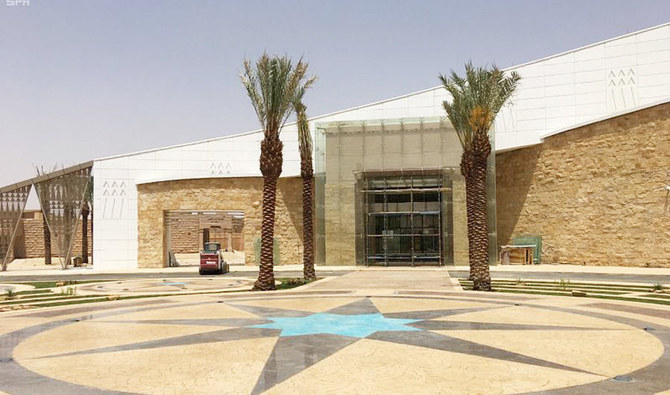
The Saudi Commission for Tourism and National Heritage (SCTH) gave the go-ahead for the latest exhibition centers. (SPA)
2 / 3
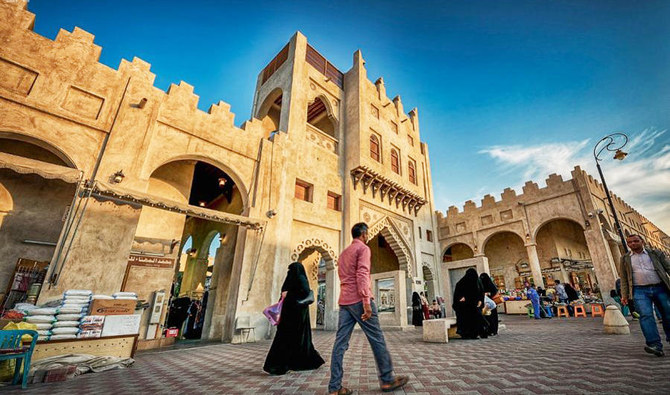
The Saudi Commission for Tourism and National Heritage (SCTH) gave the go-ahead for the latest exhibition centers. (SPA)
3 / 3
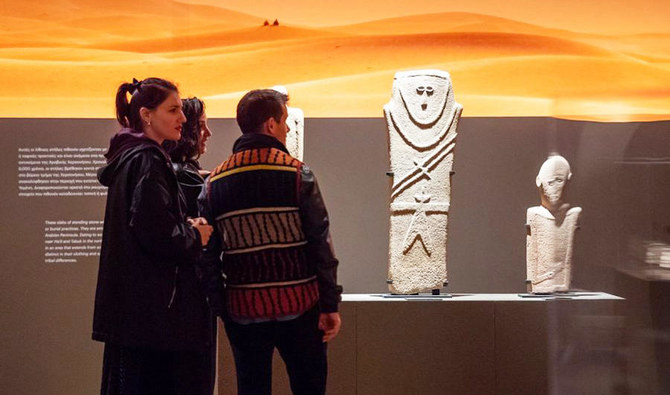
The Saudi Commission for Tourism and National Heritage (SCTH) gave the go-ahead for the latest exhibition centers. (SPA)
Updated 12 May 2019
Follow

Five new Saudi museums get license to promote cultural, civil identity

  • Two of the new museums approved by the commission, Riwaq Al-Turath Museum in Riyadh and Moudi Al-Asimi Museum in Al-Dawadmi governorate, are owned by women

RIYADH: The Riyadh region now has more private museums than any other province in Saudi Arabia after five new licenses were granted.
The Saudi Commission for Tourism and National Heritage (SCTH) gave the go-ahead for the latest exhibition centers, which will take the total number of museums in the region’s towns, cities and governorates to 50.
Two of the new museums approved by the commission, Riwaq Al-Turath Museum in Riyadh and Moudi Al-Asimi Museum in Al-Dawadmi governorate, are owned by women.
Other licenses go to the Majid Heritage Museum in Rawdat Sadir, the Khalid Al-Radian Heritage Museum in Riyadh, and the Qararah Museum in Al-Dawadmi.
Ajab Al-Otaibi, director of national heritage administration for the SCTH’s Riyadh region, highlighted the important role played by public- and private-sector partners in supporting and marketing private museums.
He said: “Private museums participate in celebrating official holidays and national and international museum days. They receive visitors, both citizens and residents, school students and state guests of foreign countries, often hosting cultural events and heritage shows.”
Al-Otaibi noted that private museums were key providers in helping raise awareness of the Kingdom’s cultural and civil identity, while also acting as a source of education, knowledge, entertainment and tourist trade.
He also hailed museum owners for their vital contribution to preserving the Saudi national heritage.
Some of the most prominent private museums in the region include Al-Hamdan Heritage Museum in Riyadh, Al-Tamim Museum in Al-Aflaj, Hamad Al-Salem Museum in Ishkeir Center, Al-Sadiriyeh Heritage Museum in Wadi Al-Dawaser, Al-Dalm Abaq Al-Tarikh Museum in Al-Kharj, Jarallah Al-Adib Museum for Popular Heritage in Riyadh, Diyar Al-Izz Museum in Al-Muzahimiyah, and Abdulrahman Al-Dweihi Museum for Popular Heritage in Al-Zulfi.


Saudi Arabia says recent STC military movements in Hadramout, Al-Mahra were unilateral, uncoordinated

Updated 25 min 54 sec ago
Follow

Saudi Arabia says recent STC military movements in Hadramout, Al-Mahra were unilateral, uncoordinated

  • Saudi Arabia said the moves harmed the interests of the Yemeni people, as well as the southern cause and the coalition’s efforts.
  • The Kingdom said it coordinated with the United Arab Emirates, the president of the Presidential Leadership Council, and the Yemeni government to contain the situation.

RIYADH: Saudi Arabia on Thursday said that recent military movements in the Yemeni governorates of Hadramout and Al-Mahra carried out by the Southern Transitional Council (STC) were conducted unilaterally and without coordination with the Presidential Leadership Council or the coalition leadership.

“These movements resulted in an unjustified escalation that harmed the interests of all segments of Yemeni people, as well as the Southern cause and the coalition’s efforts,” read a statement published by the Saudi Press Agency.

The statement said Saudi Arabia has always prioritized preserving the unity of Yemen throughout recent developments, and that the Kingdom has spared no effort to reach peaceful solutions to resolve the situation in both governorates.

In this context, “the Kingdom worked with the brotherly United Arab Emirates, the president of the Presidential Leadership Council and the brotherly Yemeni government to contain the situation.

“A joint military team was sent from the Kingdom of Saudi Arabia and the United Arab Emirates to put the necessary arrangements in place with the Southern Transitional Council in Aden. These arrangements were made to ensure the return of the Southern Transitional Council forces to their previous positions outside the two governorates and hand over the camps in those areas to the Nation Shield Forces and the local authorities, in accordance with organized procedures under the supervision of the coalition forces.”

The statement said that “these efforts remain in progress to restore the situation to its previous state.”

Saudi Arabia also said it “hopes public interest will prevail through ending the escalation by the Southern Transitional Council and the withdrawal of its forces from the two governorates in an urgent and orderly manner.”

It added: “The kingdom stresses the importance of cooperation among all Yemeni factions and components to exercise restraint and avoid any measures that could destabilize security and stability, which may result in undesirable consequences.”