

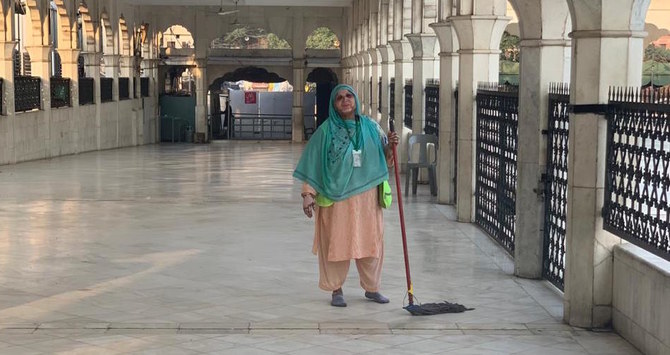
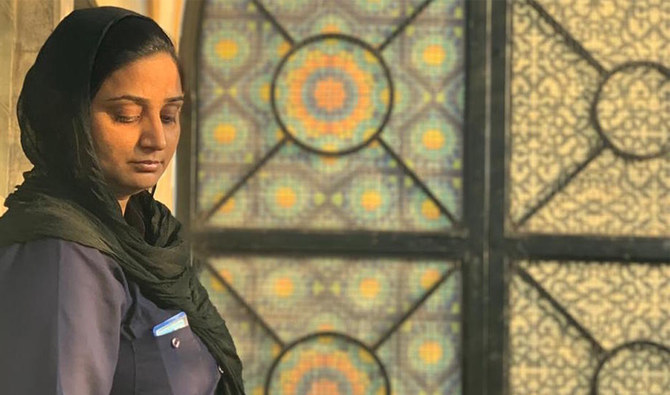

LAHORE: Rani Waheed wiped the marbled floor of the empty, echoing hall of the shrine.
Around her, there were none of the usual kneeling devotees lost in evening prayer. No worshippers reached out to kiss the humble tomb of the 11th century Persian Sufi saint, Syed Ali Hajjwairi, commonly known as Data Gunj Bakhsh, or, simply, Sarkar (King).
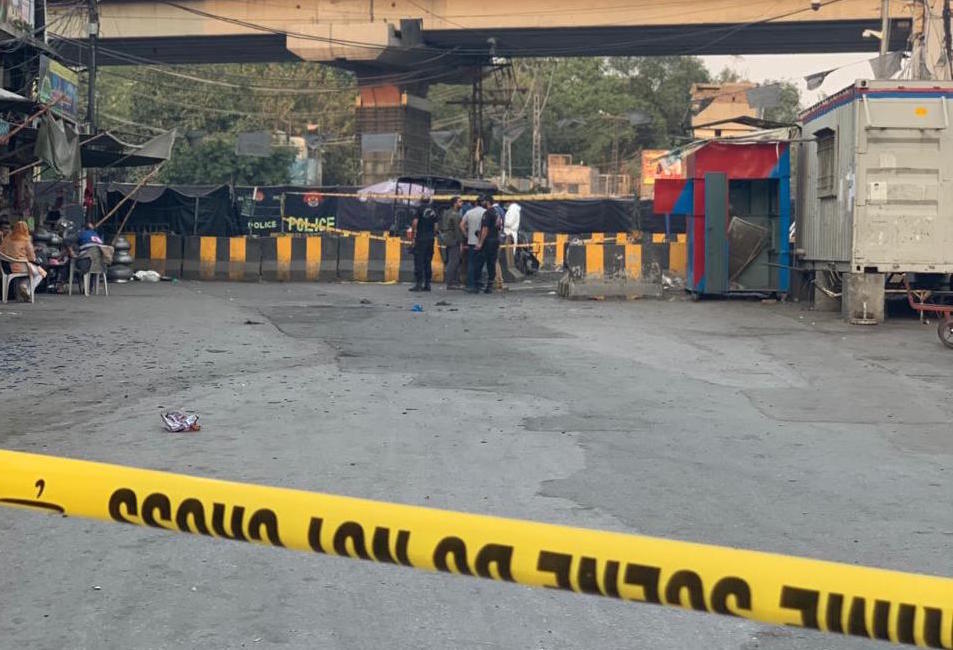
Yellow
Hours after a suicide bombing on Wednesday morning outside the Data Darbar shrine in which ten people including four policemen were killed, the halls of South Asia’s largest and Pakistan’s most popular Sufi shrine stood empty. Arab News got exclusive access to the building, where only a few members of the cleaning staff were present, sweeping the vast floors of the white marble courtyard, undisturbed by visitors for the first time in nine years when suicide bombers had struck the shrine in July 2010, killing at least 42 people and wounding more than 120.
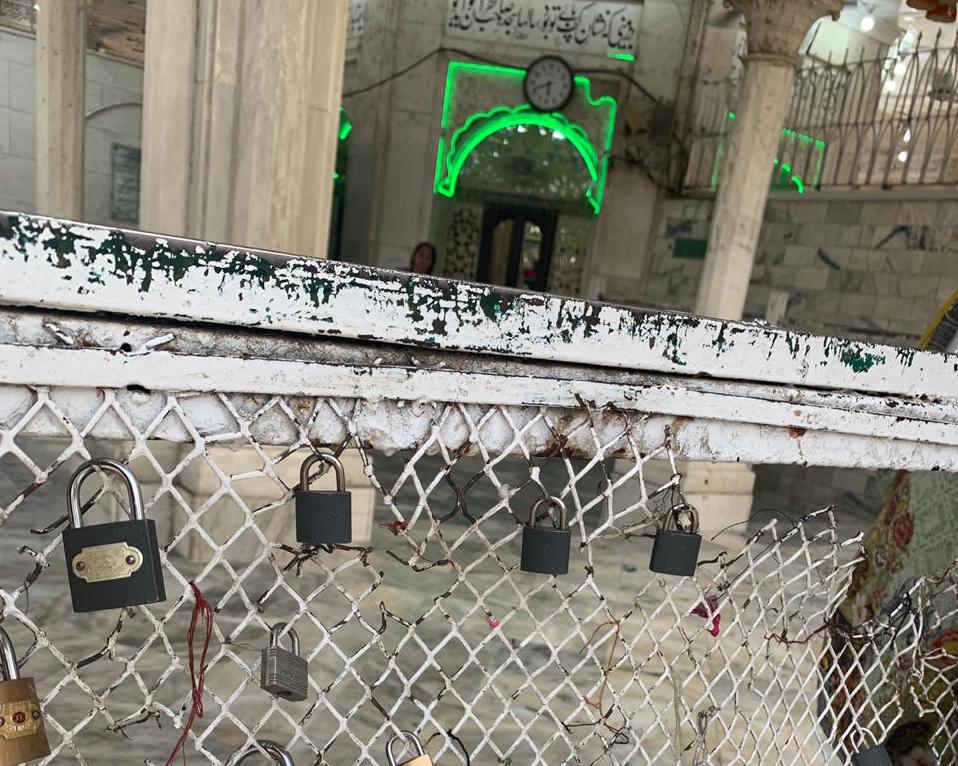
Padlocks outside the shrine of
“Today reminds me of the last time there was a bombing here,” Waheed said pushing her mop against the tiles. “None of the workers came for duty that day. It was just me and another woman, and we washed the blood and buried some of the body parts inside the shrine’s gardens.”
Waheed rested against a balcony over a street that seemed like it had been deserted for years. Through the iron lattice of its parapets, the destroyed carcass of a police van targeted by the suicide bomber and the shattered windows of nearby buildings were visible.
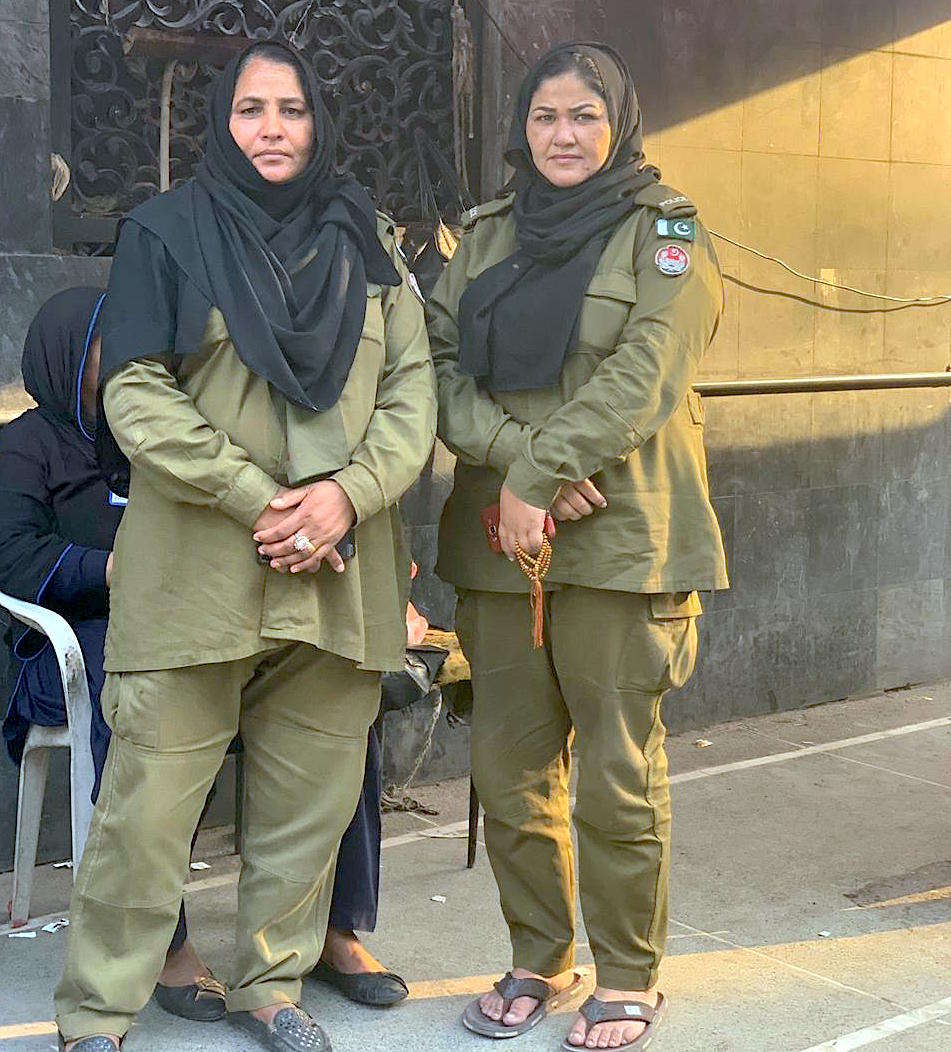
Two police constables stand guard at the women’s entrance of the Data Darbar shrine close to where a suicide bombing killed at least ten people, four of them policemen on May 8, 2019. (AN photo by Amal Khan)
“Normally, at this time of the day, you wouldn’t be able to see the tip of your nose,” female security guard Uzma Muneer said as she pointed toward the now unmanned gate outside which the blast had occurred. “This is just strange for a day in Ramzan.”
An ancient mystic branch of Islam, Sufism has been practiced in Pakistan for centuries. Data Darbar in particular attracts over a million visitors at an annual festival to mark the death anniversary of the revered saint buried inside the complex. Every day, visitors throng the holy site for prayers and alms, desperate for children, for riches, for the banishment of ghosts.
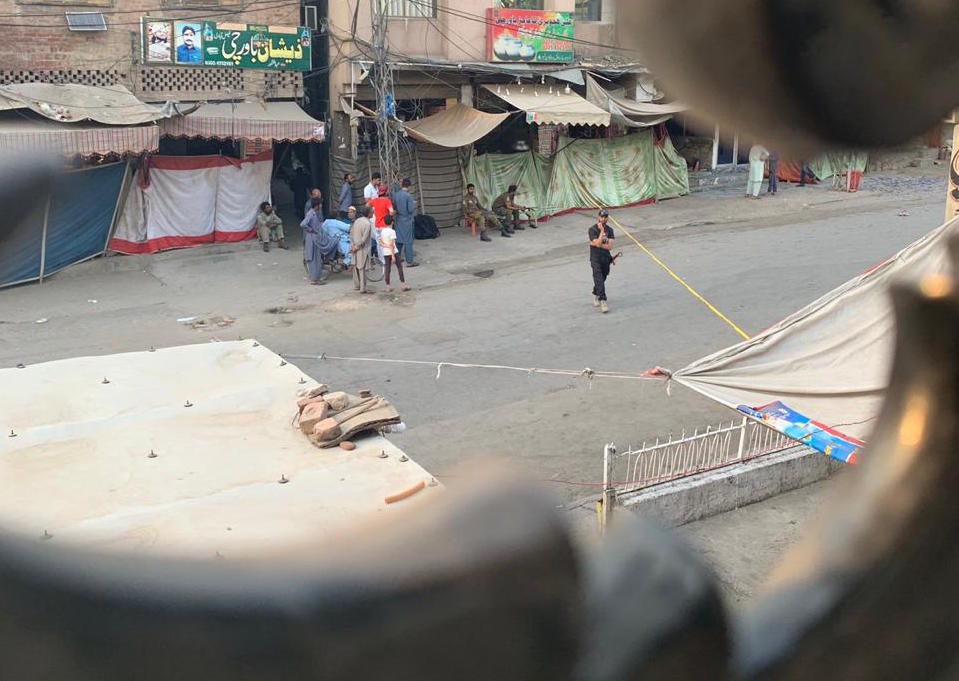
Seen from the balconies of the Data Darbar shrine, a police cordon below guards the site of a suicide bombing that targeted a police van on May 8, 2019. (AN photo by Amal Khan)
But most of Pakistan’s myriad radical militant groups, including the Pakistani Taliban’s various factions and Daesh loyalists, consider Sufis and other religious minorities heretics and have carried out frequent attacks on shrines, including a suicide bombing at Lal Shahbaz Qalandar in Pakistan’s southern Sindh province in February 2017, where 72 people died.
“We left our homes for duty today with our fear behind us,” said Aliya Hayat, a police constable stationed outside Gate 4 on the street leading to the blast site. “There is so much sadness, you couldn’t find a single eye that hasn’t wept for our colleagues, and for Sarkar.”
Hugging her knees at the bottom of a staircase leading to the main hall, female guard Muneer could not hold back tears.
According to a Punjab police handout, three security guards were among the ten people killed in Wednesday’s attack. One of them was known to Muneer as a colleague she saw daily because their shifts overlapped, and though she had never asked for his name, she wept because she saw him leaving his post to go home every day.
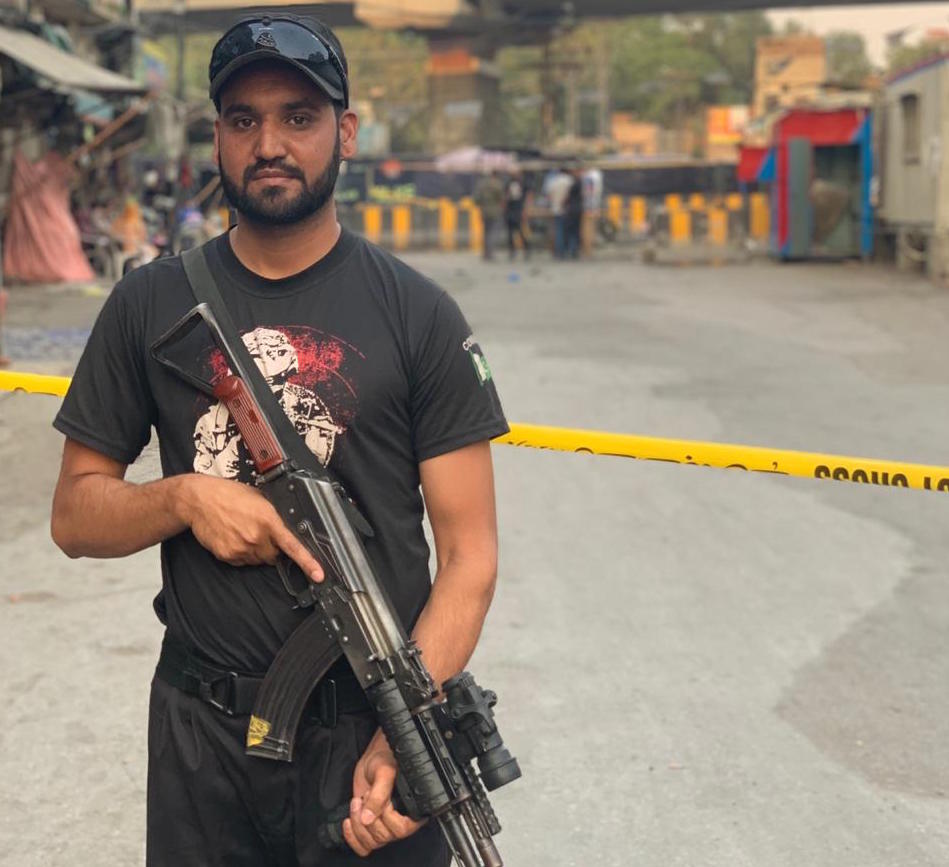
A police commando stands guard at the site of a suicide bombing that targeted Pakistani police in Lahore outside one of South Asia’s most popular
“We wore the same blue uniform,” Muneer said. “I only knew his face from a distance, because his shift ended in the afternoons when mine began.”
Beyond where Muneer sat, a security cordon marked one of the entrances to the shrine, Gate 2, which has been closed to the public and journalists since the attack. Several dozen meters away, a handful of concerned citizens lingered under the hot Lahore sun, tired from a day of fasting but wanting to make sense of what had happened.
“I heard the explosion and saw dozens of bodies on the floor,” said Abdul Waheed, a paralyzed man on a wheelchair who said he was present right outside the shrine when the explosion occurred. “All this, right outside Sarkar’s court, against men guarding this holy place.”
But others were certain normalcy would soon be restored at the shrine, because Thursday, a special day to visit shrines and cemeteries in Sufi Islam, lay just around the bend.
“Today, the people are scared,” security guard Muneer said. “But tomorrow it is Thursday and they will come again.”


