Lanterns bring touch of Cairo to Jeddah

1 / 6
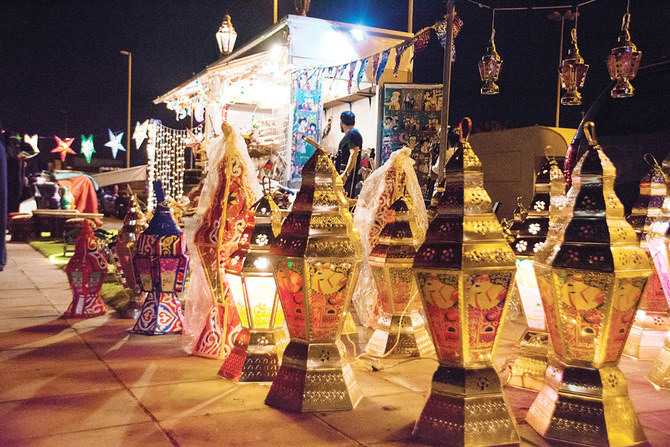
A stall in Jeddah’s Al-Shati’i district sells lanterns that are a hit with Saudi customers. (AN photo by Huda Bashatah)
2 / 6
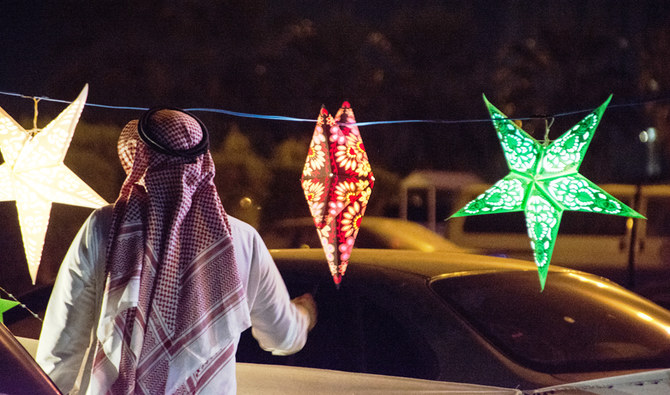
A stall in Jeddah’s Al-Shati’i district sells lanterns that are a hit with Saudi customers. (AN photo by Huda Bashatah)
3 / 6
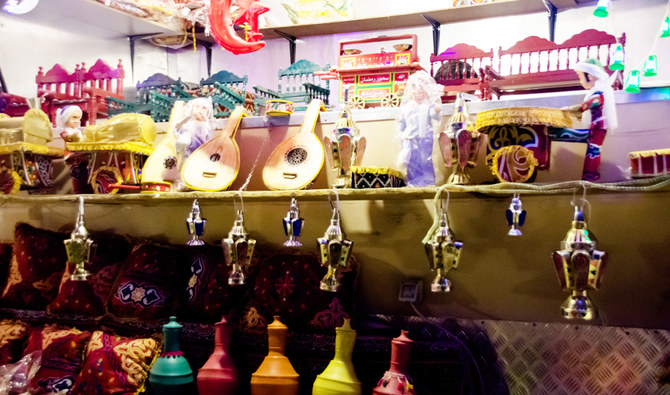
A stall in Jeddah’s Al-Shati’i district sells lanterns that are a hit with Saudi customers. (AN photo by Huda Bashatah)
4 / 6
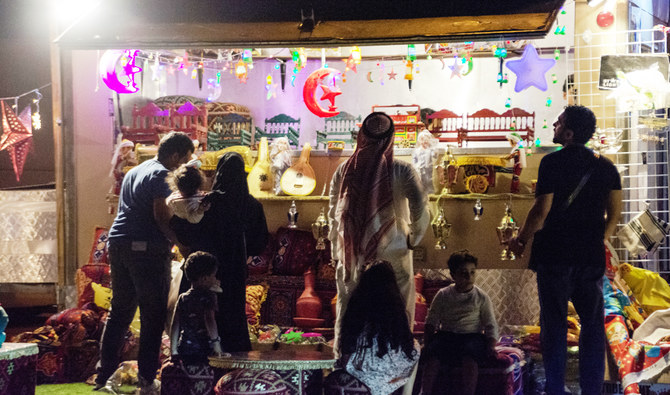
A stall in Jeddah’s Al-Shati’i district sells lanterns that are a hit with Saudi customers. (AN photo by Huda Bashatah)
5 / 6
6 / 6
A stall in Jeddah’s Al-Shati’i district sells lanterns that are a hit with Saudi customers. (AN photo by Huda Bashatah)
Updated 11 May 2019
Follow

Lanterns bring touch of Cairo to Jeddah

  • Kiosk selling Ramadan lanterns is a huge hit with shoppers
  • Entrepreneur took a leap of faith in what he thought Saudi customers would like

JEDDAH: Outside a makeshift store in Jeddah’s lively Al-Shati’i district, shoppers crowd around brightly colored lanterns that are shaped like crescent moons and stars. Other lanterns are on the ground, adding a jewel-like glow to the evening.   

The stall was set up by Zuhair Omar Shami and his business partner Ra’ed after they came across traditional Egyptian lanterns during a trip to Cairo.

“We started our business about eight or nine years ago, when this culture was foreign to us and nobody knew what Ramadan lanterns were,” said Shami. “I acquired these lanterns from Egypt and, through my visits, decided to go ahead and introduce them to the Saudi market.” 

Shami took a leap of faith in what he thought Saudi customers would like and it was a hit, with customers flocking to buy the festive and pretty lanterns.

The initial success encouraged him to develop the business by bringing in other items he thought people would be interested in, such as furniture and soft furnishings. 

“We get a lot of people who are seeing this for the first time,” said Shami. “They stop in their cars to peruse and ask us about our products, while others are in disbelief about finding them in the city.” 

Their shop opens five days into Sha’aban, the Hijri month preceding Ramadan, outside Al-Sawary Mall in Al-Zahra. 

From then until the beginning of Ramadan the entrepreneurs are busy at their kiosk helping customers to pick out the right lantern. 

Shami said they have never considered changing their location as it is where they started and where they became a hit. It is also where loyal customers come every year to find them. 

“We settled here because it is a lively part of the city that combines all segments of society, and that is our target audience because our prices also cater to everyone,” he said. “At the start of Sha’aban we handle backorders and deliver our items and decorate homes, gardens, and even cafes and events.”


King Abdulaziz Foundation reveals rare images from king’s 1916 Basra visit

Updated 20 December 2025
Follow

King Abdulaziz Foundation reveals rare images from king’s 1916 Basra visit

  • Photographs form part of a wider collection documented by British photographer Gertrude Bell

RIYADH: The King Abdulaziz Foundation has revealed archival photographs documenting King Abdulaziz’s tour of the outskirts of Basra in 1916, a visit that came at an early stage of his efforts to build regional relationships.

One of the photographs, taken by British photographer Gertrude Bell, shows King Abdulaziz standing with his men in the Basra desert, the Saudi Press Agency reported. 

The image reflects his early political and diplomatic engagement in the region, as he sought to strengthen ties with neighboring areas and engage with the wider Arab and international community, SPA added.

The photograph forms part of a wider collection documented by Bell, which records key developments and transformations across the Arabian Peninsula during the early 20th century.

The Basra visit holds particular significance in King Abdulaziz’s journey as a unifying leader. 

Rather than crossing borders in pursuit of power, the visit reflected an approach focused on stability, cooperation and long-term regional harmony, laying the groundwork for a leadership style defined by pragmatism and openness, SPA said.