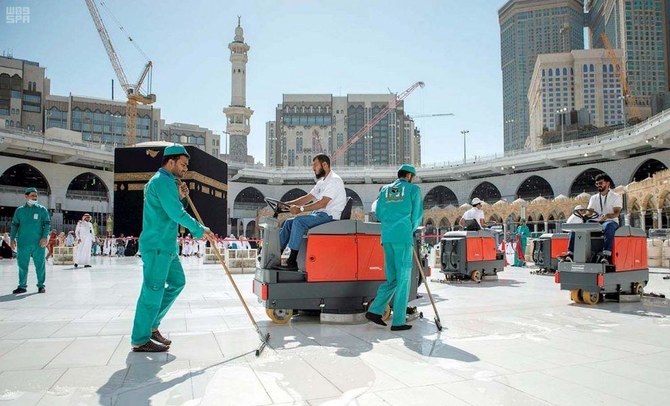
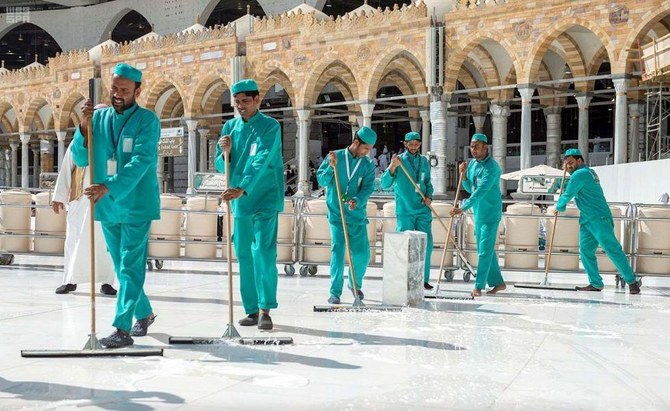
RIYADH: A team of more than 2,000 cleaners are working around the clock over four different shifts to keep the grand Mosque in Makkah spotless during Ramadan.
The workers manage to clean the entire holy mosque in just 45 minutes and scrubbing the white marble courtyard surrounding the Kaaba takes half an hour. Cleaning does not hinder the large amount of worshippers and visitors to the mosque, the Saudi Press Agency reported.
Thirty special electric vehicles, sixty-seven machines and 400 liters of water are used to clean the courtyard surrounding the Kaaba.
A number of pilgrims and visitors to the mosque praised the efficiency of the cleaning services. Mohammed Asif, from Bangladesh, said that he was very happy with the excellent services provided and that the level of cleanliness was very high.
He told SPA he was impressed with the organised and fast way the floors of the mosque were cleaned, and the use of large amounts of rose and oud fragrance to give the mosque a pleasant smell.


![]()
![]()
![]()

Small army of workers keep Makkah’s Grand Mosque courtyard clean during Ramadan

Small army of workers keep Makkah’s Grand Mosque courtyard clean during Ramadan


Latest updates



Recommended


© 2026 SAUDI RESEARCH & PUBLISHING COMPANY, All Rights Reserved And subject to Terms of Use Agreement.