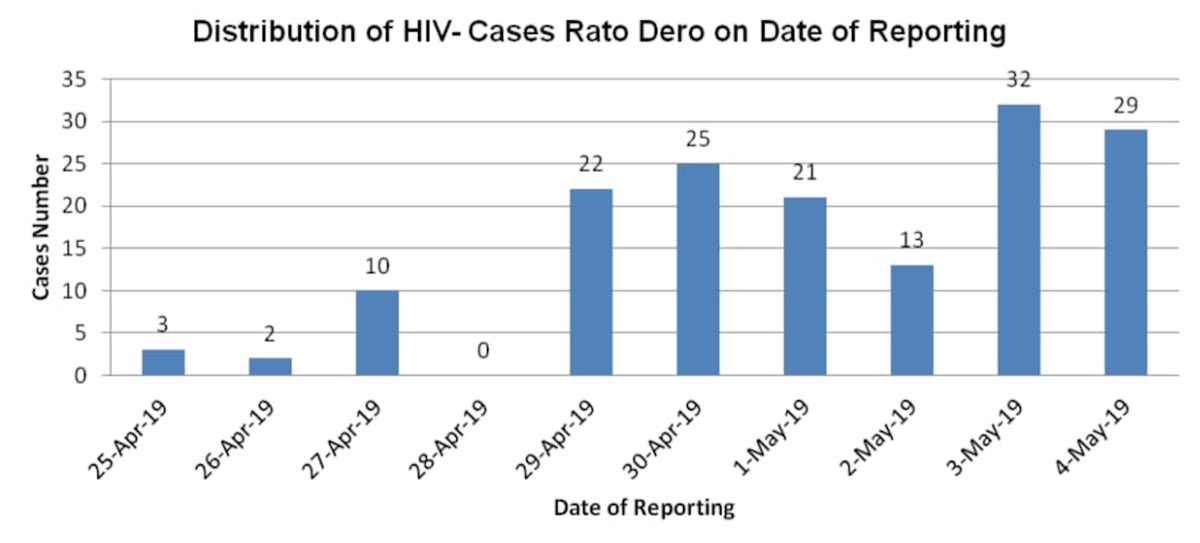
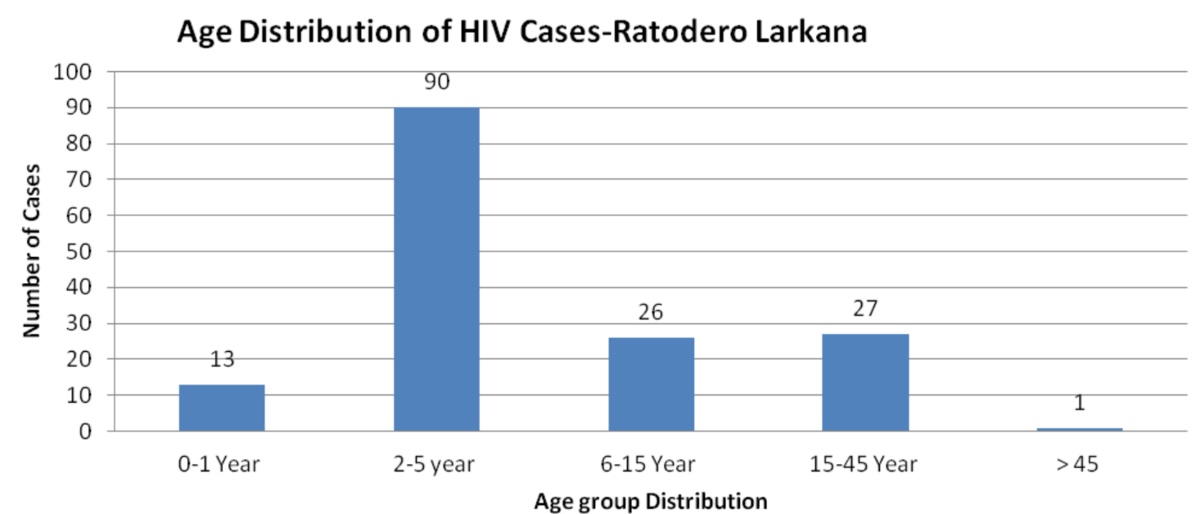
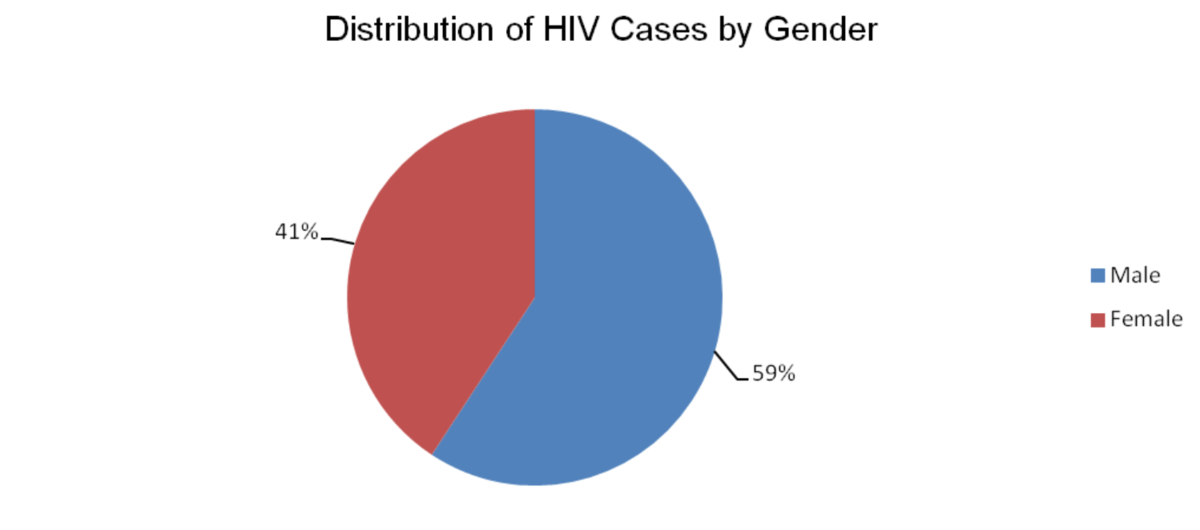
KARACHI: At least 157 people, including 127 children, have tested positive for HIV in Pakistan’s southern Sindh province, the health department said following screenings in the town of Rato Dero that have sparked alarm among both residents and officials.
Authorities were first alerted to the burgeoning crisis last week after 18 children from a town on the outskirts of Larkana city tested positive for the virus, which leads to AIDS if untreated. There is no cure for HIV currently, but antiretroviral treatment can control the virus.
As of May 4, 4,102 people had been screened in Larkana and Rato Dera. Of the 157 people who tested positive for HIV, 30 are adults.
The increased rate of new diagnoses in Pakistan comes amid a global decline. The nation of 208 million is considered a low prevalence country for HIV, but the disease is expanding, mostly among intravenous drug users, sex workers and migrant laborers returning from the Gulf.
Authorities said they had traced the Sindh outbreak to a single doctor, a paediatrician called Muzaffar Ghangharo, who allegedly used a contaminated syringe on patients and was arrested last week.
All the affected children were Ghangharo’s patients and he was seeing 300 patients on average, local police officer Sartaj Ahmed Jagirani said.
“It’s still to be ascertained whether it was deliberate or inadvertent,” Jagirani said, adding that preliminary police investigations suggested Ghangharo used the same syringe to inject at least five different children.
Dr. Sikandar Iqbal, a coordinator at the Sindh AIDS Control Programme, said Ghangharo was himself in the final stages of AIDS.
“There are...chances that Dr. Ghangharo, who is in the last stages of the disease, might have been infected by one of his patients, who mostly get treatment from quacks,” he said. Arab News could not independently verify Iqbal’s claim.
It is as yet unclear what the suspect’s medical qualifications are. His private clinic was sealed following his arrest, and is yet to be unsealed so that instruments can be examined in the presence of doctors and a judicial magistrate.
The Sindh chapter of Pakistan’s Paediatric Association (PPA) has condemned Ghangaro’s arrest and called for his immediate release, saying the police investigation used a “non-professional approach causing de-fame to a respected doctor.”
Meanwhile, official figures of victims have risen rapidly every day since the screenings began last week, with dozens of more cases coming to light on Friday.
According to Sindh’s director general of health, Dr. Masood Solangi, all HIV cases have been recorded and line-listed with laboratory-based surveillance. Daily screenings are also being carried out on high risk populations at a local hospital so that new cases can be identified, he said.
Three thousand testing kits and medicines have reportedly been sent to Larkana and Rato Dera cities, said Dr. Abdul Baseer Khan Achakzai, a program manager at the National AIDS Control Program who spoke to Arab News on Friday. Three thousand more kits would be sent on Saturday, he said, and treatment would start immediately.
Locals say the numbers are even higher than reported.
“They are concealing the figures,” said Abdul Rasool who lives in a village near Rota Dero, and whose son tested positive at a screening camp on Friday.
“My cousin’s three-year old son has also tested positive,” he said.
There have been four casualties since the cases came to light, including of a ten-month old girl.
Jameel Ahmed, a Larkana shopkeeper who lost two infant daughters after they were treated in Ghangharo’s clinic, blamed himself.
“God gave me two daughters and both died because of my ignorance,” he said. “If you love your children, go to government or registered hospitals.”