


DUBLIN: Sarajevo is one of those places that everyone has heard of, even if not everyone knows where it is. During the Balkans war, the Bosnian capital became a byword for suffering, then defiance, then hope, and even now it’s somewhat hard not to associate it with its famous siege.
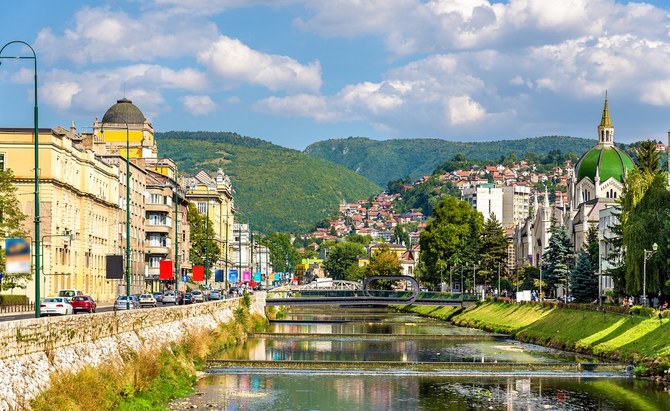
But Sarajevo is a thriving city, unafraid to confront its past but with eyes focused squarely on the future. It’s also undeniably beautiful, a picture-postcard setting along the Miljacka River, surrounded by mountains, and with greenery spilling down to the river banks.
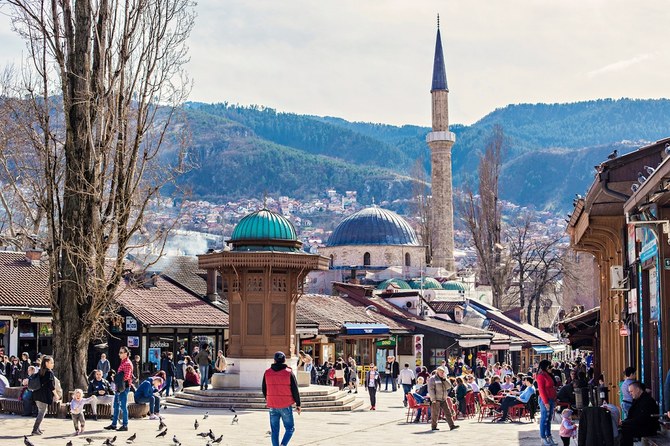
The city still straddles two worlds — it’s partly European and partly something else, something more exotic. It’s that which makes it a city of contrasts: You’ll hear the call to prayer from the countless minarets that dot the skyline as well as church bells at midday. Trendy twentysomethings walk past gnarled old men smoking shisha and gossiping. History is everywhere, from the Ottoman-era buildings to the Communist-style apartment blocks; from the Hapsburg-era restaurant 4 Sobe Gospode Safije (the veal is incredible) to the more modern buildings being constructed on the city’s outskirts. And it’s all fascinating.
That the city is once again a melting pot is almost a miracle. Until the outbreak of the war in 1992, the city was home to Yugoslav Muslims, Christians and Jews living and working together. The war — and the four-year siege of the city — cost over 11,000 lives, and it’s a conflict no one is in a hurry to forget.
In order to understand the city’s story, take the “Times of Misfortune” tour, which provides an absorbing look at what life was like during the siege. It takes three hours and leaves at 11 a.m. every day. It’s a remarkable, if somewhat harrowing, tour, and absolutely worth going on. The route includes everything from the Martyr’s Memorial Cemetery, where the town’s defenders are buried, to the infamous “Sniper Alley,” which was one of the city’s most lethal spots. Visitors can also walk through one of the tunnels built to allow residents to get around safely during the conflict.
After all that walking, head to Cajdzinica Dzirlo, a picturesque coffee shop at the eastern edge of Baščaršija, Sarajevo’s old bazaar. The café specializes in thick, slow-brewed Bosnian coffee served in copper pots (enough for two cups) and is utterly delicious. If you need something more substantial, take a taxi to Restaurant Kibe, which looks more like a house than a restaurant. Ring the doorbell (ask your hotel to reserve a table for you), and climb the stairs to a quaint room dominated by a fireplace and spectacular views of the town. There’s plenty to choose from, but we recommend the Bosnian ravioli and the roasted lamb. Bosnian food is thick and hearty, so you definitely won’t need seconds.
After filling up, head to Radnja at Kazandziluk 18, where you can buy traditional copper coffee sets, made by hand. Next to the 16th-century Gazi Husref-bey Mosque, you can buy handcrafted silver jewelry at Becart. If you are still not finished shopping, head to the Bascarsija Bazaar, which has been in operation since Ottoman times. You can pick up shisha pipes, Communist-era trinkets, and everything in between.
For some modern culture, head to the Ars Aevi Museum of Contemporary Art, which houses a wonderful collection of more than 200 pieces from the likes of Robert Kushner and Joseph Kosuth. The museum was a symbol of cultural rebellion during the war, and it’s a touching place, even today.
While you’re visiting Sarajevo, it would be a shame not to explore at least some of the beautiful countryside that surrounds it. Green Visions has been running eco-tours for more than a decade and organizes hikes up to Mt. Trebevic, a 5,338 foot mountain (which hosted the skiing events in the 1984 Winter Olympics) that offers commanding views of the surrounding countryside and is a great spot from which to take in the full scope of Sarajevo’s beautiful sprawl.


