KOLKATA: Normally bustling Kolkata was eerily quiet late Friday as one of the biggest cyclones to hit India in years bore down on the major city after leaving a trail of deadly destruction in its wake.
Cyclone Fani ("Snake" in Bengali) slammed into the eastern state of Odisha earlier in the day, reportedly killing at least eight people and one in Bangladesh, where it was headed after Kolkata, officials said.
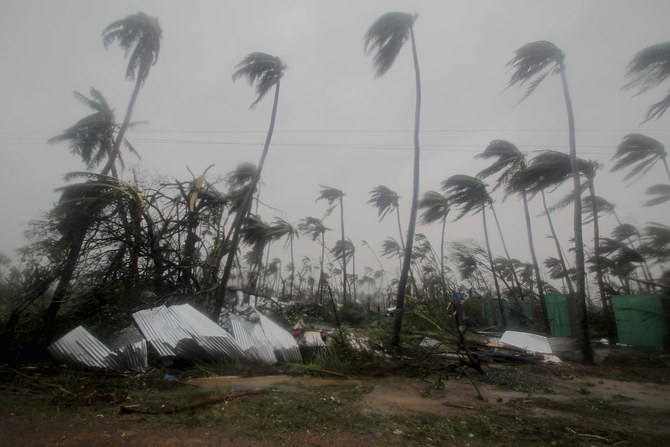
With effects felt as far away as Mount Everest, winds gusting up to 200 kilometres (125 miles) per hour sent coconut trees flying and cut off power, water and telecommunications.
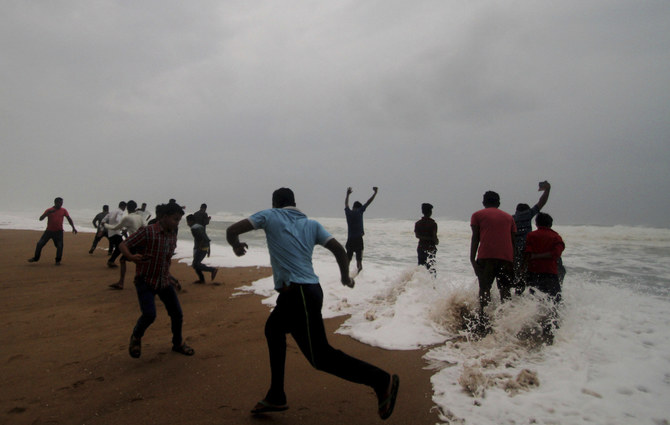
Authorities in Odisha, where 10,000 people perished in a 1999 cyclone, had evacuated more than a million people as they worried about a possible 1.5-metre (five-foot) storm surge sweeping far inland.
Eight people were killed, the Press Trust of India (PTI) reported, including a teenage boy, a woman hit by concrete debris and an elderly woman who suffered a heart attack in one of several thousand shelters packed with families.
Odisha disaster management official Prabhat Mahapatra said there were not yet any confirmed casualty figures.
"Around 160 people were injured in Puri alone. Our relief work is ongoing," he told AFP.
Authorities in Bangladesh, next in Fani's trajectory, said a woman was killed by a tree, and that 14 villages were inundated as a tidal surge breached flood dams. Some 400,000 people have been taken to shelters, officials told AFP.
Hundreds of thousands more people in India's West Bengal state have also been given orders to flee. Local airports have been shut, with train lines and roads closed.
"It just went dark and then suddenly we could barely see five metres in front of us," said one resident in the holy city of Puri, where Fani made landfall.
"There were roadside food carts, store signs all flying by in the air," the man told AFP. "The wind is deafening."
Another witness said he saw a small car being blown along a street by the winds and then turned over.
PTI reported that a big crane collapsed and that a police booth was dragged 60 metres (yards) by the wind.
As Fani headed northeastwards, losing strength but still packing a punch, Odisha authorities battled to remove fallen trees and other debris strewn over roads and to restore phone and internet services.
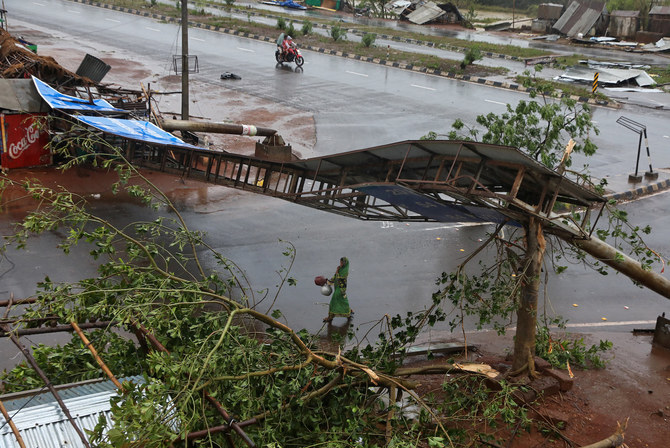
Electricity pylons were down, tin roofs were ripped off, piles of bricks could be seen and windows of hotels and homes were smashed.
Puri's famous 12th-century Jagannath Temple escaped damage however.
Gouranga Malick, 48, was solemnly picking up bricks after the small two-room house he shared with his six-strong family collapsed, its roof blown away.
"I have never witnessed this type of devastation in my lifetime," he told AFP.
"Energy infrastructure has been completely destroyed," Odisha's chief minister Naveen Patnaik said.
A baby was born near Odisha's capital Bhubaneswar just as the cyclone tore through.
"We are calling her Lady Fani," a spokesperson for the hospital told PTI.
Next in Fani's sights was West Bengal's capital Kolkata, home to 4.5 million people, with the eye of the storm due around midnight (1830 GMT) and rain already falling hard several hours before.
The city normally teeming with people was all but deserted, with shopping malls shut and hawkers absent from the pavements after packing up their stalls. Only a few vehicles packed with people heading home plied the roads.
Subrata Das, manager of the AXIS Mall, said: "We have seen how the cyclone ravaged some buildings in Bhubaneswar. We don't want to take any risk. We are trying to survive the cyclone."
"If we don't take our things, we fear the cyclone will raze everything," said Murad Hussain, 45, who runs a stall.
"We are monitoring the situation 24/7 and doing all it takes... Be alert, take care and stay safe for the next two days," West Bengal's chief minister Mamata Banerjee tweeted.
The winds were felt as far away as Mount Everest, with tents blown away at Camp 2 at 6,400 metres (21,000 feet) and Nepali authorities cautioning helicopters against flying.
Ports have been closed but the Indian Navy has sent six warships to the region. Hundreds of workers were taken off offshore oil rigs.
"We are mooring our boat because it's the only means of income for us. Only Allah knows when we can go back to fishing again," Akbar Ali, a fisherman near the town of Dacope in Bangladesh, told AFP while battling surging waves to tie his boat to a tree.


![]()
![]()
![]()

Major cyclone kills three in India, Bangladesh
Major cyclone kills three in India, Bangladesh
- Cyclone Fani, one of the biggest storms to come off the Indian Ocean in recent years, made landfall in eastern India on Friday
- The airport at Bhubaneswar, the capital of Odisha, will be shut on Friday


Latest updates


© 2026 SAUDI RESEARCH & PUBLISHING COMPANY, All Rights Reserved And subject to Terms of Use Agreement.