DUBAI: Saudi Arabian mall operator Arabian Centers Co. could raise up to $836 million at the top end of the price range for its initial public offering (IPO), the sale prospectus showed on Sunday.
The IPO would be the country’s biggest since Saudi lender National Commercial Bank raised $6 billion in 2014, according to Refintiv data.
Arabian Centers plans to sell 95 million shares at 26 riyals to 33 riyals per share, the document showed, implying a market capitalizaton of between 12.4 billion riyals and 15.7 billion riyals ($3.3 billion and $4.2 billion) on listing.
Owned by Fawaz Alhokair Group, the offering will be the first in the kingdom under Rule 144a, which allows the sale of securities primarily to qualified institutional buyers in the United States.
It will also be the first major Saudi IPO this year.
Riyadh has been encouraging more family-owned companies to list in a bid to deepen its capital markets as part of reforms aimed at reducing reliance on oil revenue.
The kingdom also wants to boost local entertainment and attract foreign visitors, at a time when subsidy cuts and new taxes have eaten into household budgets.
Arabian Centers owns 19 malls, making it the leading owner and operator of shopping malls in Saudi Arabia by total gross leasable area as at Dec. 31 2018, the prospectus said.
Gross proceeds from the sale of new shares would be used for debt repayment, the document said. The deal comprises 65 million existing shares being sold by the current shareholders and 30 million new shares, with a listing scheduled for late May.
Store based retailing still dominates the Saudi market, contributing 97 percent of total retailing in 2018, according to a market study cited in the prospectus.
Arabian Centers plans to expand its operations to 27 malls within four years, including four in the next 12 months, its chief executive Olivier Nougarou said earlier this month.
Four cinemas are already under construction, with 12 more to come over the next two years, he added. A decades-long ban on movie theaters was lifted last year.
Morgan Stanley, Samba Capital, NCB Capital, and Goldman Sachs are the joint financial advisers and bookrunners for the IPO. Other bookrunners include EFG Hermes KSA, Citigroup, Emirates NBD Capital, Credit Suisse, and Natixis.

Arabian Centers to raise up to $836m in Saudi’s biggest IPO since 2014
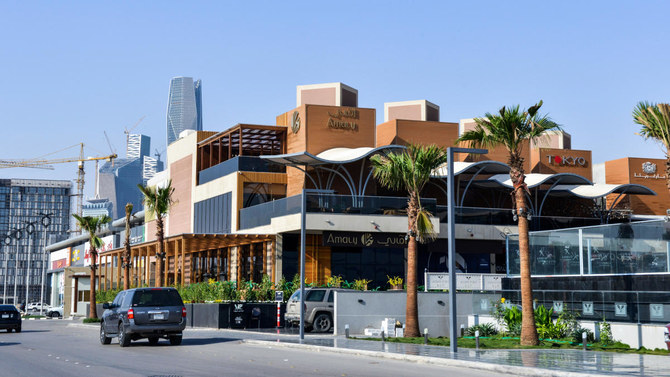
- Arabian Centers owns 19 malls, making it the leading owner and operator of shopping malls in Saudi Arabia
- The IPO would be the country’s biggest since Saudi lender National Commercial Bank raised $6 billion in 2014
Global trade isn’t deglobalizing — it’s reshuffling, Harvard economist says
ALULA: Global trade is not retreating into deglobalization despite geopolitical shocks, but is instead undergoing a structural reshuffling led by US-China tensions, according to Harvard University economist Pol Antras.
Presenting research at the AlUla Emerging Market Economies Conference, Antras said there is no evidence that countries are systematically turning inward. Instead, trade flows are being redirected across markets, creating winners and losers depending on export structure and exposure to Chinese competition.
This comes as debate intensifies over whether supply-chain disruptions, industrial policy and rising trade barriers signal the end of globalization after decades of expansion.
Speaking to Arab News on the sidelines of the event, Antras said: “I think the right way to view it is more a reorganization, where things are moving from some countries to others rather than a general trend where countries are becoming more inward looking, in a sense of producers selling more of their stuff domestically than internationally, or consumers buying more domestic products than foreign products.”
He said a change of that scale has not yet happened, which is important to recognize when navigating the reshuffling — a shift his research shows is driven by Chinese producers redirecting sales away from the US toward other economies.
He added that countries are affected differently, but highlighted that the Kingdom’s position is relatively positive, stating: “In the case of Saudi Arabia, for instance, its export structure, what it exports, is very different than what China exports, so in that sense it’s better positioned so suffer less negative consequences of recent events.”
He went on to say that economies likely to be more negatively impacted than the Kingdom would be those with more producers in sectors exposed to Chinese competition. He added that while many countries may feel inclined to follow the United States’ footsteps by implementing their own tariffs, he would advise against such a move.
Instead, he pointed to supporting producers facing the shock as a better way to protect and prepare economies, describing it as a key step toward building resilience — a view Professor Antras underscored as fundamental.
Elaborating on the Kingdom’s position amid rising tensions and structural reorganization, he said Saudi Arabia holds a relative advantage in its economic framework.
“Saudi Arabia should not be too worried about facing increased competitive pressures in selling its exports to other markets, by its nature. On the other hand, there is a benefit of the current situation, which is when Chinese producers find it hard to sell in US market, they naturally pivot to other markets.”
He said that pivot could benefit importing economies, including Saudi Arabia, by lowering Chinese export prices. The shift could increase the Kingdom’s import volumes from China while easing cost pressures for domestic producers.


