

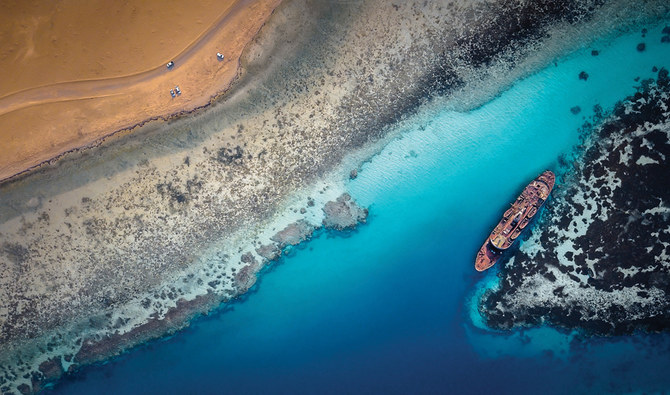
ThePlace: Saudi Arabia’s Al-Shuaiba coast

Al-Shuaiba is known for its natural beauty. (Photo/Saudi Tourism)
Updated 26 April 2019
Follow

ThePlace: Saudi Arabia’s Al-Shuaiba coast

  • Visitors choose Al-Shuaiba beach not just for its tranquility but also to dive on its magnificent coral reefs

JEDDAH: The pristine lagoon area of Al-Shuaiba in Makkah Province is one of the Kingdom’s main tourism sites.

Known for its natural beauty and small, lush islands, it is located 90 km from Makkah and 75 km from Jeddah on the Red Sea coast. 

Visitors choose Al-Shuaiba beach not just for its tranquility but also to dive on its magnificent coral reefs.

Al-Shuaiba was once the main port of Makkah before Jeddah became another important port for pilgrims. This photo of Al-Shuaiba coast was taken by Saudi photographer Mohammed Al-Thaqafi as part of the Colors of Saudi competition. •


Human development program helping to expand pathways for Saudi students into elite global universities

Updated 6 sec ago
Follow

Human development program helping to expand pathways for Saudi students into elite global universities

  • HCDP takes a comprehensive approach, supporting citizens throughout their lives from early childhood education through to lifelong learning

DAVOS: Saudi Arabia is accelerating efforts to equip its young population with the skills and global exposure needed to compete on the world stage, as part of the Kingdom’s Vision 2030 agenda, the CEO of the Human Capability Development Program told Arab News.

Speaking on the sidelines of the World Economic Forum in Davos, Anas Al-Mudaifer said the program, one of Vision 2030’s realization initiatives, is enhancing the competitiveness of Saudi citizens by investing in their skills, knowledge and long-term development.

“Our mandate is to improve and enhance the competitiveness of the Saudi citizen,” he said. “We want to make sure they have the opportunity to compete locally and globally,” he added.

The HCDP takes a comprehensive approach, supporting citizens throughout their lives from early childhood education through to lifelong learning, while aligning education and training with the evolving needs of the labor market, he said.

Al-Mudaifer added that reforms are underway across the education system, including expanded access to early childhood education, new school curricula and teaching methods, and stronger alignment between higher education, vocational training and future labor market demands.

A key pillar of the strategy is preparing Saudi youth for global competition, a push that is already delivering tangible results.

“We have seen Saudis competing in admission to Ivy League schools,” he said. “More than 1,000 Saudi students are now enrolled in top 30 universities every year.”

He added that Saudi Arabia now ranks as the second-largest source of international students at the Massachusetts Institute of Technology, behind only China, a milestone he described as “a great achievement and a great footstep for Saudi students.”

Beyond academia, Saudi graduates are increasingly securing roles in leading international institutions and companies. Al-Mudaifer pointed to Saudi professionals working in prestigious US hospitals such as the Mayo Clinic and Cleveland Clinic, as well as global technology firms including Tesla and Meta.

To support continuous upskilling, the program is also investing heavily in lifelong learning. More than 2 million Saudi citizens now receive training each year, both domestically and overseas, as rapid technological change reshapes the global labor market.

“With the emergence of intelligent technologies, especially artificial intelligence, we need to make sure the Saudi workforce is always up to date with the requirements of local and global employers,” he said.

Among recent initiatives is the launch of a platform which offers short, six-to seven-week micro and nano degrees in fields relevant to the Saudi labor market.

The courses are accredited by employers and international training bodies, providing fast-track pathways into employment.

Entrepreneurship is another priority area, particularly in technology. In partnership with the Ministry of Communications and Information Technology, the program has launched initiatives that send Saudi tech founders to global innovation hubs such as Silicon Valley and Berlin for intensive boot camps and growth programs.

Al-Mudaifer said that Saudi Arabia’s progress is rooted in global collaboration rather than isolation.

“There is no leader alone,” he added, highlighting that the Kingdom works closely with international partners and convenes global experts annually at the Human Capability Initiative Conference in Riyadh to shape the future of human development.