ISLAMABAD: Pakistan and China will ink the second phase of the China Pakistan Free Trade Agreement (CPFTA) on Sunday, Pakistani commerce adviser Abdul Razak Dawood said on Friday, which will include a protection mechanism to help correct a lopsided trade balance between the two countries.
Dawood is part of a delegation accompanying Pakistani Prime Minister Imran Khan to Beijing for the Second Belt and Road Forum that kicked off today, April 26.
Under the first phase of the trade deal which came into effect in 2007, Chinese exports to Pakistan grew from $4.2 billion to around $12 billion, whereas Pakistan’s exports to China only moved up marginally from $0.6b billion to $1.6 billion. Without trade or import safety measures in the first phase, Pakistan lost more than Rs32 billion due to free trade agreement imports from China, according to the Pakistani Federal Board of Revenue.
“There were no safeguard measures in the proper sense in CPFTA-I, now these have been put in place to protect the local Industry,” Dawood told the Pakistani APP news agency.
Under the revised trade deal, 1,700 items have been put on a ‘sensitive list’ to safeguard the local industry, the commerce adviser said, adding that export access into Chinese markets and import protections were the hallmark of the new trade agreement. The safeguard measures will also be utilized to rescue any industry that faced jeopardy and duties could be imposed on certain goods under the mechanism in case a balance of payments problem arose, Dawood said.
The commerce adviser said under the new deal, Pakistan’s exports to China would increase by $500 million within a few months while trade volume would keep increasing in the years to come. Pakistan would also get market access at par with the Association of South East Asian Nations (ASEAN), he added, providing a level playing field for the country’s exports to compete in the Chinese market.
Under the new free trade regime, Pakistan would also get duty free access on 313 tariff lines, which would help Pakistani exporters boost trade in different products including textiles, chemicals, engineering, fisheries, food items, footwear, plastics and agriculture product — covering around $40 billion in Chinese imports.
However, Dawood said, signing the CPFTA with China was not sufficient to exploit the trade potential between the two countries and additional measures needed to be taken to promote bilateral trade and economic relations. He said around 380 Chinese investors would engage in joint ventures with local investors and there was a push to increase business to business cooperation between both sides. He said Pakistan wanted Chinese investors to invest in a variety of sectors in the country and help export Pakistani products to world markets, including the African region.
In 2017, Pakistan and China unveiled a long-term cooperation plan in economic development envisioning cooperation until at least 2030 in areas ranging from infrastructure to information technology.
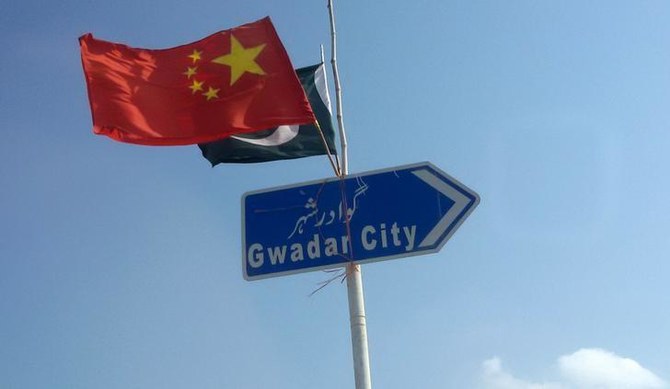
The two countries are also partners in the China Pakistan Economic Corridor, a flagship of Beijing’s Belt and Road initiative to build a new “Silk Road” of land and maritime trade routes across more than 60 countries in Asia, Europe and Africa, for which China has committed a $62 billion investment in Pakistan.


![]()

Second phase of Pak-China free trade deal to be inked on Sunday
Second phase of Pak-China free trade deal to be inked on Sunday
- Safeguard mechanisms in China-Pak FTA Phase-II will protect local industry, notes PM’s aide on commerce
- Says Pakistan’s exports to China to go up by $500 million within months
Latest updates


© 2026 SAUDI RESEARCH & PUBLISHING COMPANY, All Rights Reserved And subject to Terms of Use Agreement.