BENGALURU/NEW DELHI: Millions of voters across swathes of southern India cast ballots on Thursday in the second phase of a mammoth, staggered general election, as sporadic violence flared in the east and the insurgency-wracked state of Jammu and Kashmir.
The Election Commission said 66 percent of more than 155 million eligible Indians had voted, as per provisional data, in 95 constituencies in 12 states. Results of the election to India's 545-member parliament are expected on May 23.
In focus are the southern states of Tamil Nadu and Karnataka, where the main opposition Congress party and its allies need to win big if they hope to stop Prime Minister Narendra Modi from securing a second straight term.
Modi and his Bharatiya Janata Party (BJP) have run an aggressive campaign, playing to their nationalist, Hindu-first base and attacking rivals they accuse of appeasing minorities.
Critics say such divisive rhetoric threatens India's secular foundations.
"Communal polarisation is the biggest issue for me," said Rakesh Mehar, who voted in the technology hub of Bengaluru, capital of Karnataka. "And the growing intolerance in the country is what worries me the most."
Sporadic violence was reported in the northern state of Jammu and Kashmir, where separatists have called for an election boycott, and the eastern state of West Bengal, which has a history of election clashes.
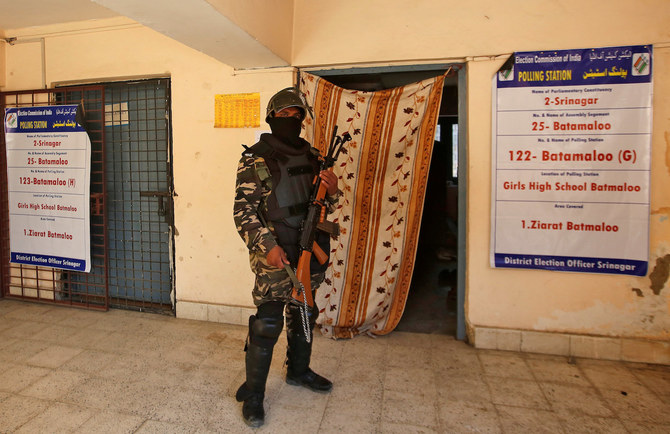
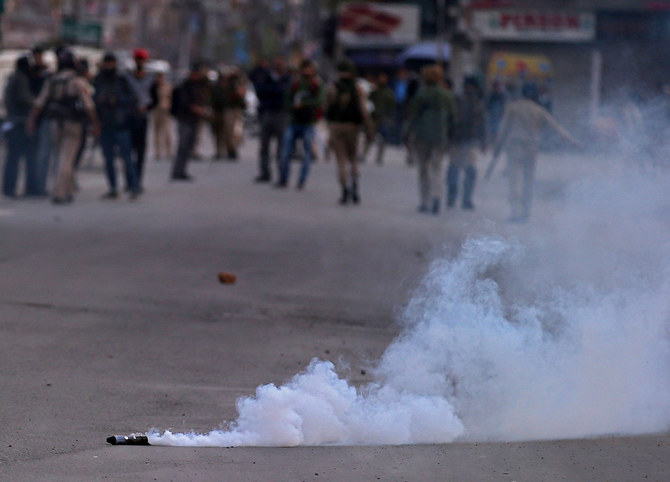
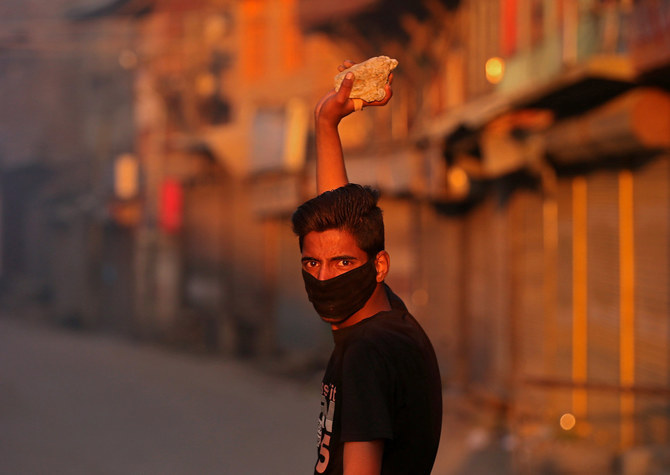
Police fired teargas to disperse stone-throwers in Srinagar, the Himalayan region's main city, where thousands of troops had been deployed to guard the vote, although turnout was less than 8 percent, according to provisional election commission data.
"There has been stone pelting by protesters in at least 40 places," said a senior police officer who sought anonymity because he is not authorised to speak to the media.
Police in the West Bengal constituency of Darjeeling also fired tear gas at protesters who complained they had not been allowed to vote, said top district official Arvind Kumar Mina.
"They had blocked a highway and had to be dispersed," he added.
In the last general election in 2014, the BJP recorded sweeping victories in six northern states that delivered 70 percent of its seats, helping clinch a landslide majority, said academic Neelanjan Sircar.
"You can never expect you’ll do that again," added Sircar, a political science professor at Ashoka University near the capital New Delhi. "Those seats that you lose, you’ll have to make up somewhere."
Eastern and southern India would be where the BJP would look to make up those seats, analysts say.
Congress, which is focusing on concerns about growing joblessness and farmers' distress, is staking its chances on a promise of generous handouts to India's poorest families.
"People are talking about national issues," said Manjunath Munirathnappa, a voter in Bengaluru, who hoped lawmakers would resolve infrastructure woes, such as traffic congestion and inadequate water supply.
"But only when they fix the local issues will there be progress."
About 900 million people are eligible to vote in the election that began last week and ends next month.
On Thursday morning, the body of a 20-year-old worker for the BJP's youth wing was found hanging from a tree in West Bengal's Purulia district, party officials and local police said.
"The night before he died he was seen writing graffiti for BJP for the elections. In the night he was reported missing. His body was found today," said local BJP leader Vidyasagar Chakrabarty.
Tensions between the BJP and the regional Trinamool Congress that governs the state have been rising in the lead-up to the poll, with each accusing the other of killings, beatings, vandalism and making false allegations to the police.
Trinamool Congress local leader Shantiram Mahato said the party had asked the police to conduct an impartial investigation into the death of the BJP worker.


![]()
![]()
![]()

Sporadic violence as millions vote in 2nd phase of India's mammoth election
Sporadic violence as millions vote in 2nd phase of India's mammoth election
- The Election Commission said 66 percent of more than 155 million eligible Indians had voted, as per provisional data, in 95 constituencies in 12 states
- Results of the election to India's 545-member parliament are expected on May 23


Latest updates





Recommended


© 2026 SAUDI RESEARCH & PUBLISHING COMPANY, All Rights Reserved And subject to Terms of Use Agreement.