KABUL: Women will be included for the first time in the Taliban delegation to talks this month in Qatar on the future of Afghanistan, the movement’s main spokesman said on Monday.
For a group notorious for its strictly conservative attitude to women’s rights, the move represents a step toward addressing demands that women be included in the talks, aimed at bringing an end to more than 17 years of war in Afghanistan.
“There will be women among Taliban delegation members in the Doha, Qatar meeting,” Zabihullah Mujahid, the Taliban’s main spokesman, said by telephone.
He did not name the women, but added, “These women have no family relationship with the senior members of the Taliban, they are normal Afghans, from inside and outside the country, who have been supporters and part of the struggle of the Islamic Emirate.”
The April 19-21 meeting in Doha will be between the Taliban and a delegation comprising prominent Afghans, including opposition politicians and civil society figures.
The Taliban have maintained their rejection of formal talks with the Afghan government, which they dismiss as a “puppet” regime controlled by the United States.
While Afghanistan remains a deeply conservative country, especially in rural areas, there have been major advances in women’s rights since the US-led campaign of 2001 that toppled the Taliban government. Many women fear that if the group regains some power, many of these gains could be erased.
The movement gained worldwide notoriety when it came to power in the 1990s by forcing women to wear full facial covering and imposing severe restrictions including banning girls from school and forbidding women from working outside the home.
However, Taliban spokesmen say the group has changed and it encourages girls’ education and other women’s rights within an Islamic Sharia system.
Civil society groups, the Western-backed government and Afghanistan’s international partners have pressed for women to take part in the talks and news of the Taliban delegation was welcomed. Fawzia Koofi, a former member of parliament who took part in a previous round of meetings in Moscow, said the presence of women in the Taliban team was a “good step.”
“Only women can feel the pain and miseries that Afghan women have suffered. The presence of women among the Taliban negotiators shows that the Taliban’s ideology has changed.”

Taliban team at Afghan peace talks in Qatar to include women: spokesman
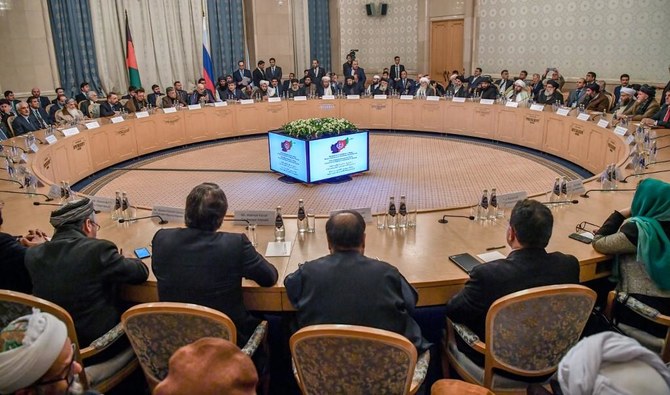
- Taliban is notorious for its strictly conservative attitude to women’s rights
- The move represents a step toward addressing demands that women be included in the talks
Three Afghan migrants die of cold while trying to cross into Iran
AFGHANISTAN: Three Afghans died from exposure in freezing temperatures in the western province of Herat while trying to illegally enter Iran, a local army official said on Saturday.
“Three people who wanted to illegally cross the Iran-Afghanistan border have died because of the cold weather,” the Afghan army official told AFP on condition of anonymity.
He added that a shepherd was also found dead in the mountainous area of Kohsan from the cold.
The migrants were part of a group that attempted to cross into Iran on Wednesday and was stopped by Afghan border forces.
“Searches took place on Wednesday night, but the bodies were only found on Thursday,” the army official said.
More than 1.8 million Afghans were forced to return to Afghanistan by the Iranian authorities between January and the end of November 2025, according to the latest figures from the United Nations refugee agency (UNHCR), which said that the majority were “forced and coerced returns.”
“These mass returns in adverse circumstances have strained Afghanistan’s already overstretched resources and services” which leads to “risks of onward and new displacement, including return movements back into Pakistan and Iran and onward,” UNHCR posted on its site dedicated to Afghanistan’s situation.
This week, Amnesty International called on countries to stop forcibly returning people to Afghanistan, citing a “real risk of serious harm for returnees.”
Hit by two major earthquakes in recent months and highly vulnerable to climate change, Afghanistan faces multiple challenges.
It is subject to international sanctions particularly due to the exclusion of women from many jobs and public places, described by the UN as “gender apartheid.”
More than 17 million people in the country are facing acute food insecurity, the UN World Food Programme said Tuesday.
“Three people who wanted to illegally cross the Iran-Afghanistan border have died because of the cold weather,” the Afghan army official told AFP on condition of anonymity.
He added that a shepherd was also found dead in the mountainous area of Kohsan from the cold.
The migrants were part of a group that attempted to cross into Iran on Wednesday and was stopped by Afghan border forces.
“Searches took place on Wednesday night, but the bodies were only found on Thursday,” the army official said.
More than 1.8 million Afghans were forced to return to Afghanistan by the Iranian authorities between January and the end of November 2025, according to the latest figures from the United Nations refugee agency (UNHCR), which said that the majority were “forced and coerced returns.”
“These mass returns in adverse circumstances have strained Afghanistan’s already overstretched resources and services” which leads to “risks of onward and new displacement, including return movements back into Pakistan and Iran and onward,” UNHCR posted on its site dedicated to Afghanistan’s situation.
This week, Amnesty International called on countries to stop forcibly returning people to Afghanistan, citing a “real risk of serious harm for returnees.”
Hit by two major earthquakes in recent months and highly vulnerable to climate change, Afghanistan faces multiple challenges.
It is subject to international sanctions particularly due to the exclusion of women from many jobs and public places, described by the UN as “gender apartheid.”
More than 17 million people in the country are facing acute food insecurity, the UN World Food Programme said Tuesday.
© 2025 SAUDI RESEARCH & PUBLISHING COMPANY, All Rights Reserved And subject to Terms of Use Agreement.