ISLAMABAD: Members of Pakistan’s Hazara community ended their sit-in late Monday night after State Minister for Interior Sheharyar Afridi assured them that the government was aware of their agony and was willing to take concrete steps to provide them better security.
Balochistan’s ethnic Hazara community has been frequently targeted by sectarian outfits, most recently by a suicide bomber who killed at least 20 people and wounded 48 others in a busy fruit and vegetable market in Quetta on Friday.
The attack was claimed by Daesh, a militant group that emerged in the Middle East but also found some support in Afghanistan and Pakistan, on Saturday.
The families of the Quetta blast victims, who protested for four consecutive days, demanded on Sunday that Prime Minister Imran Khan personally visit them to ensure better security.
“The sit-in will continue till Prime Minister Imran Khan, who praised New Zealand’s Prime Minister Jacinda Ardern for standing with victims of Christchurch mosque, visits and assures us better security,” Jalila Haider, one of the sit-in organizers, had told the media.
While Khan could not visit Balochistan’s capital city, Afridi went there on Monday to review the security situation and condole with the bereaved families. After interacting with the protesters, he said that he had met the elders of the Hazara community “with [a] heavy heart” in a twitter post.
While recognizing that their loss was irreparable, he pledged to do everything to give them a “better tomorrow.”
“Let these sacrifices help us make a safer Balochistan [and] better Pakistan,” he wrote. “I am indebted that even in sorrow [you] heard me. I [will] stand by my words.”


![]()

Protesters in Quetta end sit-in after four days
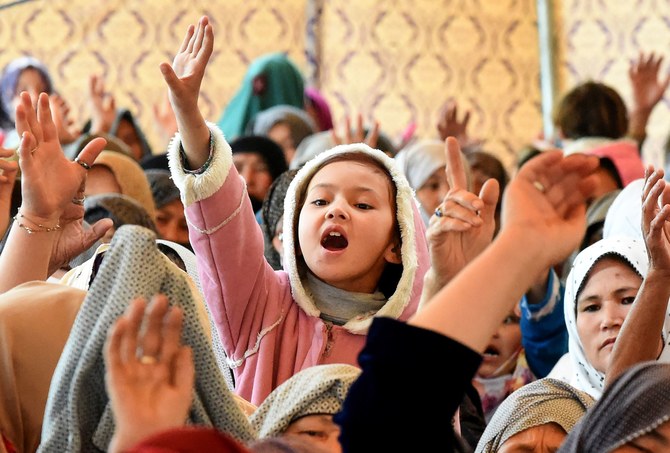
Protesters in Quetta end sit-in after four days
- Sheharyar Afridi thanks them for listening to him in their time of sorrow
- The state minister says he will fulfil his promises of providing them better security
Latest updates


© 2026 SAUDI RESEARCH & PUBLISHING COMPANY, All Rights Reserved And subject to Terms of Use Agreement.