SAN FRANCISCO: Home-sharing platform Airbnb on Tuesday announced it will back off a plan to remove Jewish settler homes in the occupied West Bank from its rental listings to end lawsuits brought by hosts.
The agreement settles all legal actions brought by hosts and potential hosts who went to court with concerns about listings, according to Airbnb.
Israeli lawyers filed a class action suit against Airbnb in November immediately after it said it planned to remove from its rental listings Jewish settler homes in the West Bank “that are at the core of the dispute between Israelis and Palestinians.”
“Airbnb will not move forward with implementing the removal of listings in the West Bank from the platform,” the San Francisco-based company said Tuesday in a news release.
“We will continue to allow listings throughout all of the West Bank, but Airbnb will take no profits from this activity in the region.”
Profit generated from Airbnb listings in the West Bank will be donated to non-profit groups dedicated to humanitarian aid in various parts of the world, according to the startup.
Airbnb added that it will implement the same approach for listings in Moscow-backed separatist regions South Ossetia and Abkhazia, two other disputed areas where the company previously planned to take action.
The class action suit had sought 15,000 shekels ($4,183) in damages for the lead plaintiff and each other settler host should Airbnb delete them from its listings, a spokesman said earlier.
The decision would have affected around 200 homes in Israeli settlements that had been listed on the platform.
Around 400,000 Israelis live in settlements that dot the West Bank and range in size from tiny hamlets to large towns, in addition to 200,000 living in settlements in occupied east Jerusalem.
The international community considers the settlements to be illegal and a barrier to peace between Israelis and Palestinians.
A major campaigner against Airbnb’s earlier decision told AFP that “Airbnb has realized what we have long argued — that boycotts of Jews anywhere, even just in the West Bank, are discriminatory.
“This is a huge blow to efforts to delegitimize the Jewish presence in the West Bank,” said Eugene Kontorovich, Director of International Law at the Jerusalem-based Kohelet Policy Forum.
But Arvind Ganesan, of New York-based Human Rights Watch, called Airbnb’s retreat from the decision disappointing.
“Donating profits from unlawful settlement listings, as they’ve promised to do, does nothing to remedy the ‘human suffering’ they have acknowledged that their activities cause,” Ganesan said.
“By continuing to do business in settlements, they remain complicit in the abuses settlements trigger.”
Israel’s Prime Minister Benjamin Netanyahu had pledged to annex settlements in the occupied West Bank if he wins Tuesday’s elections.
Exit polls showed him neck-and-neck with his main challenger Benny Gantz.

Airbnb will leave West Bank homes listed to settle suits
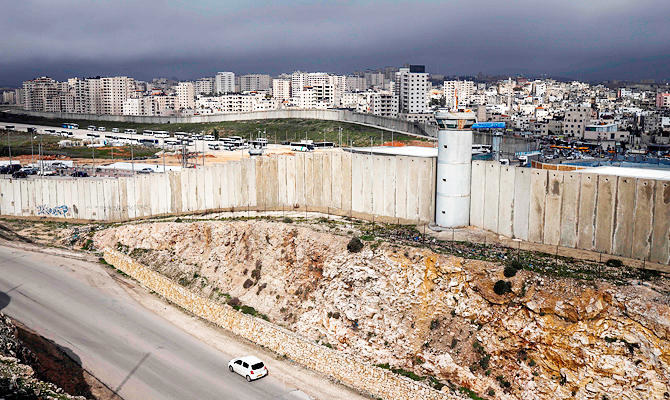
- The international community considers the settlements to be illegal and a barrier to peace between Israelis and Palestinians
What 2026 holds for Sudan as conflict drags on and famine deepens
- Hopes after Khartoum’s recapture dimmed as El-Fasher fell to RSF atrocities and ceasefire efforts stalled
- Armed factions consolidated control over different regions, splitting the country and prolonging the fighting
LONDON: When the Sudanese Armed Forces recaptured Khartoum from the paramilitary Rapid Support Forces in late March, soldiers and many of the capital’s remaining residents took to the streets to celebrate.
The RSF, which seized the city soon after the civil war erupted in April 2023, had ruled with an iron fist. When its fighters were finally dislodged, much of the population was glad to see the back of them.
There was even hope that the army’s victory could mark a turning point in the conflict, setting in train a series of events that would lead to an end to the fighting. Such optimism, however, looked misplaced as the rest of the world welcomed 2026.
Seven months after the SAF had reclaimed Khartoum, RSF fighters unleashed a fresh wave of violence against the population of another city, El-Fasher, 800 kilometers away on the other side of the country.
The RSF’s capture of North Darfur’s capital and the days of bloodletting that followed marked one of the darkest chapters in Sudan’s history.
Fighters carried out mass executions, torture and rapes reminiscent of the 2003-05 genocide inflicted on Darfur by the Janjaweed — the predecessor of the RSF.
Far from being the year when Sudan’s fortunes began to turn, 2025 will likely be remembered as the year when the vast nation, already bifurcated by the independence of South Sudan in 2011, was split once more, this time between a SAF-controlled east and a RSF-dominated west.
The International Crisis Group recently warned that the war “could settle into a prolonged stalemate that will morph into a durable partition.”
“Neighboring countries fear that such a failed-state scenario would spell even more long-term instability that spills beyond Sudan’s borders,” the think-tank added.
El-Fasher was the SAF’s last holdout in Darfur. Its strategic significance was reflected in the RSF’s brutal 18-month siege to break the city.
When the group finally succeeded on Oct. 26, it consolidated its hold over Darfur and cemented the dividing line running through the middle of Sudan.
The RSF now controls most of western Sudan and large areas of the Kordofan region.
The SAF, meanwhile, controls the central areas around Khartoum, the north and the east, including Port Sudan on the Red Sea coast.
Kordofan, a vast agricultural area made up of three states and home to the nation’s oil fields, has now become the focus of the fighting.
The violence there has escalated in recent weeks, with hundreds of civilians killed since late October, according to the UN.
On Dec. 4, a children’s nursery and a hospital in Kalogi were hit by a drone strike, killing 114 people including 63 children.
Another drone strike on Dec. 13 killed six Bangladeshi UN peacekeepers, who had been deployed to South Kordofan to oversee disputed territory between Sudan and South Sudan.
Sudan’s largest oil field, Heglig, which is located near the border and supplies both countries, has now fallen to the RSF.
Kordofan is also strategically significant because it spans the supply lines to the west of the country.
With the world’s gaze distracted by Gaza and Ukraine, Sudan’s humanitarian crisis continued to spiral in 2025.
UN agencies say the conflict is now the world’s largest humanitarian crisis and largest displacement crisis, while the International Rescue Committee describes it as the largest humanitarian crisis ever recorded.
Tens of thousands of people have been killed, more than 12 million displaced, and 30 million — two thirds of the population — are in need of aid. Half the population faces acute hunger. Areas of Darfur and Kordofan are already in the grip of famine.
“We’re really looking at the most devastating war in Sudan’s history,” Ahmed Soliman, senior research fellow at Chatham House, said in a recent podcast. “It’s shocking and globally the worst humanitarian crisis without a doubt.”
Speaking shortly after the fall of El-Fasher, UN Secretary General Antonio Guterres said the conflict was “spiraling out of control.”
But the conflict had spiraled long before the horror of the RSF’s onslaught. El-Fasher just represented a sickening nadir.
About 260,000 people were trapped in El-Fasher when it was finally overrun. The RSF had recently completed an earth barrier encircling the city to block people from leaving.
The group’s fighters videoed themselves gunning down residents both in the city and as they tried to flee.
In one incident, more than 460 men, women and children at the Saudi Maternity Hospital were massacred.
Satellite images analyzed by the Yale Humanitarian Research Lab showed pools of blood on the ground and piles of bodies in the hospital car park.
Victims and witnesses recounted sickening acts of brutality and sexual violence.
One woman told Amnesty International that she had tried to flee the Abu Shouk neighborhood with her five children and a group of neighbors but were stopped by RSF fighters.
Both she and her 14-year-old daughter were raped. Her daughter died a few days later after reaching a clinic outside the city.
A 34-year-old man told the human rights monitor that he was among a group of 20 men who had managed to cross the earth berm but were caught by RSF fighters.
They were forced to lie down before the gunmen opened fire, killing 17 of them.
“The RSF were killing people as if they were flies,” he said. “It was a massacre. None of the people killed that I have seen were armed soldiers.”
The International Criminal Court said last month it was taking immediate steps to preserve and collect evidence related to the El-Fasher atrocities for use in future prosecutions.
Even before El-Fasher, the RSF had been widely accused of carrying out war crimes and crimes against humanity, with the US government determining that the group had committed acts of ethnic cleansing and genocide.
The shocking images that emerged from El-Fasher have given new impetus to international efforts to try to end the conflict.
The war stems from the aftermath of the downfall of President Omar Bashir amid mass protests against his rule.
After the civilian aspect of a power sharing agreement was shut out of the transitional process in 2021, a power struggle emerged between SAF commander Abdel Fattah Al-Burhan and RSF chief Mohammed Hamdan Dagalo.
The rivalry eventually led to the outbreak of war in April 2023.
Since El-Fasher fell, the “Quad” group of mediators of Saudi Arabia, the US, Egypt and the UAE have intensified efforts to secure a ceasefire and a peace settlement.
During his visit to Washington last month, Saudi Arabia’s Crown Prince Mohammed bin Salman encouraged US President Donald Trump to help bring the conflict to an end.
The RSF has said it would agree to the Quad’s roadmap, which includes an initial three-month humanitarian truce leading to a permanent ceasefire and transition to civilian rule.
On Dec. 16, Al-Burhan declared he was ready to work with the Trump administration to resolve the conflict.
For those suffering in Sudan’s conflict zones, it is a faint glimmer of hope after a year of unfathomable suffering.
Whether 2026 will see a change in the fortunes of Sudanese, only time will tell.


