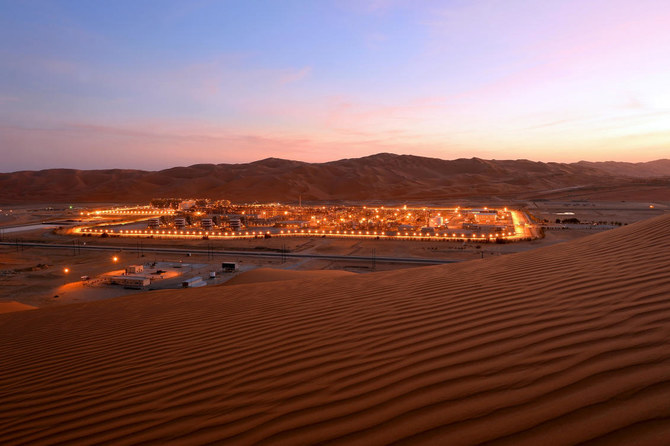
RIYADH: Saudi Aramco’s crucial bond issue, set to close on Wednesday, has already attracted higher-than-expected interest from international investors, the Kingdom’s energy minister, Khalid Al-Falih, has revealed.
Speaking on Monday at the inaugural Saudi Energy Forum in Riyadh, organized by information consultancy Gulf Intelligence, Al-Falih said that the issue attracted demand “north of $30 billion.”
The minister, however, declined to give details of the final amount to be raised or the pricing.
“It is at a very critical stage, but according to all the press reports and the analysts, investors have been extremely impressed,” Al-Falih said.
Aramco’s first foray into international debt markets had previously been expected to raise around $10 billion, to be put toward the cost of acquiring the Saudi industrial conglomerate SABIC, valued at nearly $70 billion. But increased global investor appetite for the issue would reassure Aramco and the Kingdom that its appeal in international markets remained as strong as ever.
It would also encourage Aramco to go back to the bond markets at a later date. Al-Falih said that Aramco was “seeking a permanent presence in capital markets.”
In a wide-ranging interview with Bloomberg TV, broadcast live at the forum, Al-Falih spoke of the changes taking place in the economy of Saudi Arabia as a result of the Vision 2030 reform plan, the acquisition of SABIC, and future investment policy in the Kingdom.
“It is a phenomenal transformation, and SABIC is the ideal way to do it. Just a short while ago our acquisition of SABIC would have been unthinkable, because it was seen as a national champion,” he said.
Asked whether the proceeds of the SABIC transaction would “re-energize” the investment strategy of the Saudi Public Investment Fund (the vendor of SABIC’s shares and on whose board Al-Falih sits), he said: “The vision of PIF goes way beyond $69 billion from Aramco.”
He hinted that PIF might divest other “non-strategic assets” in the future to focus on its hi-tech international stakes such as Uber,
Lucent and Tesla. “As bold as they were in entering these assets, they may also be bold to exit others.”
Al-Falih later said that the electric vehicles industry needed to be a significant element of the recently announced National Industrial Development and Logistics Plan.
With regard to the oil market, Al-Falih said that the forthcoming meeting of the Joint Ministerial and Monitoring Committee (the framework for OPEC co-operation with non-OPEC producers) would be a “key decision point” on whether or not to implement further cuts in oil output.
“I don’t think we will need (to do more) ... the market is on its way toward balance. We have done a lot more than others,” he said, referring to speculation that some producers have not adhered to previously agreed levels.
The minister added that personal relations between himself and his Russian counterpart Alexander Novak were “great”, but he added: “The dynamics in Russia are different from other countries.”


![]()

Saudi Aramco bond issue attracts ‘north of $30bn’
Saudi Aramco bond issue attracts ‘north of $30bn’
- Aramco’s first foray into international debt markets had previously been expected to raise around $10 billion
- Increased global investor appetite for the issue would reassure Aramco and the Kingdom that its appeal in international markets remained as strong as ever


Latest updates




© 2026 SAUDI RESEARCH & PUBLISHING COMPANY, All Rights Reserved And subject to Terms of Use Agreement.