LONDON: Representatives from the Saudi Arabia General Investment Authority (SAGIA) held a seminar for foreign entrepreneurs interested in investing in the Kingdom in London on Saturday, at the Arab-British Chamber of Commerce (ABCC).
The seminar, “Commercial business practices in Saudi Arabia,” was hosted by Yaarob Al-Dughaither, director of the international office at SAGIA.
“The Kingdom has seen remarkable progress in various sectors, especially mining, manufacturing, energy, water resources and tourism,” Al-Dughaither told the prospective investors.
Reem Al-Sharekh, advisory account manager at SAGIA, gave a talk on license facilitating and flexible regulatory conditions in the Kingdom for foreign companies, and Abdulsalam Al-Idrissi, deputy secretary-general of the ABCC, stressed the role of the chamber in assisting its members in seeking new opportunities, and in promoting bilateral commercial relations between Arab countries and the UK.
In addition, Al-Idrissi invited the participants to attend the Arab-British Economic Summit in London on July 3.
Finally, an open discussion was held in which participants were given the opportunity to ask questions on topics ranging from the Kingdom’s Vision 2030 program to entrance visa requirements, as well as the current business climate in the Saudi real estate, financial, infrastructure and healthcare sectors.

Saudi Arabia's SAGIA holds London seminar aimed at foreign investors
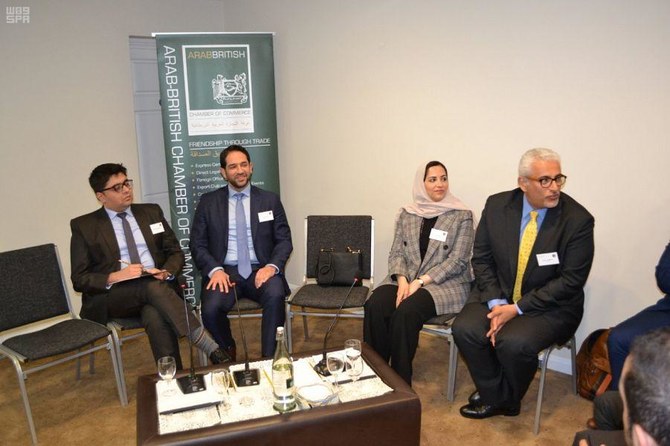
- The seminar was hosted by Yaarob Al-Dughaither, director of the international office at SAGIA
- Reem Al-Sharekh, advisory account manager at SAGIA, gave a talk on license facilitating and flexible regulatory conditions in Saudi Arabia for foreign companies
Economic growth and resilience at heart of 2nd AlUla Emerging Market Economies Conference
- Event on Feb. 8 and 9 will bring together ministers, governors of central banks, policymakers, economic experts and international financial institutions
- Emerging-market economies a ‘pivotal element’ in global economic system due to effect they have on growth and stability, says Saudi Finance Minister Mohammed Al-Jadaan
RIYADH: The second annual AlUla Conference for Emerging Market Economies, which Saudi Arabia will host next week, offers a platform to exchange views on global developments and discuss policies and reforms that support inclusive growth and strengthen economic resilience, the Kingdom’s finance minister said.
The event on Feb. 8 and 9 will bring together finance ministers, governors of central banks and policymakers, alongside economic experts and representatives of international financial institutions.
Organized by the Saudi Ministry of Finance in partnership with the International Monetary Fund, it takes place as emerging-market economies face mounting challenges amid rapid global economic change.
Finance Minister Mohammed Al-Jadaan said the decision to host the conference reflects Saudi Arabia’s ongoing commitment to efforts that support global financial and economic stability, and highlights the growing influence of emerging economies on worldwide growth.
Emerging-market economies represent a “pivotal element” in the global economic system due to the direct impact they have on economic growth and stability, he added.
“The AlUla Conference for Emerging Market Economies provides a unique platform for exchanging views on global economic developments, and discussing policies and reforms that will support inclusive growth and enhance economic resilience, in light of broader international cooperation that contributes to confronting common challenges,” Al-Jadaan said.
Kristalina Georgieva, managing director of the IMF, said the event would help emerging economies deal with growing uncertainty driven by technological change, demographic shifts and geopolitical tensions.
“The AlUla conference provides a vital platform for emerging economies to discuss how they can navigate the risks and embrace the opportunities ahead,” she said.
“In these times of sweeping transformations in the global economy, policymakers face a more challenging and uncertain environment. Countries should work together to strengthen resilience through sound macroeconomic and financial policies.”


