KARACHI: Pakistan’s economic growth is set to slow to 3.9 percent in the 2019 fiscal year, the Asian Development Bank said in data published on Wednesday.
The government, which has been holding discussions with the International Monetary Fund over a possible bailout, had been targeting growth of 6.2 percent, but there have been growing expectations among economists of a slowdown.
Last month, the State Bank of Pakistan said economic growth was set to slow to between 3.5-4.0 percent in the 2019 fiscal year from 5.2 percent in 2018, with a fiscal deficit of 6.0-7.0 percent.
“GDP growth is forecast to decelerate further to 3.9% in FY2019 as macroeconomic challenges continue and despite steps to tighten fiscal and monetary policies to rein in high and unsustainable twin deficits,” ADB said. “Continued fiscal consolidation in FY2020 will keep growth subdued at 3.6%.”
The report said the supply side was already showing signs of a slowdown and agriculture was expected to underperform the 3.8 percent growth target for fiscal 2019 after water shortages struck as wet season crops were being sown. Large-scale manufacturing reversed 6.6 percent growth in the first half of the year to decline by 1.5 percent as domestic demand contracted and rising world prices crimped demand for raw materials.
Faced with the prospect of a balance of payments crisis, the government of Prime Minister Imran Khan has stepped up efforts to shore up its foreign exchange reserves and attract more foreign investments.
It has secured funding and credit arrangements from Saudi Arabia, the United Arab Emirates and China, some of which have already been booked and some of which is expected in the second half of the year.
The ADB report said inflation is expected to rise sharply to average 7.5 percent, driven up by continued heavy government borrowing from the central bank, hikes to domestic gas and electricity tariffs, further increases in regulatory duties on luxury imports, and the lagged impact of currency depreciation by more than 10.7 percent since July 2018.
Lower revenue collection and higher current expenditure pushed the budget deficit from the equivalent of 2.3 percent of GDP in the first half of 2018 to 2.7 percent a year later, the ADB said.
According to ADB, the current account deficit is expected to ease in FY2019 but will remain high at the equivalent of 5 percent of GDP because of the large trade deficit. It will narrow further to 3 percent in FY2020 with easing macroeconomic pressures on the external accounts.
Foreign exchange reserves, depleted to $8.1 billion in February 2019, will likely remain stressed at the end of 2019.


![]()

Asian Development Bank sees Pakistan’s growth slowing to 3.9 percent
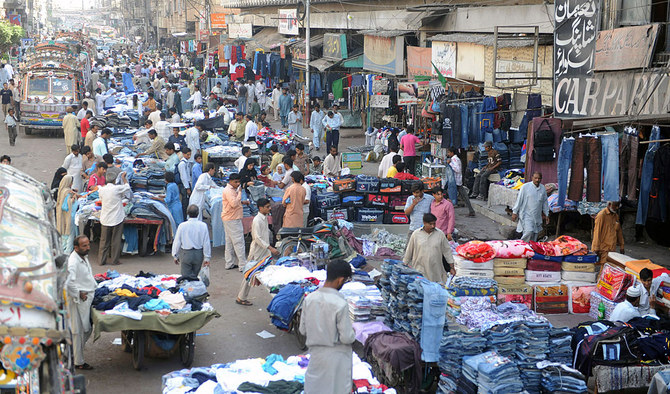
Asian Development Bank sees Pakistan’s growth slowing to 3.9 percent
- The government had been targeting growth of 6.2 percent
- Foreign exchange reserves will likely remain stressed at the end of 2019
Latest updates


© 2026 SAUDI RESEARCH & PUBLISHING COMPANY, All Rights Reserved And subject to Terms of Use Agreement.