

World Bank cuts growth outlook for the Philippines, but remains positive

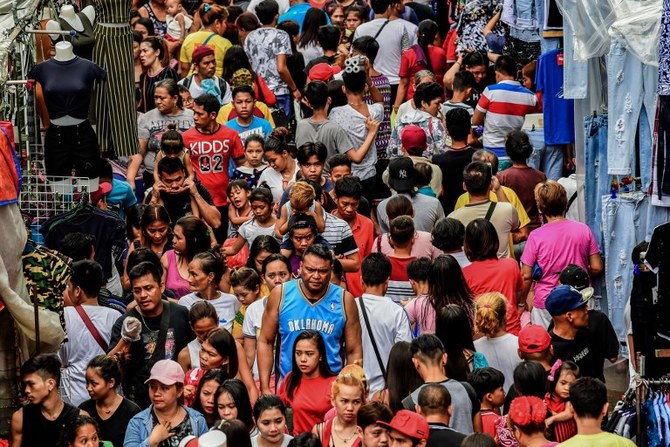
The Philippine economy has historically been driven by private consumption, mostly funded by the remittances of over 10 million overseas Filipino workers. (AFP)
Updated 01 April 2019
Follow

World Bank cuts growth outlook for the Philippines, but remains positive

  • The new estimates were lower than previous forecasts of 6.5 percent growth in 2019 and 6.6 percent in 2020 released in January this year
  • The Philippine economy has historically been driven by private consumption

DUBAI: The World Bank has downgraded on Monday its growth outlook for the Philippines this year and 2019, but remained positive despite internal and external factors that could affect economic expansion.

“Amidst lingering global and local uncertainties, the Philippine economy is poised to grow at 6.4 percent in 2019 and 6.5 percent in 2020 and 2021” the World Bank’s Philippines Economic Update said.

The new estimates were lower than previous forecasts of 6.5 percent growth in 2019 and 6.6 percent in 2020 released in January this year, according to the Bank, “owing to several factors including the delay in the 2019 budget approval and the slowing down of global trade that can lead to weaker demand for Philippine exports.”

“The country’s growth outlook remains positive,” said World Bank Country Director for Brunei, Malaysia, Philippines and Thailand Mara K. Warwick. “Higher private consumption due to lower inflation, steady growth of remittances, and election spending will fuel growth this year. Growth in public investment will be tempered in the first half of 2019 but is expected to recover in the second half of the year.”

The Philippine economy has historically been driven by private consumption, mostly funded by the remittances of over 10 million overseas Filipino workers, with households contributing more than two-thirds of aggregate expenditures.

High inflation last year however temper consumption growth to 5.6 percent, from 5.9 percent a year earlier. It is expected to rebound in 2019 on lower inflation and continued job generation.

The World Bank report flagged several internal risks that could affect the Philippines’ overall growth prospects, including the delay in the approval of the 2019 budget and a looming drought.

A reenacted budget limits the government’s ability to implement new programs and projects, thus affecting public investment. The El Niño weather phenomenon meanwhile could cause several months of dry spell and reduce farm output, and thus result into higher food prices.

Among the external factors, the Bank raised concerns about the potential escalation of trade tensions between the US and China, a weak demand for the country’s exports and a strengthening in the US dollar.

“In the short term, key priorities for sustaining the Philippines’ rapid and more inclusive growth include prudently managing fiscal and current account balances and preserving consumer and business confidence,” said World Bank Senior Economist Rong Qian. “As government ramps up spending to implement its inclusive growth agenda, it would need complementary reforms to increase revenue and ensure that the country’s finances are sound and sustainable.”


European gas prices soar almost 50% as Iran conflict halts Qatar LNG output

Updated 02 March 2026
Follow

European gas prices soar almost 50% as Iran conflict halts Qatar LNG output

  • Analysts warn prolonged disruption could push prices higher
  • Some shipments of oil, LNG through Strait of Hormuz suspended
  • Benchmark Asian LNG price up almost 39 percent

LONDON: ​Benchmark Dutch and British wholesale gas prices soared by almost 50 percent on Monday, after major liquefied natural gas exporter Qatar Energy said it had halted production due to attacks in the Middle East.

Qatar, soon to cement its role as the world’s second largest LNG exporter after the US, plays a major role in balancing both Asian and European markets’ demand of LNG.

Most tanker owners, oil majors and ‌trading houses ‌have suspended crude oil, fuel and liquefied natural ​gas shipments ‌via ⁠the ​Strait of ⁠Hormuz, trade sources said, after Tehran warned ships against moving through the waterway.

Europe has increased imports of LNG over the past few years as it seeks to phase out Russian gas following Russia’s invasion of Ukraine.

Around 20 percent of the world’s LNG transits through the Strait of Hormuz and a prolonged suspension or full closure would increase global competition for other ⁠sources of the gas, driving up prices internationally.

“Disruptions to ‌LNG flows would reignite competition between ‌Asia and Europe for available cargoes,” said ​Massimo Di Odoardo, vice president, gas ‌and LNG research at Wood Mackenzie.

The Dutch front-month contract at the ‌TTF hub, seen as a benchmark price for Europe, was up €14.56 at €46.52 per megawatt hour, or around $15.92/mmBtu, by 12:55 p.m. GMT, ICE data showed.

Prices were already some 25 percent higher earlier in the day but extended gains ‌after QatarEnergy’s production halt.

Benchmark Asian LNG prices jumped almost 39 percent on Monday morning with the S&P Global ⁠Energy Japan-Korea-Marker, widely used ⁠as an Asian LNG benchmark, at $15.068 per million British thermal units, Platts data showed.

“If LNG/gas markets start to price in an extended period of losses to Qatari LNG supply, TTF could potentially spike to 80-100 euros/MWh ($28-35/mmBtu),” Warren Patterson, head of commodities strategy at ING, said. The British April contract was up 40.83 pence at 119.40 pence per therm, ICE data showed.

Europe is also relying on LNG imports to help fill its gas storage sites which have been depleted over the winter and are currently around 30 percent full, the latest data from Gas Infrastructure ​Europe showed. In the European carbon ​market, the benchmark contract was down €1.10 at €69.17 a tonne