WASHINGTON: Democrats intensified their demands for the Robert Mueller’s full report Thursday after learning the special counsel’s findings from his Trump-Russia investigation run to more than 300 pages, while President Donald Trump boasted of total exoneration based on a four-page summary by his attorney general.
House Judiciary Chairman Jerrold Nadler was told by Attorney General William Barr that there’s no intention of giving the confidential report to Congress immediately as he redacts grand jury testimony and other elements.
Democrats say they may subpoena the report if it’s not forthcoming by their Tuesday deadline, which Barr has said will not be met.
Through the day, tempers were rising on Capitol Hill.
Shaking her fist for emphasis, House Speaker Nancy Pelosi said Barr’s summary, which cleared Trump of campaign collusion with Russia and criminal obstruction of Mueller’s federal probe, was “condescending” and “arrogant.”
“Mr. Attorney General,” she said, “show us the report and we’ll come to our own conclusions.” She asked what Trump and the Republicans were afraid of and mocked them as “scaredy-cats.”
Trump himself headed to Grand Rapids, Michigan, for a campaign rally where he was sure to lambaste the Democrats again for the investigation he has repeatedly dismissed as a “witch hunt.”
As he left the White House, Trump said the summary had “beautiful conclusions.” He said hadn’t yet seen Mueller’s report.
The length of Mueller’s still-confidential report makes clear that there are substantially more details that he and his team have documented in their investigation than Barr disclosed to Congress and the public. The volume of pages was described Thursday by a Justice Department official and another person familiar with the document.
The Justice Department official said Barr discussed the length of the report during a phone call Wednesday with Nadler, who would only indicate it was less than 1,000 pages.
Both the department official and the other person spoke on condition of anonymity to discuss the document.
Barr would not commit to providing the full report with its underlying evidence, according to a House Democratic aide granted anonymity Thursday to brief reporters.
The attorney general has been going through the report amid Democratic concerns that what has been made public so far was tilted in Trump’s favor. It’s unclear whether whatever Barr might release next will be Mueller’s own words or another summary. Nadler offered to join Barr to seek a judge’s approval to unseal grand jury testimony, the aide said.
Barr has said he’ll provide Congress with at least a partial version in April and told Nadler he would agree to testify before his committee.
As that battle brews, House Democrats barreled ahead with their own investigation of the Trump administration, and Trump resumed his attack on Rep. Adam Schiff, D-Calif., just as the chairman of the intelligence committee was about to gavel his panel into session.
“Congressman Adam Schiff, who spent two years knowingly and unlawfully lying and leaking, should be forced to resign from Congress!” Trump tweeted early Thursday.
Republicans picking up on Trump’s complaints formalized their demand that Schiff resign as chairman of the intelligence panel over his comments that there was significant evidence the president and his associates conspired with Russia.
“We have no faith in your ability to discharge your responsibilities” in line with the Constitution, the Republicans wrote to Schiff in a missive they read aloud at the hearing.
Republicans pointed to Barr’s synopsis, released Sunday, that said Mueller’s probe didn’t find that Trump’s campaign “conspired or coordinated” with the Russian government to influence the 2016 presidential election.
Schiff stood by his remarks, listing the meetings that people in Trump’s circle had with Russians. He noted Trump’s pursuit of a deal to build a Trump Tower in Moscow.
“There is a different word for that than collusion, and it’s called compromise,” Schiff said, as he opened the session. The hearing was called to provide an overview on how Russia in the past has blackmailed Americans.
Since Barr’s findings were released, Schiff this week has repeated his assertion that evidence of collusion is in “plain sight.” He says Mueller’s failure to find a criminal conspiracy with Russia does not absolve the Trump campaign.
Pelosi stood by Schiff, saying she was proud of him and taunting Republicans — including Trump — for fearing the chairman, whom she called a “patriotic leader.”
“What is the president afraid of, Is he afraid of the truth?” she said. “They’re just scaredy-cats.”
Democrats complain that Barr overstepped by making the determination, with Deputy Attorney General Rod Rosenstein, that Trump did not obstruct the investigation.
While Barr’s summary Sunday said Mueller did not find that the Trump campaign “conspired or coordinated” with the Russian government to influence the 2016 presidential election, it also said Mueller reached no conclusion on whether Trump obstructed the federal investigation, instead setting out “evidence on both sides” of the question.
“I would hope the attorney general would not be acting as a political operative for the president,” said Rep. Jamie Raskin, D-Md., a member of the Judiciary Committee. “The Department of Justice should not be involved in a cover-up of what’s actually in the report.”
Rep. Elijah Cummings, D-Md., chairman of the House Oversight Committee, said Wednesday he was disappointed Barr would take weeks, not days, to release the report.
“The president has now an opportunity for weeks, it sounds like, to do these victory laps,” said Cummings, noting that Trump’s lawyer, Michael Cohen, is among those headed to jail as a result of the probe. “Cohen goes to jail, the president runs a victory lap.”
Barr told the chairman of the Senate Judiciary Committee, Sen. Lindsey Graham, R-S.C., that he’s combing through Mueller’s report and removing classified, grand jury and other information in hopes of releasing the rest to Congress.
Trump has said he’s fine with releasing the findings. “The president said, ‘Just let it go,’ and that’s what’s going to happen,” Graham said.

US Democrats mock ‘scaredy-cat’ Republicans, demand Mueller’s full 300 pages
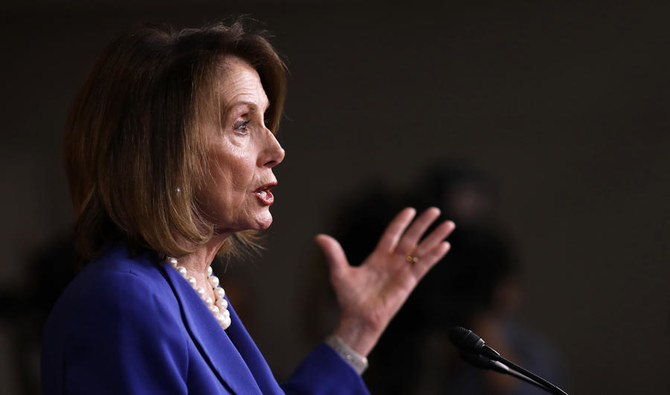
- Attorney General William Barr's summary on Mueller's probe cleared President Trump of campaign collusion with Russia
- Democrats say they may subpoena the report if it’s not forthcoming by their Tuesday deadline, which Barr has said will not be met
Zuckerberg says Meta no longer designs apps to maximize screentime
- Meta Platforms CEO faces questioned at a landmark trial over youth social media addiction
- It was the billionaire Facebook founder’s first time testifying in court on Instagram’s effect on the mental health of young users
LOS ANGELES: Meta Platforms CEO Mark Zuckerberg pushed back in court on Wednesday against a lawyer’s suggestion that he had misled Congress about the design of its social media platforms, as a landmark trial over youth social media addiction continues.
Zuckerberg was questioned on his statements to Congress in 2024, at a hearing where he said the company did not give its teams the goal of maximizing time spent on its apps.
Mark Lanier, a lawyer for a woman who accuses Meta of harming her mental health when she was a child, showed jurors emails from 2014 and 2015 in which Zuckerberg laid out aims to increase
time spent on the app by double-digit percentage points. Zuckerberg said that while Meta previously had goals related to the amount of time users spent on the app, it has since changed its approach.
“If you are trying to say my testimony was not accurate, I strongly disagree with that,” Zuckerberg said.
The appearance was the billionaire Facebook founder’s first time testifying in court on Instagram’s effect on the mental health of young users.
While Zuckerberg has previously testified on the subject before Congress, the stakes are higher at the jury trial in Los Angeles, California. Meta may have to pay damages if it loses the case, and the verdict could erode Big Tech’s longstanding legal defense against claims of user harm.
The lawsuit and others like it are part of a global backlash against social media platforms over children’s mental health.
Australia has prohibited access to social media platforms for users under age 16, and other countries including Spain are considering similar curbs. In the US, Florida has prohibited companies from allowing users under age 14. Tech industry trade groups are challenging the law in court.
The case involves a California woman who started using Meta’s Instagram and Google’s YouTube as a child. She alleges the companies sought to profit by hooking kids on their services despite knowing social media could harm their mental health. She alleges the apps fueled her depression and suicidal thoughts and is seeking to hold the companies liable.
Meta and Google have denied the allegations, and pointed to their work to add features that keep users safe. Meta has often pointed to a National Academies of Sciences finding that research does not show social media changes kids’ mental health.
The lawsuit serves as a test case for similar claims in a larger group of cases against Meta, Alphabet’s Google, Snap and TikTok. Families, school districts and states have filed thousands of lawsuits in the US accusing the companies of fueling a youth mental health crisis. Over the years, investigative reporting has unearthed internal Meta documents showing the company was aware of potential harm.
Meta researchers found that teens who report that Instagram regularly made them feel bad about their bodies saw significantly more “eating disorder adjacent content” than those who did not, Reuters reported in October.
Adam Mosseri, head of Instagram, testified last week that he was unaware of a recent Meta study showing no link between parental supervision and teens’ attentiveness to their own social media use. Teens with difficult life circumstances more often said they used Instagram habitually or unintentionally, according to the document shown at trial.
Meta’s lawyer told jurors at the trial that the woman’s health records show her issues stem from a troubled childhood, and that social media was a creative outlet for her.
Zuckerberg was questioned on his statements to Congress in 2024, at a hearing where he said the company did not give its teams the goal of maximizing time spent on its apps.
Mark Lanier, a lawyer for a woman who accuses Meta of harming her mental health when she was a child, showed jurors emails from 2014 and 2015 in which Zuckerberg laid out aims to increase
time spent on the app by double-digit percentage points. Zuckerberg said that while Meta previously had goals related to the amount of time users spent on the app, it has since changed its approach.
“If you are trying to say my testimony was not accurate, I strongly disagree with that,” Zuckerberg said.
The appearance was the billionaire Facebook founder’s first time testifying in court on Instagram’s effect on the mental health of young users.
While Zuckerberg has previously testified on the subject before Congress, the stakes are higher at the jury trial in Los Angeles, California. Meta may have to pay damages if it loses the case, and the verdict could erode Big Tech’s longstanding legal defense against claims of user harm.
The lawsuit and others like it are part of a global backlash against social media platforms over children’s mental health.
Australia has prohibited access to social media platforms for users under age 16, and other countries including Spain are considering similar curbs. In the US, Florida has prohibited companies from allowing users under age 14. Tech industry trade groups are challenging the law in court.
The case involves a California woman who started using Meta’s Instagram and Google’s YouTube as a child. She alleges the companies sought to profit by hooking kids on their services despite knowing social media could harm their mental health. She alleges the apps fueled her depression and suicidal thoughts and is seeking to hold the companies liable.
Meta and Google have denied the allegations, and pointed to their work to add features that keep users safe. Meta has often pointed to a National Academies of Sciences finding that research does not show social media changes kids’ mental health.
The lawsuit serves as a test case for similar claims in a larger group of cases against Meta, Alphabet’s Google, Snap and TikTok. Families, school districts and states have filed thousands of lawsuits in the US accusing the companies of fueling a youth mental health crisis. Over the years, investigative reporting has unearthed internal Meta documents showing the company was aware of potential harm.
Meta researchers found that teens who report that Instagram regularly made them feel bad about their bodies saw significantly more “eating disorder adjacent content” than those who did not, Reuters reported in October.
Adam Mosseri, head of Instagram, testified last week that he was unaware of a recent Meta study showing no link between parental supervision and teens’ attentiveness to their own social media use. Teens with difficult life circumstances more often said they used Instagram habitually or unintentionally, according to the document shown at trial.
Meta’s lawyer told jurors at the trial that the woman’s health records show her issues stem from a troubled childhood, and that social media was a creative outlet for her.
© 2026 SAUDI RESEARCH & PUBLISHING COMPANY, All Rights Reserved And subject to Terms of Use Agreement.



