ISLAMABAD: Pakistan issued a call against military threats in outer space on Wednesday, hours after India said it had shot down one of its own satellites in a demonstration of its growing power in space.
“Space is the common heritage of mankind and every nation has the responsibility to avoid actions which can lead to the militarization of this arena,” Pakistan’s foreign ministry said in a statement.
“We hope that countries which have in the past strongly condemned demonstration of similar capabilities by others will be prepared to work toward developing international instruments to prevent military threats relating to outer space,” it said, without mentioning India by name.
“Boasting of such capabilities is reminiscent of Don Quixote’s tilting against windmills,” it said, in a reference to the delusional hero of the 17th-century Spanish novel by Miguel de Cervantes.


Pakistan urges no militarization of space after India downs satellite
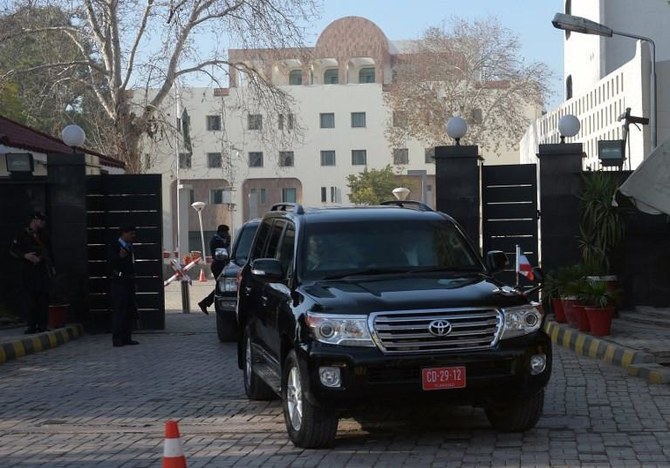
Pakistan urges no militarization of space after India downs satellite

- India successfully targeted a live satellite on a low earth orbit with an anti-satellite weapon
- Pakistan denounces the move by calling space a ‘common heritage of mankind’


‘Keep dreaming’: NATO chief says Europe can’t defend itself without US
BRUSSELS: NATO chief Mark Rutte warned Monday Europe cannot defend itself without the United States, in the face of calls for the continent to stand on its own feet after tensions over Greenland.
US President Donald Trump roiled the transatlantic alliance by threatening to seize the autonomous Danish territory — before backing off after talks with Rutte last week.
The diplomatic crisis sparked gave fresh momentum to those advocating for Europe to take a tougher line against Trump and break its military reliance on Washington.
“If anyone thinks here again, that the European Union, or Europe as a whole, can defend itself without the US — keep on dreaming. You can’t,” Rutte told lawmakers at the European Parliament.
He said that EU countries would have to double defense spending from the five percent NATO target agreed last year to 10 percent and spend “billions and billions” on building nuclear arms.
“You would lose the ultimate guarantor of our freedom, which is the US nuclear umbrella,” Rutte said. “So hey, good luck.”
The former Dutch prime minister insisted that US commitment to NATO’s Article Five mutual defense clause remained “total,” but that the United States expected European countries to keep spending more on their militaries.
“They need a secure Euro-Atlantic, and they also need a secure Europe. So the US has every interest in NATO,” he said.
The NATO head reiterated his repeated praise for Trump for pressuring reluctant European allies to step up defense spending.
He also appeared to knock back a suggestion floated by the EU’s defense commissioner Andrius Kubilius earlier this month for a possible European defense force that could replace US troops on the continent.
“It will make things more complicated. I think Putin will love it. So think again,” Rutte said.
On Greenland, Rutte said he had agreed with Trump that NATO would “take more responsibility for the defense of the Arctic,” but it was up to Greenlandic and Danish authorities to negotiate over US presence on the island.
“I have no mandate to negotiate on behalf of Denmark, so I didn’t, and I will not,” he said.
Rutte reiterated that he had stressed to Trump the cost paid by NATO allies in Afghanistan after the US leader caused outrage by playing down their contribution.
“For every two American soldiers who paid the ultimate price, one soldier of an ally or a partner, a NATO ally or a partner country, did not return home,” he said.
“I know that America greatly appreciates all the efforts.”


