DUBAI: Dubai’s government on Sunday forcefully denied a claim by R&B singer R. Kelly that the artist had planned concerts in the country after he had sought permission from an Illinois judge to travel here despite facing sexual-abuse charges.
In a rare statement, the government’s Dubai Media Office also denied claims by his lawyer in court that Kelly had plans to meet the country’s ruling Al Maktoum family.
“Authorities in Dubai have not received any request for a performance by singer R. Kelly nor are there any venues that have been booked,” the statement said.
It added Kelly “has not been invited by the Dubai royal family for a performance.”
In an email to The Associated Press, Kelly’s lawyer Steven A. Greenberg responded saying: “Mr. Kelly had a signed contract with a legitimate promoter, and any information that was included in the motion to travel was from that contract. We did not say he was invited by the royal family, but the contract did provide that he would make himself available to meet with them.”
Kelly was charged on Feb. 22 with 10 counts of aggravated sexual abuse for allegedly assaulting three girls and one adult woman, coming after the release of a documentary “Surviving R. Kelly.” He has denied ever abusing anyone.
In a court filing last week, Greenberg had said the singer needed to raise money as “he has struggled of late to pay his child support and other child related expenses.”
“Before he was arrested Mr. Kelly had signed a contract to perform between 3-5 shows in Dubai, UAE, in April 2019,” the court filing read. “He requests permission to travel to Dubai for the shows. While there he is supposed to meet with the royal family.”
The filing did not elaborate on where Kelly was allegedly supposed to perform. There was no immediately publicized event for which Kelly was known to be a performer, nor did anyone in the entertainment industry hear about one.
However, Dubai’s luxury nightclubs often host hip hop and other artists for days at a time to perform and be seen among the millionaires of this skyscraper-studded city that is home to the world’s tallest building. Rich families also pay for celebrities at their parties.
The UAE’s seven emirates are overseen by hereditary rulers who hold absolute power. Dubai’s ruler is Sheikh Mohammed bin Rashid Al Maktoum, 69. His 36-year-old son, Sheikh Hamdan bin Mohammed Al Maktoum, serves as Dubai’s crown prince and is next in line to be ruler.
Dubai, home to the world’s largest manmade archipelago the Palm Jumeriah and an indoor ski slope in its desert climes, has long drawn celebrities craving both luxury and seclusion. Will Smith is a repeated visitor. Lindsay Lohan lives off and on in the sheikhdom. David Beckham, Shah Rukh Khan and others are believed to own property in Dubai.
Yet it also has drawn world leaders seeking to escape their own countries. Pakistani Gen. Pervez Musharraf, facing criminal charges back home, fled to Dubai in 2016. Former Thai Prime Minister Yingluck Shinawatra came to Dubai to avoid a criminal conviction in 2017, following in the footsteps of her brother, the ousted former Prime Minister Thaksin Shinawatra.
The US does not have an extradition treaty with the UAE. However, the US stations some 5,000 troops in the country and Dubai’s Jebel Ali port is the biggest port of call for the US Navy outside of America.


![]()

Dubai denies there were plans for R. Kelly concert
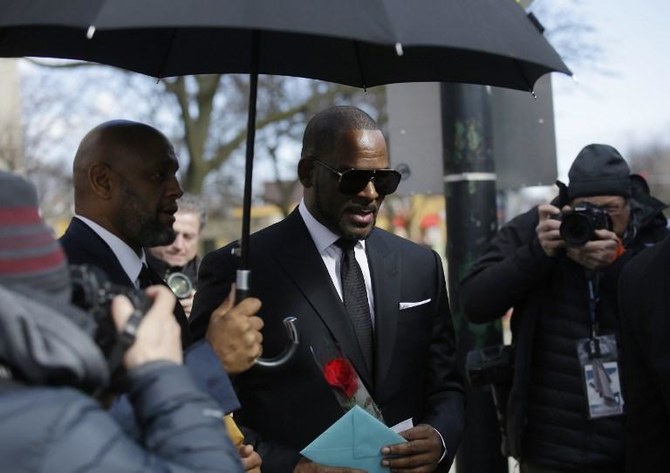
Dubai denies there were plans for R. Kelly concert
- Dubai Media office said no venues were booked for R. Kelly
- The singer was charged with 10 counts of aggravated sexual abuse in February


Latest updates


Recommended


© 2026 SAUDI RESEARCH & PUBLISHING COMPANY, All Rights Reserved And subject to Terms of Use Agreement.