

Pakistani rupee at all-time low against dollar due to excessive buying of Saudi Riyal

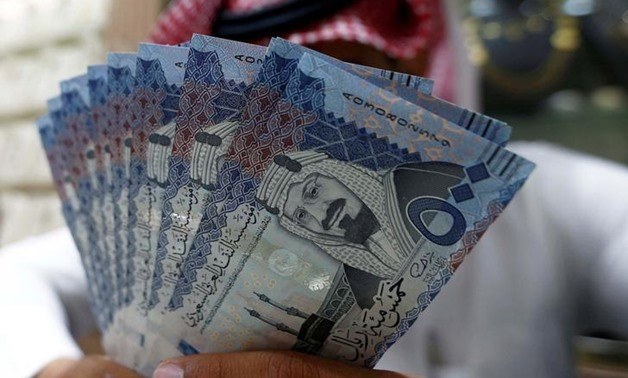
Many people in Pakistan are buying Saudi Riyals while preparing for the Hajj season since they fear further devaluation of Pakistani rupee, says President of the Pakistan Forex Association Malik Bostan. (Reuters)
Updated 12 April 2019
Follow

Pakistani rupee at all-time low against dollar due to excessive buying of Saudi Riyal

  • Exchange rate fluctuations not linked to ongoing dialogue with IMF, says finance ministry
  • Forex traders urge the government to maintain exchange rate in interbank market to stabilize the situation

ISLAMABAD: Pakistan’s Ministry of Finance said on Saturday that it was focused on strengthening the exchange rate regime after the rupee hit an all-time low of 140.36 against the US dollar on Friday in interbank trade, mainly pushed by the excessive buying of the Saudi Riyal for the upcoming Hajj season.

Malik Bostan, President Pakistan Forex Association, told Arab News that individuals who intended to go to Saudi Arabia for Umrah and Hajj in the coming months were excessively buying the Saudi Riyal due to “rumors of further depreciation of the Pakistani rupee.”

“We used to have five to seven million Riyals in surplus per day in market that were exported to the international market to import dollars,” he said. “However, now the Saudi Riyal is not in surplus due to its increasing demand in local market, and this gap has led to a shortage of US dollars.”

Bostan urged the government to maintain the exchange rate in the interbank market to “quell rumors of further devaluation of the Pakistani rupee in the coming days.”

The country’s currency exchange rate market remains highly volatile due to speculations of further depreciation of the local currency before Islamabad signs a bailout deal with the International Monetary Fund (IMF) next month.

The rupee on Friday plunged to 140.50 against the US dollar at one point, but it closed at 140.36.  The dollar gained one rupee in the interbank and 1.30 rupees in the open market during the week.

The Finance Ministry’s spokesman, Dr. Khaqan Hassan Najeeb, has denied any link between the exchange rate fluctuations and Pakistan’s ongoing negotiations with the IMF.

“The discussions with international partners do not entail any specific target of the exchange rate,” he said in a statement on Saturday.

“The government’s focus is on further strengthening the exchange rate regime, aligning it and keeping it consistent with the evolving macroeconomic fundamentals of the economy,” he added.

On March 15 this year, Pakistan received inflow of $1 bn from UAE as placement of funds. After taking into account outflows relating to external debt and other official payments, the total foreign exchange reserves held by central bank of the country increased by $716 million during the week to  $8.8 billion while reserves held by the commercial banks stood at $6.9 billion, increasing the total reserves held by the country to $15.709 billion by the end of the last week. 

China is also expected to release $2.1 billion in commercial loan by Monday, an injection that will further push up foreign currency reserves and help stabilize the exchange rate.


Pakistan IT minister in Kuwait to attend digital cooperation body meeting on AI risks

Updated 7 sec ago
Follow

Pakistan IT minister in Kuwait to attend digital cooperation body meeting on AI risks

  • Shaza Fatima Khawaja to attend event themed ‘Inclusive Prosperity in the Age of AI’
  • Pakistan approved National AI Policy last year, launched first locally hosted AI cloud

KARACHI: Pakistan’s Information Technology (IT) Minister Shaza Fatima Khawaja on Wednesday arrived in Kuwait on a two-day visit to hold discussions on artificial intelligence (AI) and its risks at the fifth Digital Cooperation Organization General Assembly (DCOGA), her office said.

The annual gathering brings together representatives of various states and international organizations to discuss the digital economy and the challenges associated with its growth. This year’s theme is “Inclusive Prosperity in the Age of AI.”

Pakistan has been actively developing its AI landscape, marked by the approval of the National AI Policy in July last year and the subsequent launch of its first locally hosted AI cloud in a bid to integrate AI for economic growth.

“The federal minister will participate in the General Assembly of the Digital Cooperation Organization (DCO) and hold meetings with representatives of member states,” the IT ministry said in a statement on Wednesday.

“Discussions will be held on artificial intelligence and its risks, with meetings scheduled with global policymakers.”

Khawaja will hold high-level meetings with global leaders at the event and participate in the DCO thematic ministerial roundtable comprising ministers from various countries, it added.

The development comes as Pakistan seeks to position itself as a credible participant in the global AI economy to harness AI for productivity, skills development and innovation while managing regulatory risks.

Pakistan has mainly been engaging with Gulf countries on AI. In October last year, Pakistan’s Prime Minister Shehbaz Sharif announced that Saudi Arabia has offered free training in IT and AI for Pakistani youth. Last November, Pakistan and the United Arab Emirates agreed to deepen cooperation in AI, digital governance and data innovation.

Pakistan is also hosting a week-long national AI initiative, “AI Indus Week 2026,” from Feb. 9-15 to promote the responsible use of technology and accelerate the adoption of AI across the public and private sectors.