Pakistan plans to boost space program with UAE collaboration

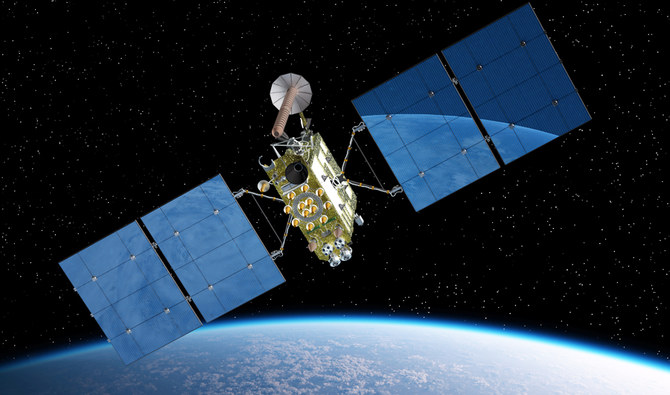
Pakistan is exploring options to collaborate with the United Arab Emirates for its nascent space program, a senior official said on Thursday. (Shutterstock)
Updated 21 March 2019
Follow

Pakistan plans to boost space program with UAE collaboration

  • Pakistan in talks with the UAE for help in “satellite manufacturing and relevant applications”
  • Signed last year an agreement with China to send its first mission into space by 2022

ISLAMABAD: Pakistan is exploring options to collaborate with the United Arab Emirates for its nascent space program, a senior official at Pakistan’s bureaucratic space agency said on Thursday, in joint ventures that could potentially boost the country’s socioeconomic development and national security.

Last year, Pakistan announced that it had signed an agreement with China to send the country’s first mission into space by 2022. 

“The UAE is one of our best friends in the Muslim world and collaboration in space-related activities will help both the Emirates and Pakistan,” Hassam Muhammad Khan, spokesman for the Pakistan Space and Upper Atmosphere Research Commission (Suparco), told Arab News.

He said that space technology required “huge funds and special skills” and thus Pakistan was in talks with the UAE “in satellite manufacturing and relevant applications.” 

Khan said Pakistan was a strong believer in the peaceful use of outer space and wanted to use technology only for socioeconomic development and national security. 

“The UAE has its own strengths in space technology and we want to benefit from them,” he added.

Pakistan currently has four remote-sensing and communications satellites in total – two ground stations and two in orbit. In July last year, Pakistan launched two satellites with the help of China, enhancing its ability to predict and ascertain levels of precipitation, and runoff water, for a given area in the country.

Dr. Qamar ul Islam, the head of the Department of Space Science at the Institute of Space Technology, Islamabad, said Pakistan lacked satellite launch facilities and capabilities and thus had “to seek assistance of friendly countries.”

“The real issues Pakistan faces at the moment are lack of funding, but our collaboration with the UAE in the space sector can really prove beneficial for both countries,” he told Arab News. “It has become crucial for Pakistan to have a good presence in outer space to protect its sovereignty and ensure security.”

Pakistan participated in this year’s Global Space Congress held in Abu Dhabi on March 19 for the first time and shared the details about their satellite related projects with the audience. SUPARCO was representing Pakistan in this event in UAE where the secretary of SUPARCO Dr. Arif Ali said that the commission was in initial level talks with the UAE for potential collaboration in its space program.

Pakistan forecasts inflation to remain in moderate 5.5-6.5 percent range

Updated 10 sec ago
Follow

Pakistan forecasts inflation to remain in moderate 5.5-6.5 percent range

  • Finance Division report says robust remittance inflows, steady performance of IT, service sectors to cushion external pressures
  • Consumer inflation in Pakistan has significantly reduced over the years when it surged to a record high of 38 percent in May 2023

ISLAMABAD: Inflation is expected to remain in the moderate range of 5.5 to 6.5 percent for December, the Finance Division said in its Monthly Economic Outlook report on Wednesday. 

Pakistan reported inflation at 6.1 percent on a year-on-year basis in November as compared to 6.2 percent in October. Pakistan’s inflation rate rose to a record high of 38 percent in May 2023 on account of surging food and fuel costs as Islamabad scrapped subsidies as part of a financial deal agreed with the International Monetary Fund (IMF). 

“Inflation is projected to remain moderate, in the range of 5.5-6.5 percent in December, primarily reflecting base effect,” the report said. 

The Finance Division’s report said Pakistan’s economic outlook remains “positive,” driven by sustained growth in industrial activity due to continued momentum in textiles, automobiles, cement and food processing sectors. 

“Robust remittance inflows and steady performance in IT and services exports are likely to cushion external pressures,” the report said. 

The report said Pakistan’s current account recorded a surplus of $100 million while it posted a deficit of $812 million during the July-November period.

It said remittances increased by 9.3 percent to $16.1 billion in November, led by inflows from Saudi Arabia (24.2 percent) and the UAE (20.8 percent), while the net foreign direct investment inflows were recorded at $927.4 million during the same July to November period. 

It said Pakistan’s fiscal consolidation is expected to continue supporting macroeconomic stability, with government efforts in expenditure management, enhanced tax collection and structural reforms contributing to sustainable growth. 

“Overall, Pakistan’s economy is projected to maintain its positive momentum in the coming months, driven by industrial growth, improved governance, digitalization, and prudent macroeconomic management,” the report said.