SINGAPORE: At least two tankers have ferried Iranian fuel oil to Asia in recent months despite U.S. sanctions against such shipments, according to a Reuters analysis of ship-tracking data and port information, as well as interviews with brokers and traders.
The shipments were loaded onto tankers with documents showing the fuel oil was Iraqi. But three Iraqi oil industry sources and Prakash Vakkayil, a manager at UAE shipping services firm Yacht International Co, said the papers were forged.
The people said they did not know who forged the documents, nor when.
The transfers show at least some Iranian fuel oil is being traded despite the reimposition of sanctions in November 2018, as Washington seeks to pressure Iran into abandoning nuclear and missile programmes. They also show how some traders have revived tactics that were used to skirt sanctions against Iran between 2012 and 2016.
"Some buyers...will want Iranian oil regardless of U.S. strategic objectives to deny Tehran oil revenue, and Iran will find a way to keep some volumes flowing," said Peter Kiernan, lead energy analyst at the Economist Intelligence Unit.
While the United States has granted eight countries temporary waivers allowing limited purchases of Iranian crude oil, these exemptions do not cover products refined from crude, including fuel oil, mainly used to power the engines of large ships.
Documents forwarded to Reuters by ship owners say a 300,000 tonne-supertanker, the Grace 1, took on fuel oil at Basra, Iraq, between Dec. 10 and 12, 2018. But Basra port loading schedules reviewed by Reuters do not list the Grace 1 as being in port during those dates.
One Iraqi industry source with knowledge of the port's operations confirmed there were no records of the Grace 1 at Basra during this period.
Reuters examined data from four ship-tracking information providers - Refinitiv, Kpler, IHS Markit and Vessel Finder - to locate the Grace 1 during that time. All four showed that the Grace 1 had its Automatic Identification System (AIS), or transponder, switched off between Nov. 30 and Dec. 14, 2018, meaning its location could not be tracked.
The Grace 1 then re-appeared in waters near Iran's port of Bandar Assaluyeh, fully loaded, data showed. The cargo was transferred onto two smaller ships in UAE waters in January, from where one ship delivered fuel oil to Singapore in February.
Shipping documents showed about 284,000 tonnes of fuel oil were transferred in the cargoes tracked by Reuters, worth about $120 million at current prices.
Officials at Iran's oil ministry declined to comment.
Singapore customs did not respond to requests for comment.
The Grace 1, a Panamanian-flagged tanker, is managed by Singapore-based shipping services firm IShips Management Pte Ltd, according to data. IShips did not respond to several requests for comment via email or phone.
A Reuters reporter visited the office listed on IShips' website but was told by the current tenant that the company had moved out two years earlier.
The ship-tracking data analysed by Reuters showed the Grace 1 emerged from the period when it did not transmit its location almost 500 kilometres south of Iraq. It was close to the Iranian coast with its draught - how deep a vessel sits in water - near maximum, indicating its cargo tanks were filled.
The Grace 1 transferred its cargo to two smaller tankers between Jan. 16 and 22 in waters offshore Fujairah in the UAE, data showed.
One of those vessels, the 130,000 tonne-capacity Kriti Island, offloaded fuel oil into a storage terminal in Singapore around Feb. 5 to 7. Reuters was unable to determine who purchased the fuel oil for storage in Singapore.
The Kriti Island is managed by Greece's Avin International SA.
The tanker was chartered by Singapore-based Blutide Pte for its voyage to Singapore, Avin International's Chief Executive Officer George Mylonas told Reuters. Mylonas confirmed the Kriti Island took on fuel oil from the Grace 1.
There is no indication that Avin International knowingly shipped Iranian fuel oil. Mylonas said his firm had conducted all necessary due diligence to ensure the cargo's legitimate origin.
Mylonas emailed Reuters a copy of a Certificate of Origin (COO) that he said was provided by the charterers – referring to Blutide - showing the Grace 1 loaded fuel oil at Basra on Dec. 10 and 12, 2018.
"The Certificate of Origin and all the information obtained did not reveal any connection with Iran, let alone that the cargo of fuel oil originated" from there, Mylonas wrote.
Mylonas said the Grace 1's owners, managers, shippers, receivers and charterers were screened by Avin International. "There were not circumstances that would make the COO of dubious origin," he said via email.
He said he had been told by the charterers that the Grace 1 only stopped in waters off Iran in late December and early January for "repairs of damaged diesel generators" before sailing to Fujairah.
The document provided by Mylonas says Iraq's state oil marketer SOMO certified the Grace 1 in December loaded a total of 284,261 tonnes of Iraqi fuel oil.
Reuters shared the document with a SOMO official in Iraq who said it was "faked" and "completely wrong". The official declined to be identified by name, citing the marketer's communications policy.
Two other Iraqi oil industry sources with direct knowledge of Basra port and oil industry operations also said the documentation was forged.
The two sources said the document bore the signature of a manager who was not working at Basra port on the stated dates. The document also bears contradictory dates: It indicates a loading period of Dec. 10 and 12, 2018 but a sign-off date for the transaction of Jan. 12, 2018.
Data showed the second tanker into which the Grace 1 transferred cargo was the Marshal Z, also a 130,000-tonne vessel.
It was bound for Singapore in the first half of February but changed course on Feb. 15, parking off western Malaysia. Reuters was unable to determine who owns the Marshal Z, nor who chartered it.
Around Feb. 25, the Marshal Z transferred its cargo to another vessel called the Libya, owned and managed by Tripoli-based General National Maritime Transport Company (GNMTC).
A GNMTC spokesman said the Libya was chartered by Blutide, the same Singapore firm that chartered the Kriti Island.
Blutide registered as a company in Singapore on May 14, 2018. Its sole listed shareholder and only director, Singaporean Basheer Sayeed, said by telephone on Feb. 7 he was retired and not in a position to comment on the company's activity.
The Libya's owner GNMTC "was not aware, at any stage that the cargo is linked in any way to Iran," the company's spokesman said via email.
GNMTC provided Reuters with a copy of a COO that it said was issued by shipping services company Yacht International, based in Fujairah, showing the Marshal Z loaded Iraqi-origin fuel oil during a ship-to-ship transfer in UAE waters on Jan. 23.
However, Yacht International shipping manager Prakash Vakkayil said in an email his firm did not issue the certificate and "considers it to be forged".
The GNMTC spokesman did not respond to follow-up questions from Reuters.


![]()

Iran lays false trail to dodge US sanctions
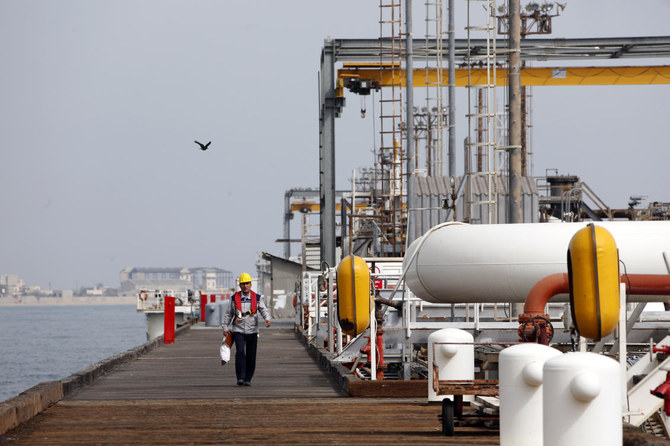
Iran lays false trail to dodge US sanctions
- Supertanker shipped fuel oil under forged Iraqi papers
- Ship not in Basra port during cited loading period


Latest updates


© 2026 SAUDI RESEARCH & PUBLISHING COMPANY, All Rights Reserved And subject to Terms of Use Agreement.