LONDON: Iran this week faced a media industry outcry over its alleged systematic targeting of BBC Persian Service journalists including the “sexual defamation” of female staff.
It follows a move by the European Parliament to back a resolution criticizing the treatment of BBC Persian service journalists by Iranian authorities.
Writing in The Guardian, veteran UK media commentator Roy Greenslade said that “too little attention has been paid to an insidious long-run campaign of persecution by the Iranian authorities against the staff of the BBC Persian service.”
“As they stand, the facts are shocking,” said Greenslade. “Unable to get their hands on BBC Persian’s London-based staff, Iran’s police intimidate their relatives inside Iran. They freeze their assets, which has the effect of preventing them buying and selling property. They arrest them arbitrarily, interrogating them for hours at a time and often detaining them for days in prison.”
Britain’s National Union of Journalists (NUJ) said that it would continue to campaign to stop the harassment of the BBC Persian journalists. “We are pleased the European Parliament and the UN Human Rights Council have supported our calls for Iran to stop targeting BBC journalists in London and their families in Iran,” Sarah Kavanagh, NUJ senior campaigns and communications officer, told Arab News.
“We will continue campaigning until the authorities stop the harassment and persecution.”
Press Gazette, the UK media industry trade publication, also reported on the story on Monday and quoted MEP Jude Kirton-Darling who drew attention to smear campaigns aimed at some female Persian Service staff who have had their faces superimposed on pornographic images. “I would particularly like to raise awareness about the sexualized defamation campaigns being waged against brave female journalists at BBC Persian and I would call on the EU to no longer be silent about this attack on European women, European journalists.
“We have a duty and a responsibility to defend free journalism.”
Last week the UN Special Rapporteur on the situation of human rights in Iran, Professor Javaid Rehman, presented his first report to the United Nations Human Rights Council.
He told the Council that he “deplores” the harassment of BBC Persian staff. He also raised concerns about attacks on BBC Persian journalists in Iranian state media, with fake and defamatory news being published to undermine their reputations.
The BBC took the unprecedented step of directly appealing to the UN in 2017, in what was the first time the broadcaster has ever engaged with the body about the treatment of its journalists.
BBC Persian presenter Rana Rahimpour told the council about her own experience and how her father was subjected to a travel ban to prevent him from visiting her after her first child was born.
International counsel for the BBC World Service, Caoilfhionn Gallagher QC and Jennifer Robinson, have filed a further complaint to the UN over the reprisals BBC Persian journalists have faced.
They said, “Reprisals against BBC Persian journalists and their families for engaging with the UN is not just an attack on freedom of expression, but an attack on the integrity of the UN system. Such reprisals must be condemned in the strongest possible terms.”
Simon Spanswick, CEO of Association for International Broadcasting, said his organization “deplores any and all attempts to interfere with the work” of legitimate media companies.
“The case of BBC Persian staff and their families is one of a growing number of cases where broadcasting organizations and those that work for them are being intimidated,” he said.
“The case has been raised by the BBC at the UN through a complaint — the first it has ever made to the UN. The UN Special Rapporteur on Iran has included the case in his report to the UN Human Rights Council. We look forward to seeing the response of the Iranian government on this case which is, in effect, a jurisprudence dragnet.”
Sherif Mansour, the Middle East and North Africa program coordinator at the New York-based Committee to Protect Journalists, said there was a “wider story” of intimidation of journalists by Tehran, especially dual-national Iranian media workers.
Many Iranian journalists had been “portrayed as tools of foreign intervention and included in conspiracy theories,” Mansour said.


![]()
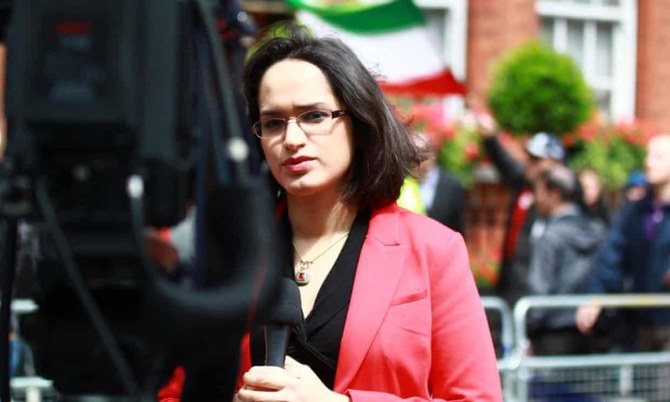
Iran BBC reprisals trigger media ouctry
Iran BBC reprisals trigger media ouctry
- Iran this week faced a media industry outcry over its alleged systematic targeting of BBC Persian Service
- Britain’s National Union of Journalists (NUJ) said that it would continue to campaign to stop the harassment of the BBC Persian journalists


Latest updates


Recommended


© 2026 SAUDI RESEARCH & PUBLISHING COMPANY, All Rights Reserved And subject to Terms of Use Agreement.