DHAKA: Rohingya refugees in Bangladesh are divided over an island that will become their new home, as government officials try to persuade them to relocate voluntarily.
Bhashan Char in the Bay of Bengal has been earmarked as the new home for Rohingya refugees who fled Myanmar following a brutal military crackdown in 2017.
The island can accommodate around 100,000 people but activists, climate change experts and rights groups have raised concerns about the plan.
But the Bangladesh government has launched an awareness campaign about life away from the teeming refugee camps.
“We are talking to them about the merits and demerits of the present camp life and the new island life. Many of them realize that further expansion of this camp is not at all possible in this small piece of land in Cox’s Bazar,” one official told Arab News requesting anonymity.
“We have briefed the Rohingyas about the livelihood offerings on the island. For instance, the Rohingyas will get the opportunity for agricultural farming, poultry and cattle rearing, fishing.
“This scope for livelihoods attracted many Rohingyas to relocation. On the island they will have a permanent structured house, which is better than the present plastic sheds and tarpaulins. These better facilities also encouraged a few Rohingyas during my meeting with them,” said the official, who works for the administrative authority in charge of the refugee camps.
But there have been mixed reactions to Bhashan Char.
Sayed Ullah, general secretary of a Rohingya rights group, said nobody was in the mood for island life. “I don’t think any of my fellow (Rohingya) will agree for any voluntary relocation. We don’t want any relocation to any island. We want to be repatriated to our motherland,” he told Arab News.
“Although the present camp life is very hard to endure, we want to stay here until our repatriation.”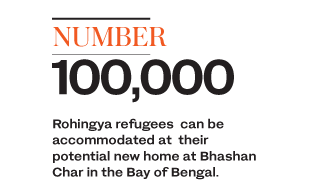
But another refugee, Ashraf Alam, welcomed the chance of a better life. “In this over-congested camp we don’t get any opportunity for (earning a) livelihood,” he told Arab News. “If I have the opportunity for farming, fishing … I would like to consider the relocation ideas. For many months I could not feed my children properly. To me, it’s a new opportunity to live a better life.”
Camp authorities have been meeting Rohingya community leaders and imams so they can motivate other refugees to move. Expressions of interest in relocation are also being registered.
Bhashan Char is around 30 kilometers away from the mainland and the only mode of transport for its residents will be boats, with a journey time of three hours or longer depending on the weather.
The main fear regarding relocation is that the whole island might go under water in the event of a cyclone or high tide.
Nobody has lived on the island before. It was declared a forest reserve in 2013 and it also used to be a cattle-rearing field.
Bangladesh began construction work on the island last year and spent around $280 million on shelters, embankments and community spaces. A flood defense embankment has been erected to protect refugee housing during weather events.
More than a million Rohingya refugees are living in camps in Cox’s Bazar, dwarfing the district’s host population.
UN aid agencies have yet to give their approval on the relocation plan, saying the safety and protection of refugees are the most important considerations.
Caroline Gluck, regional public information officer of UNHCR, told Arab News there were ongoing discussions with Dhaka about the “critical protection and operational issues” that needed to be addressed before any voluntary relocations took place to ensure refugees had safe and sustainable living conditions if they chose to relocate.
She said the UN was engaging constructively with the government on its plan and appreciated its efforts to find “alternative safe locations” for refugees to settle which could help de-congest the overcrowded settlements in Cox’s Bazar.
“However we have only been able to undertake one brief assessment visit last September. The UN and (its) partners have offered to carry out and support further assessments,” she added.
The government is pressing ahead with the relocation plan.
Liberation War Affairs Minister A.K.M. Mozammel Haque told the media last week that Bhashan Char had been made suitable. “Foreign organizations should not concern themselves over the matter and should only deal with humanitarian aspects.”
There is no timeline for relocation and the preparation work is continuing, officials told Arab News.


![]()
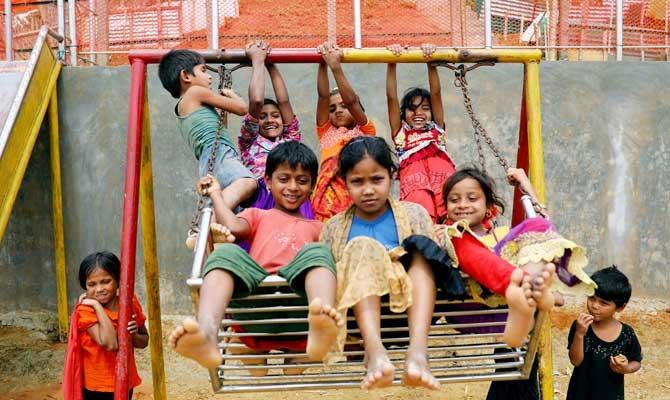
Rohingya divided over relocation as awareness campaign begins
Rohingya divided over relocation as awareness campaign begins
- Camp authorities have been meeting Rohingya community leaders and imams so they can motivate other refugees to move


Latest updates


© 2026 SAUDI RESEARCH & PUBLISHING COMPANY, All Rights Reserved And subject to Terms of Use Agreement.