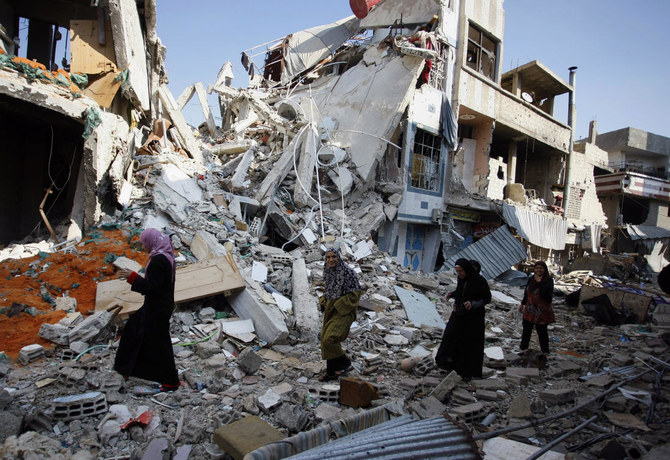
DAMASCUS: Syria on Friday accused donors who pledged aid to help its citizens displaced by the country’s eight-year war of “hypocrisy” as they continue to impose sanctions on the regime.
International donors — led by the European Union — meeting on Thursday in Brussels pledged nearly $7 billion in aid for 2019 for civilians caught up in the conflict.
But European powers stressed progress on a UN-led peace process must come before they release funds to rebuild Syria — though they no longer insist President Bashar Assad must go.
“The hypocrisy of the discourse of the officials of some countries taking part in the Brussels conference is both laughable and angering,” a source at the foreign ministry said.
EU sanctions have deprived “the European Union of any credibility when it speaks about helping Syrians and alleviating their suffering,” state news agency SANA quoted the source as saying.
The source criticized what it called the “deliberate and systematic politicization of the humanitarian issue and attempts to use it through conferences like these to continue to exert pressure on Syria and compound the crisis.”
It slammed the conference for not inviting the Damascus government, calling it the “main concerned party” in the matter.
Since late 2011, the 28-member bloc has imposed sanctions on 277 Syrian officials including Damascus ministers over their role in the “violent repression” of civilians.
It has frozen the assets of some 72 entities and introduced an embargo on Syrian oil, investment restrictions and a freeze on Syrian central bank assets within the European Union.
The United States has also imposed a flurry of sanctions against Syrian officials, and had worked to hamper oil shipping to Syria.
Damascus says the sanctions have contributed to a fuel crisis in the country, which on Friday marked the eighth anniversary of its civil war.
Numerous rounds of US-backed peace talks have failed to stem the bloodshed, which has killed more than 370,000 people and pushed millions more from their homes.


![]()
Syria slams ‘hypocrisy’ of donors
Syria slams ‘hypocrisy’ of donors
- International donors pledged nearly $7 billion in aid for 2019 for civilians caught up in the conflict
- European powers stressed progress on a UN-led peace process must come before they release funds to rebuild Syria


Latest updates





Recommended


© 2026 SAUDI RESEARCH & PUBLISHING COMPANY, All Rights Reserved And subject to Terms of Use Agreement.