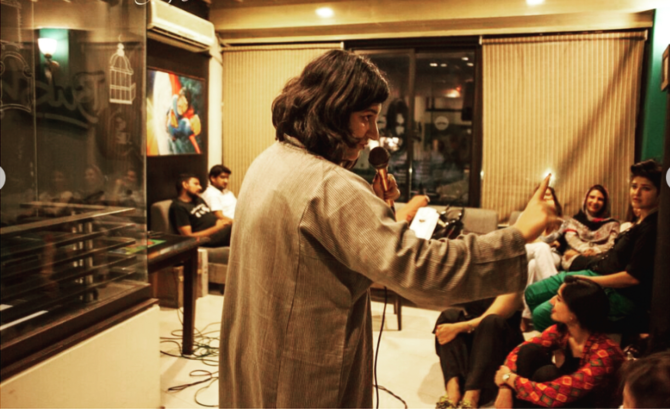


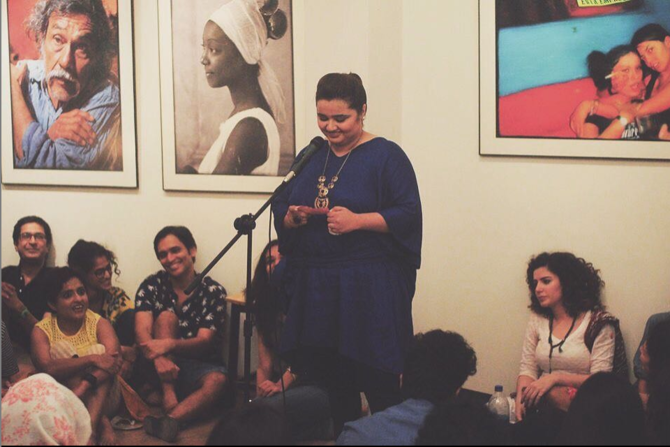

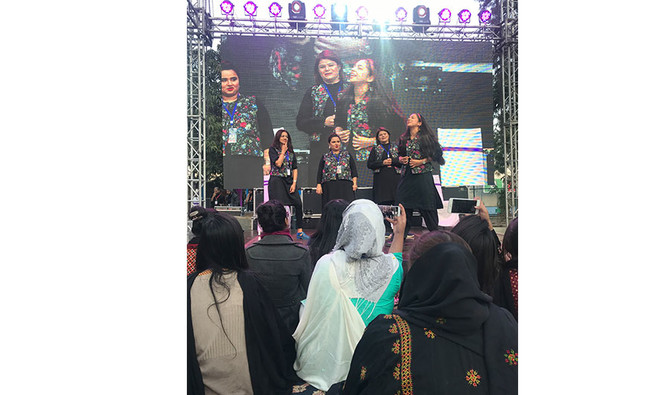
ISLAMABAD - The crowd erupted in laughter as Pakistani comedian Ayesha Tariq threw in a final joke, clutching the mic as she summed up her experience of entering puberty as a young Pakistani girl and the trauma of having to go to her mother for an explanation for "what the hell is going on."
“I was ten,” she said. “I thought I had cancer!”
In another routine about misogyny at all levels of Pakistani society, Orooj-e-Zafar said: “I wish I could drop a hint of feminism on a house situated on top of a hill in Bani Gala,” referring to the private residence of Prime Minister Imran Khan. People applauded and hooted.
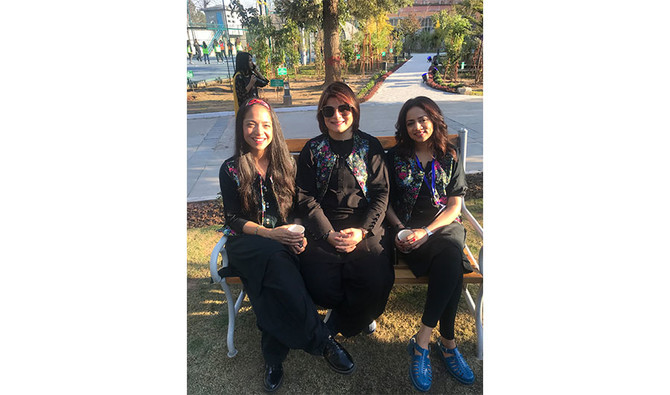
The jokes are funny but the problems are real and Tariq and Zafar, both part of an improvisational comedy troupe called Auratnaak, say they won't shy from discussing them.
The word Auratnaak is a portmanteau of “aurat” (woman) and “khatarnaak” (dangerous). The group uses their comedy to make audiences laugh but also to spin often risque jokes and punchlines about the many problems plaguing Pakistan, not least deeply entrenched gender inequality.
Domestic abuse, sexual and other violence, job discrimination, acid attacks and child and forced marriages make Pakistan the world’s third-most-dangerous country for women, a 2018 Thomson Reuters Foundation expert poll showed.
While crime, corruption and politics are all common topics on the stand-up comedy circuit and TV shows, some subjects remain taboo. Few jokes touch uncomfortable topics like puberty, reproductive rights or harassment.
But groups like Auratnaak and the popular Khawatoons (another amalgam, of khawateen, or women, and cartoons) are trying to start a conversation.
"We talk about things considered taboo or vulgar for polite conversation including going through puberty, reproductive rights and our health,” Anusheh Ashraf of Auratnaak said on Wednesday, minutes before she went onstage to perform a show for the World Bank to mark International Women’s Day. “Women suffer because they can’t have these conversations.”
“My comedy talks about not having access to this knowledge and how it held me back from understanding my own body, which is why many women can relate to it and that’s a sad realisation to come to also,” Ashraf said, flipping through her show notes.
Khawatoons’ Amtul Bajewa added: “A lot of women come up to us and say, ‘thank you for highlighting these issues, you have the guts to say all this on stage,’ and I say to them, ‘No! Everyone should be able to talk about these things.’”
For both comedy troupes, the core of the material comes from the micro-absurdities and macro-neuroses of Pakistan women (and men) and their modern lives.
Marva Ghaznavi, a Karachi-based member of Auratnaak explained: “Through our comedy we've been able to talk about privilege, gender politics, oppression and agency. We've had sets and jokes about sex, periods, harassment, marriage proposals, children, being transgender, jobs, insecurities, drinking, drugs, vaginal infections and corruption. We also talk about the mundane and that's what creates a really well-layered set that hits all the notes.”
“These problems that you feel and experience in your day-to-day life,” said Auratnaak’s Hajira Asaf Khan, “to see women perform them, it humanises the statistics.”
Faiza Saleem, arguably the queen of Pakistan’s stand-up comedy scene, founded Auratnaak in the port city of Karachi in 2016. The troupe now has chapters in the eastern cities of Lahore and the Pakistani capital of Islamabad.
Saleem, who also founded Khawatoons, said she took up comedy as a career over law because she felt that “jokes resonate.”
“I was pursuing law as a career before comedy, I would talk about women’s rights and issues, write papers and articles,” she said before Wednesday’s show. “Those articles and all that research ... did not have much resonance. How many people pick up an academic article or a paper about sexual harassment?”
But through comedy, Saleem felt, her voice could be more widely heard.
“Comedy reaches more people,” she said. “People are less likely to Google my work as a lawyer as they are to look up my comedy videos. Jokes resonate.”
For some like Yusra Amjad from Auratnaak’s Lahore chapter, performing comedy goes even further: it becomes “rebellion.”
“Women doing stand up comedy in a patriarchy is inherently an act of rebellion and a subversion in itself,” she said.
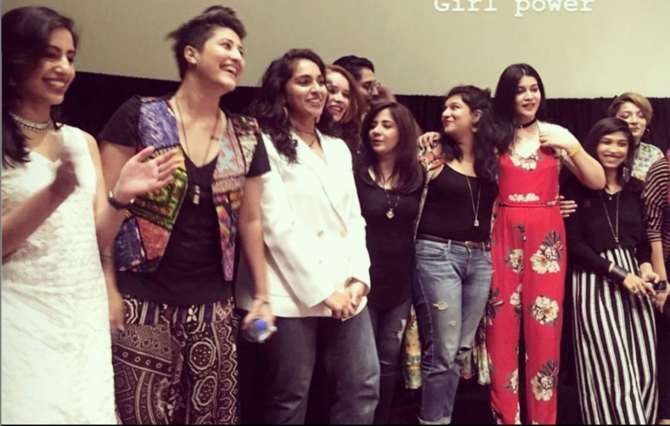
Behind the stage before Wednesday's show at the World Bank, fans gathered around Saleem, wanting to take selfies, as she went over some routines with her fellow comedians.
“I see these women step out on stage with me and it makes me very proud because I believe that long after we are gone, we are going to be remembered for sort of bringing a revolution,” Saleem said as she posed for a picture with a teenage girl. “Maybe right now it’s not as much appreciated as it should be but we’ve left a lasting impact.”