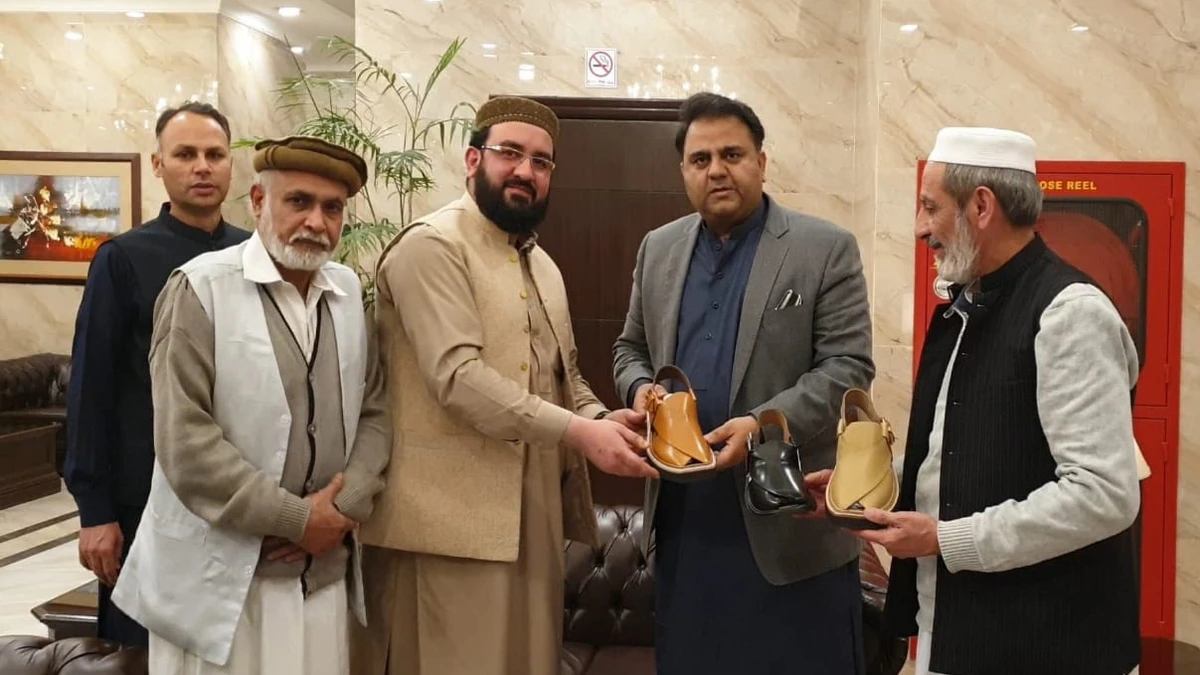
PESHAWAR: A renowned sandal maker in Pakistan’s northwestern city of Peshawar, Chacha Noor-ud-Din, will be gifting two of his famous hand-crafted leather sandals to the Saudi crown prince in Islamabad during his two-day visit.
Indigenous to the Pashtuns of Pakistan’s Khyber Pakhtunkhwa province, the traditional sandal known as the Peshawari Chappal became iconic in recent years as Prime Minister Imran Khan’s footwear of choice, and one he has worn at all state and formal gatherings after coming to power last year.
An emotional Noor-ud-Din told Arab News that the crown prince was coming from the land of his beloved Prophet (PBUH).
“I want to lay my heart and the whole universe at the prince’s feet,” he said.
Noor-ud-Din set up his business in Peshawar’s bustling old Namak Mandi market in 1976, and despite deteriorating sales in the past, has resurfaced as one of the province’s most popular shoe-makers with his custom-made, double-sole sandals coveted by national and international celebrities, as well as local parliamentarians, bureaucrats and army officers.
With the approval of Pakistan’s information ministry, Noor-ud-Din says he is now heading for the capital before the crown prince’s arrival on Sunday, with one black and one camel colored pair in the prince’s size, size 12, as confirmed by the government.
“I wish to knot the chappal in Muhammad Bin Salman’s feet myself, but I am aware of tough security and a busy schedule,” he said, after polishing the shoes one last time and placing them in their box.
“I hope he will accept this small indigenous gift from Khyber Pakhtunkhwa.”
Famous Pakistani cobbler crafts shoes for crown prince
- Famous Peshawari cobbler to gift two sandals to Saudi prince in Islamabad
- “I want to lay the whole universe at prince’s feet,” — Noor-ud-Din
Pakistan Customs seize ecstasy tablets worth $1 million in Karachi
- Pakistan Customs has initiated investigation to identify recipients, facilitators of smuggling attempt, says FBR
- Ecstasy, also known as “party drug,” causes energizing effect, enhanced enjoyment of tactile experiences
ISLAMABAD: Pakistan Customs this week foiled a bid to smuggle more than 9,000 MDMA or ecstasy tablets into the country valued at Rs299.8 million [$1 million], the Federal Board of Revenue (FBR) said in a statement.
According to the FBR, the narcotics were found concealed inside speakers and LED lamps in a parcel that arrived from Germany at the International Mail Office in the southern port city of Karachi.
It said the shipment had been falsely declared as containing “clothes, socks and music boxes.”
“Officials of the Airport Cargo Control Unit (ACCU), Collectorate of Customs Airports Karachi, seized 9,455 MDMA (ecstasy) tablets valued at Rs299.791 million during a targeted inspection,” the FBR said on Friday.
“Customs authorities have initiated further investigation to identify the recipients and facilitators of the smuggling attempt.”
Ecstasy/MDMA acts as both a stimulant and hallucinogen, producing an energizing effect, distortions in time and perception, and enhanced enjoyment of tactile experiences.
Adolescents and young adults use it around the world to reduce inhibitions and to promote euphoria, feelings of closeness, and empathy.
Known as a “party drug,” ecstasy is consumed in both pill and powder form.
Pakistan has stepped up efforts against clamping down on illegal drugs, with authorities frequently seizing large quantities of narcotics such as heroin, ecstacy, ice and hashish across the country.
In November, Pakistan Navy seized narcotics worth Rs36 billion ($130 million) under a Saudi-led maritime task force.
In October, another Pakistan Navy ship seized a record haul worth nearly Rs271 billion ($972 million), one of the largest drug seizures ever reported in the North Arabian Sea.