

Saudi anti-corruption crackdown recovers $107 billion in assets

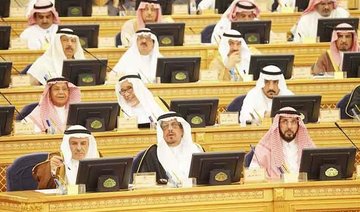
Saudi Arabia's King Salman has received a report from a special committee investigating public corruption, which will see billions of riyals recovered. (SPA/File photo)
Updated 31 January 2019
Follow

Saudi anti-corruption crackdown recovers $107 billion in assets

  • More than SR400 billion ($107bn) was “retrieved to the state treasury"
  • Settlements were reached with 87 of those accused after they confessed

RIYADH: Saudi investigators have recovered assets worth more than $106 billion in an anti-corruption crackdown ordered by Crown Prince Mohammed bin Salman, the royal court said on Wednesday.

The funds are in the form of property, companies, cash and other assets surrendered by  senior princes, ministers and top businessmen who were under investigation.

In the anti-corruption campaign launched in November 2017, many of the Kingdom’s economic and political elite were detained in Riyadh’s Ritz-Carlton Hotel for nearly three months.

The government summoned 381 people, although some appeared only as witnesses to give evidence. 

A comprehensive review was conducted of the case against each of those detained, under the supervision of the Public Prosecutor, and each was presented with the allegations against them.

Settlements were reached with 87 people who confessed to the charges against them, the royal court said. 

The public prosecutor refused to settle the cases of 56 people because of existing criminal charges against them. Eight people refused to reach a settlement, and have been referred to public prosecution for further action under the law.

Everyone who was detained but not indicted on charges related to corruption has been released, the court said.

The anti-corruption committee set up by the crown prince submitted its report to King Salman on Wednesday. It said it had now completed its work, and asked for the king’s permission to cease operations.

The king agreed, and thanked the committee and the crown prince for their efforts.

King Salman pledged that the Kingdom would “continue its efforts to preserve integrity, combat corruption, and empower law enforcement and other relevant state bodies so that they are able to effectively practice their role in preserving public funds.”

First Saudi State’s economy laid foundation for modern stability

Updated 23 February 2026
Follow

First Saudi State’s economy laid foundation for modern stability

  • Revived commerce in Arabian Peninsula, according to historian
  • Diriyah highlighted as premier political and commercial center

RIYADH: The economy of the First Saudi State served as a fundamental pillar in building the nation, consolidating its influence, and ensuring its stability, the Saudi Press Agency reported recently.

The main features of this economy is outlined in the book “Diriyah: Origins and Development during the First Saudi State,” by Dr. Abdullah Al-Saleh Al-Othaimeen, the SPA reported.

The measures taken in those early days helped to ensure security, unify regions, and organize society. This assisted in stimulating trade, stabilizing markets, and enhancing life in Diriyah and surrounding areas.


Beyond its political and intellectual prominence, Diriyah emerged as a vibrant economic hub. (SPA)

The book, published by the King Abdulaziz Foundation for Research and Archives, outlines how these actions facilitated the arrival of caravans, secured vast trade routes, and revived commerce across the Arabian Peninsula.

Beyond its political and intellectual prominence, Diriyah emerged as a vibrant economic hub. Its markets attracted merchants and students from across the region.

The local community relied on diverse activities including trade, agriculture, and livestock breeding, with horses and camels playing crucial roles in transportation, commerce, and securing roads.

Economic growth during this founding phase “solidified Diriyah’s position as a premier political and commercial center in the Arabian Peninsula,” the SPA reported