


RIYADH: When Saudi Arabia’s Shoura Council voted on Jan. 11 to ban child marriage in the Kingdom, it joined a global movement seeking to end a practice that is harmful not just to girls’ health — child brides are more likely to experience domestic violence and die in childbirth — but also to their future, as they are less likely to remain in school.
According to UNICEF, the term “child marriage” is used to refer to both formal marriages and informal unions in which a girl or boy lives with a partner before the age of 18. An informal union is one in which a couple live together for some time, intending to have a lasting relationship, but do not have a formal civil or religious ceremony.
The Shoura Council banned child marriages for both genders with the approval of two-thirds of its members.
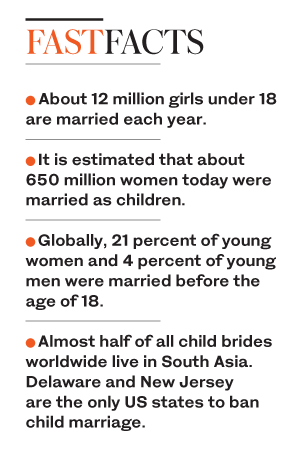 The law was eight years in the making, and was put before the council at least five times in last year’s council sessions. The members voted to approve regulations limiting marriages of those under 18 years of age and banning marriages involving children under 15 years of age. The law was effective immediately.
Shoura Council member Dr. Hoda Al-Helaissi said the law is an important step in protecting children’s rights.
“The idea was to protect girls more than anything, but also young boys,” she said. “You cannot expect a girl of 10 or 12 to understand what marital relations are, or for her body to correctly carry a baby. There are a lot of health issues involved.”
Al-Helaissi explained the reason behind the delay in approving the law. “The usual argument was that it took place in the days of the Prophet (Muhammad). But times have changed since the olden days, and we are not just talking about Islam. It was used as a bartering tool for (those in) poverty, where the fathers received dowries.
“Things are completely different now,” she said. “The law gives them the possibility of an education and future.”
Times are certainly changing in Saudi Arabia, which is modernizing under the Vision 2030 reform plan. And while the latest step is one of many taken recently to empower women, the Kingdom is not even among the 20 countries that have the highest absolute numbers of child marriages.

Most child marriages take place in poverty-stricken countries in which families benefit financially from a daughter’s marriage, or in countries that adhere strictly to traditional norms. In many such countries, girls are viewed as a burden on families — in need of safeguarding to protect their honor — while boys are considered breadwinners.
Child marriage is a generations-old custom still practiced today around the world in countries including India, Bangladesh, Nigeria, Indonesia and Mexico. The custom has often gone unquestioned in such places since it has been part of communities’ lives and identities for a long time.
Families marry their daughters in return for dowries, passing the responsibility of their daughter’s care to the husband. This eases the financial strain of impoverished families because they have one less mouth to feed. In conflict areas, many believe marriage is in the daughter’s best interest to protect her from physical or sexual harassment.
India has by far the highest number of child brides. Even though child marriage is technically illegal there, many are falling victim to the practice.
A study published in UNICEF’s “State of the World’s Children” report in 2017 estimated that there were more than 15 million women in India who married when they were children.
According to a study carried out by Girls Not Brides — a global partnership of more than 1,000 civil society organizations committed to ending child marriage — 27 percent of Indian girls are married before the age of 18, and 7 percent by the age of 15. India is one of 12 countries selected to be part of the UN Population Fund and UNICEF’s Global Program to Accelerate Action to End Child Marriage.
Child marriage is not just restricted to the developing world, however. It is legal — taking judicial exceptions into account — in 49 US states.
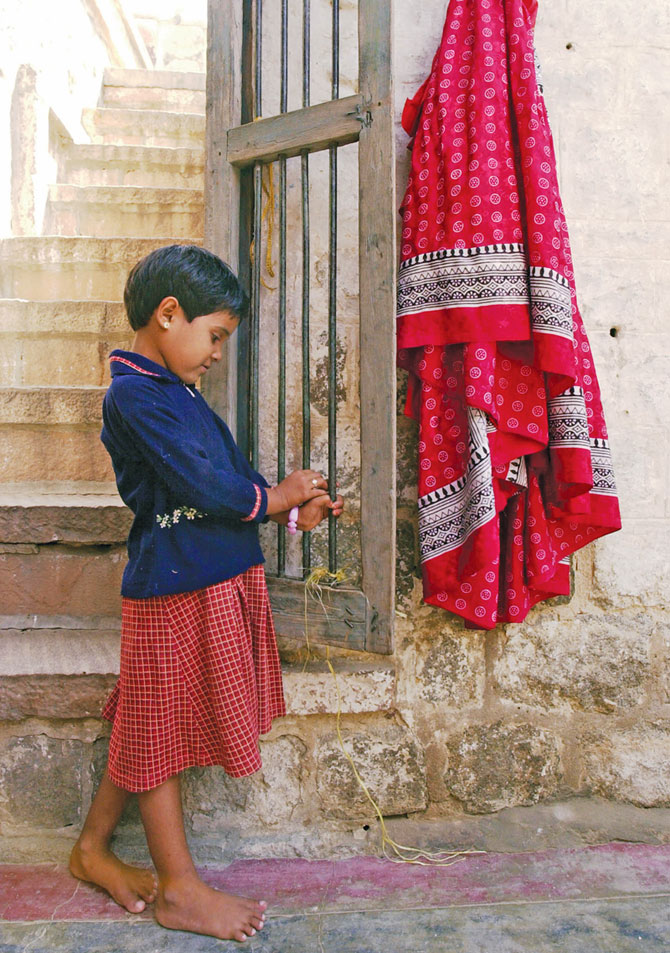
Child bride Sunita Bishnoi, 5, at her parents’ home near Jodpur in
India’s northwest. (AFP)
States often make exceptions to their minimum-age ruling if those below the age of 18 have parental consent, the approval of a judge, or are recognized as adults. And 25 states have no statutory minimum age for marriage to begin with, meaning that minors can legally marry other minors or adults.
Minors are most likely to get married in places that are rural and poor, said Nicholas Syrett, who combed through historical marriage records while researching his book “American Child Bride: A History of Minors and Marriage in the United States.”
He wrote: “Almost all the evidence indicates that girls in cities don’t get married young, that girls from middle class or wealthy families don’t get married young. This is a rural phenomenon and it is a phenomenon of poverty.”
According to Unchained at Last, an organization dedicated to ending forced and child marriage in the US, an estimated 248,000 children — some as young as 12 — were married between 2000 and 2015 in America.
The new law in Saudi Arabia is in keeping with the country’s existing child protection law, which applies to people under the age of 18, Jeddah-based divorce lawyer Bayan Zahran told Arab News. “Anyone under this age limit is considered to be under the child protection system,” she said.
The new law confirms the view that minors cannot be expected to function as adults in a marriage, Zahran said, and will help prevent divorces that result from these dysfunctional partnerships.
Dr. Fawzia Aba Al-Khail, a member of the Shoura Council, emphasized the importance of the matter being debated thoroughly by the council — even if that meant taking a long time to pass the law.
“The fact that a minority of the council’s (Islamic and judicial affairs) committee disagreed with passing the law shows they have a right to their opinion, and that the committee discusses (matters) intelligently, with a focus on human rights.
“Yes, there have been many discussions before, but you need the majority, and the Shoura Council is made up of many different backgrounds … In passing this law, we have agreed to protect all minors.”


