DUBAI: The Saudi Arabian economy will expand by 2 percent this year with the non-oil sector getting a boost from higher crude prices and government spending likely to rise further in 2019, an Emirates NBD Research report said on Sunday.
But the growth estimate was lower than the official government projection of 2.4 percent, the report noted.
“Even taking the OPEC agreed production cuts which came into effect at the start of the year, we think average oil production in KSA will be at least 1 percent higher on average than 2018,” Khatija Haque, Emirates NBD’s head of MENA Research, said.
“We expect non-oil sector growth to accelerate to 2.8 percent as the lagged effect of higher oil prices and production feeds through to the non-oil sectors, and as government spending is likely to rise further this year.”
But the cautious economic outlook for Saudi Arabia is also true for the wider GCC region, Haque noted, considering a ‘slowing global growth and heightened geo-political risks globally.’
Average growth for the GCC states this year is forecast at 2.5 percent, with the UAE and Qatar likely to report faster growth rates, after the regional economy rebounded in 2018, driven by higher oil output.
Meanwhile for 2018, average GDP growth was pegged at 2.4 percent.
“Production in Q4 2018 was much higher than we had expected and as a result, the hydrocarbons sector contributed positively to overall GDP growth in the GCC last year,” the report said.
Emirates NBD Research has revised its oil forecasts for 2019 lower to an average of $65 a barrel for Brent, against the more than $70 a barrel previously.
“We expect budget deficits to widen modestly this year, based on our assumption of an average Brent oil price of $65 a barrel and increased government spending,” the report noted.
“The introduction of VAT in Bahrain and potentially Oman (the latter expected in September 2019) should help these countries address their sizable budget deficits, although other fiscal reforms will need to be undertaken to sustain any improvement over time,” it added.
Saudi Arabia has programmed a 7.2 percent rise in its budget this year to 1.1 trillion Saudi riyals, majority of it allocated for education and military spending, on a projected deficit of 4.2 percent.


![]()
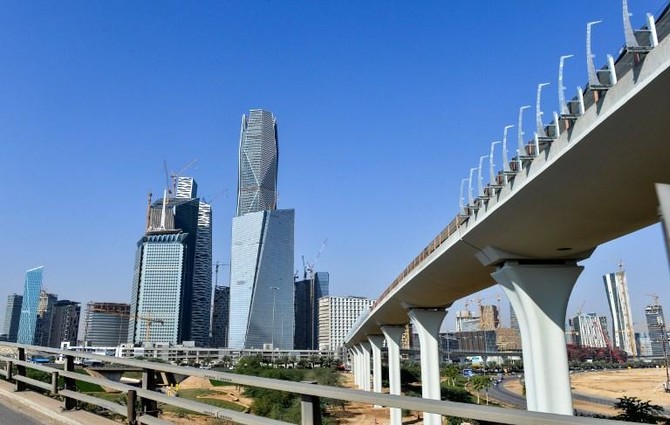
Saudi economy forecast to grow 2% on stronger non-oil sector, higher government spending
Saudi economy forecast to grow 2% on stronger non-oil sector, higher government spending
- But the growth estimate was lower than the official government projection of 2.4 percent
- Saudi Arabia has programmed a 7.2 percent rise in its budget this year to 1.1 trillion Saudi riyals


Latest updates


Recommended


© 2026 SAUDI RESEARCH & PUBLISHING COMPANY, All Rights Reserved And subject to Terms of Use Agreement.