


PESHAWAR: Hotel Watch, also knows as Hotel Eye, is a new android application launched last year to facilitate digital policing for Khyber Pakhtunkhwa police by speeding up surveillance and verification at hundreds of hotels in Peshawar.
Talking to Arab News, Qazi Jamilur Rehman, Capital City Police Officer (CCPO) Peshawar said, “It is a criminal record and counter-check database of criminals including suspects wanted by the police and other law enforcing agencies.”
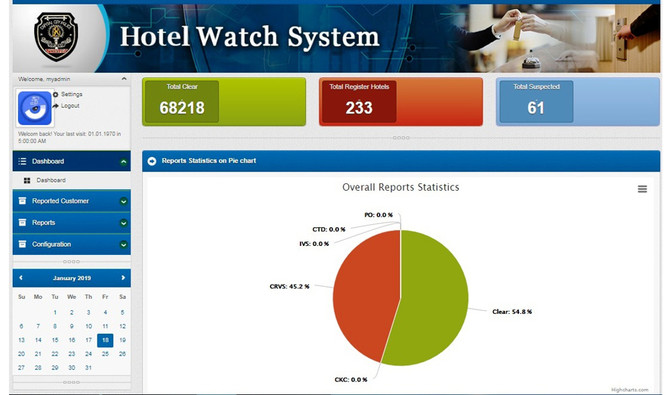
According to Rehman, the app has so far helped check the records of 68,218 people in 233 hotels registered with the system. Since its launch in June last year, it has helped detain at least 61 wanted persons.
“The app aids in the 24/7 monitoring of Peshawar hotels. A Hotel Watch Desk has been established at the control room East Cantonment Police Station which submits a weekly report to the CCPO office in the Central Police Offices in Peshawar,” he said.
Initially, the hoteliers resisted registering with the app, but after multiple awareness sessions, the police managed to power through and convince owners on its proposed security benefits.
At the same time, random hotel inspections are carried out under the law and hotels violating the law in data sharing are warned of legal proceedings.
The idea of developing the application was first formed during operations against militants in various parts of Khyber Pakhtunkhwa and former Federally Administered Tribal Areas.
Criminals moving between cities preferred to stay at low and mid-tier hotels instead of personal visits with families to avoid police encounters. But the Hotel Watch application is a powerful deterrent to criminals looking to find refuge at any of Peshawar’s registered hotels.
Asfandyar Wazir, Assistant Director Information Technology Centre leads a team of 10 technical employees who work round the clock operating the Hotel Watch application system.
“Everyday, the system gets data for daily First Information Reports (FIR) from police stations all over the province,” he said.
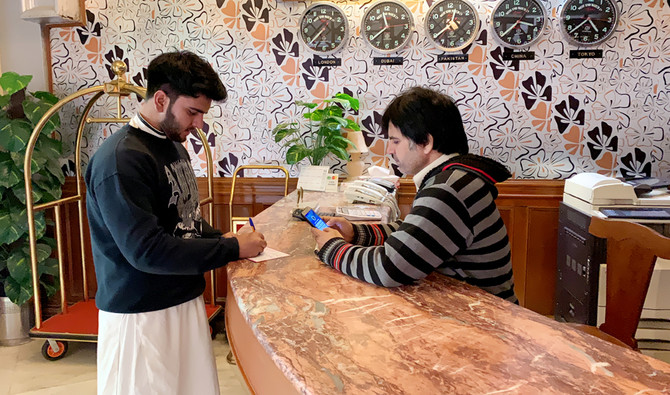
The process is straightforward. The name, national identity card and mobile number of every guest checking into the hotel is fed into the app.
“The data is received and automatically checked by powerful computers against different databases including that of the provincial police, army, and various intelligence agencies,” Wazir said. “The system triggers an alert in case a person has an active complaint against him/her in any police station or with any security agency.”
In such cases, the closest police station to the hotel is urgently informed and rapid action taken.
“More than 100 suspects, including at least 61 proclaimed offenders were taken into custody with the help of the application,” Wazir said.
The app has also made certain responsibilities easy for hoteliers. Aziz Gul, Manager at Hotel Grand in Peshawar said the app had made credential verification easy by guaranteeing criminals cannot bypass security mechanisms.
“Hotel Eye helps us to improve our hotel security and reassures both us and our guests that no criminal is hiding in our hotel. It serves as an added security tool,” Gul said.
To guests, the app provided security, albeit a problematic one. Though many welcomed its use, some guests like Akbar Khan questioned if data privacy was really ensured and if the system was secure enough against malicious cyber attacks.
According to CCPO Qazi Jamilur Rehman, the police department intends to expand Hotel Watch to other big cities. “We will observe and eradicate any shortcomings and improve the service before expanding its scope,” he said.
In a troubled region still adapting to the merger of former tribal districts into its fold, the Hotel Watch application is proving its worth as a creative technical facility in a long and difficult road to successful policing in Khyper Pakhtunkhwa.




