In Pakistan’s upscale capital, a new tea culture blossoms

1 / 17
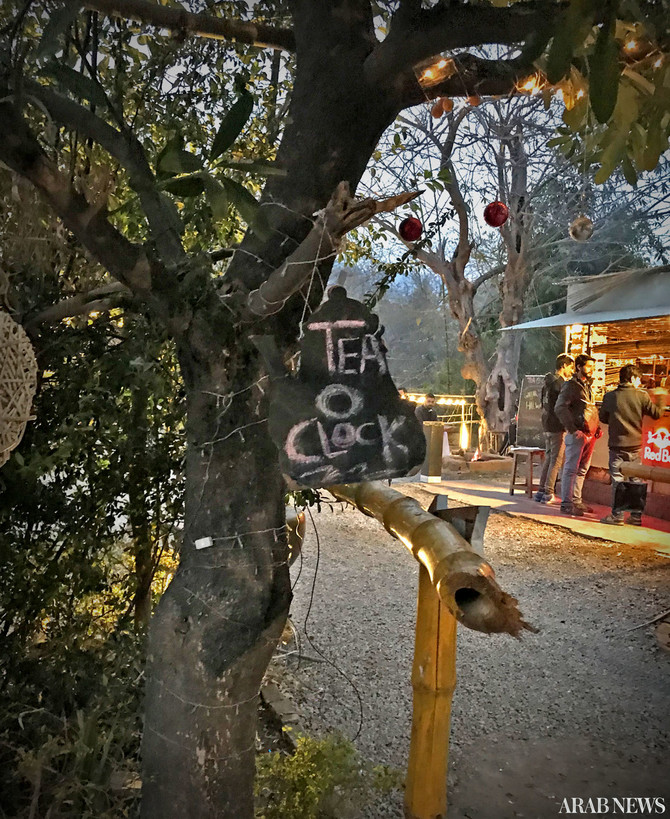
Tea O’ Clock in Islamabad’s F7 sector sits on a bend of Bhitai Road. (AN photo)
2 / 17
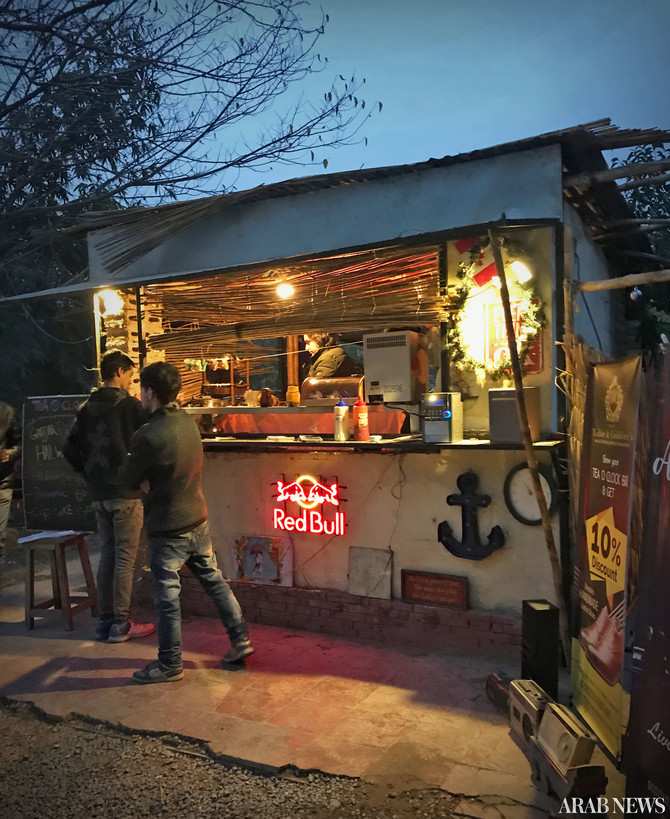
Where the magic happens. Chai is brewed and any food is brought in and prepared for customers, ‘We heat up standard packaged food from local homemade vendors,’ owner of Tea O’ Clock Imran Khan said. (AN photo)
3 / 17
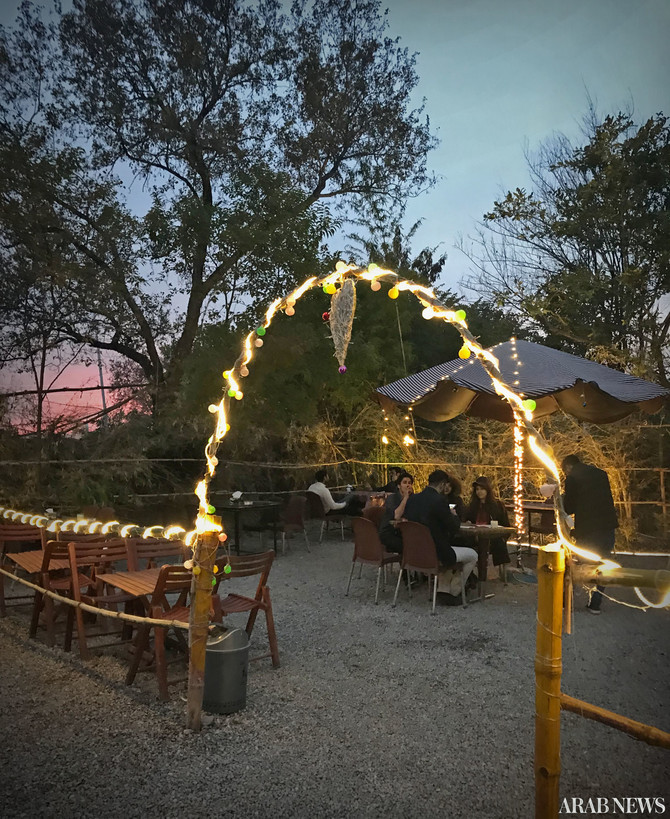
Lights and a rustic fence add charm to the humble ground. (AN photo)
4 / 17
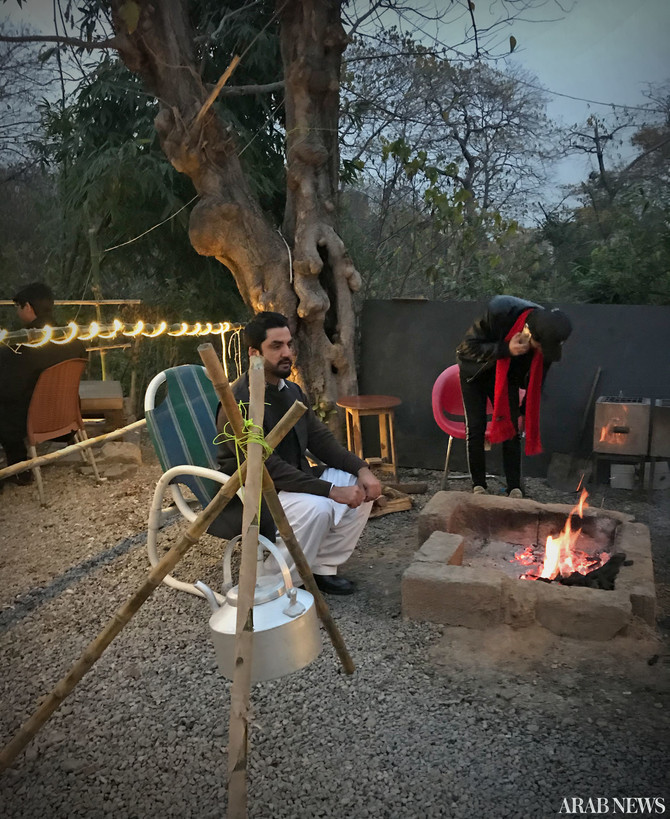
Owner Imran Khan sits by the fire at Tea O’ Clock. (AN photo)
5 / 17
The menu has few items, a common theme among the chai shops where focus is on simplicity. (AN photo)
6 / 17
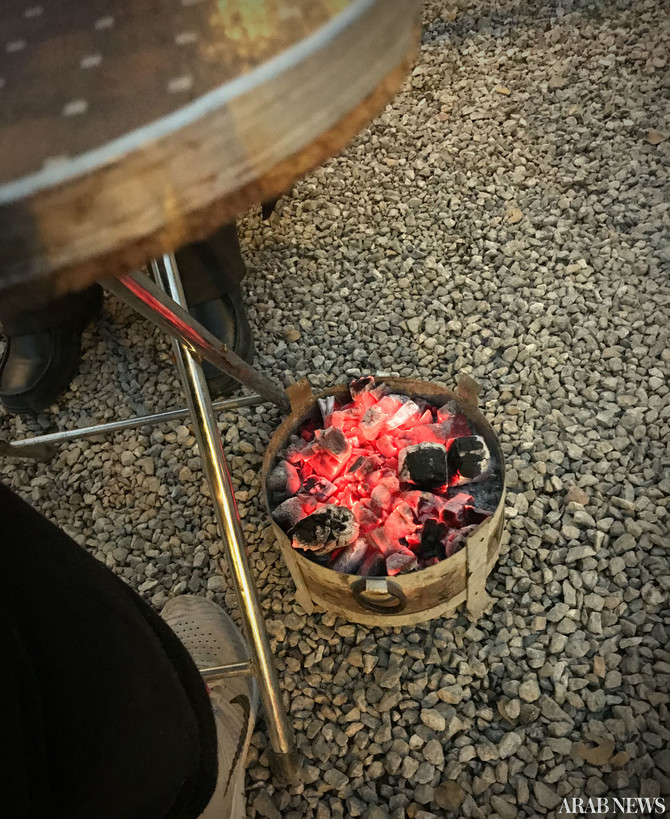
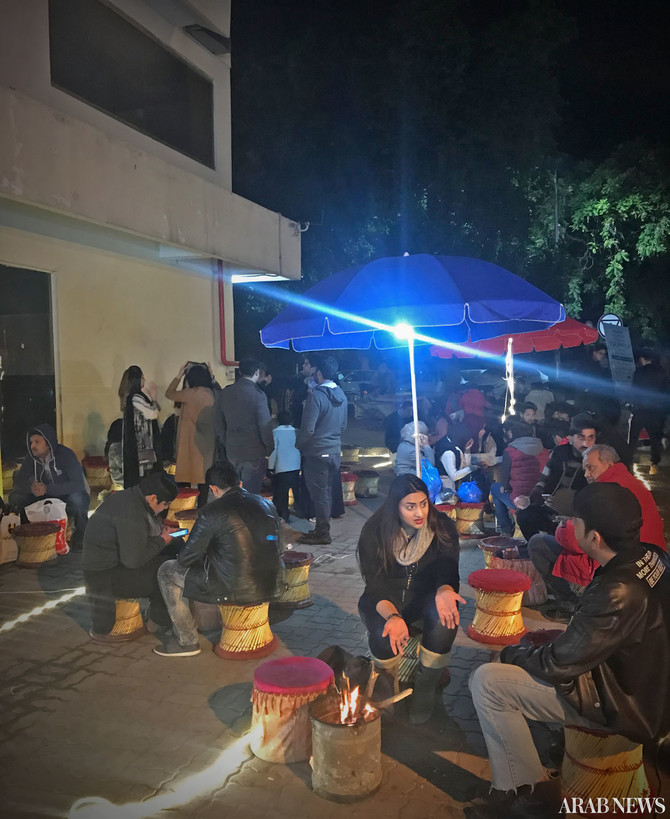
Tables are heated with mini grills filled with coals attended to by the staff. (AN photo)
7 / 17
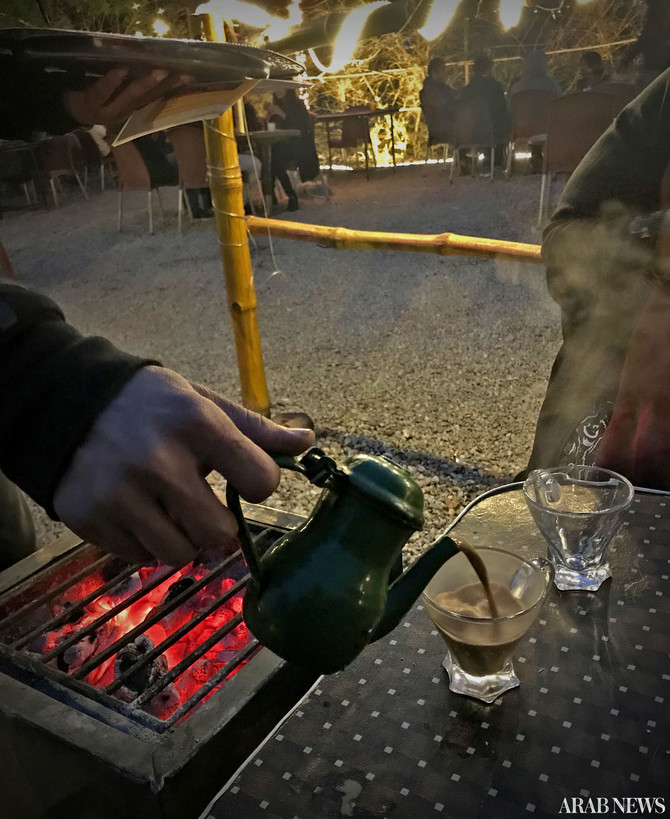
Tea is brought to the table with a table side grill. (AN photo)
8 / 17
Tea served in classic glass mugs. (AN photo)
9 / 17
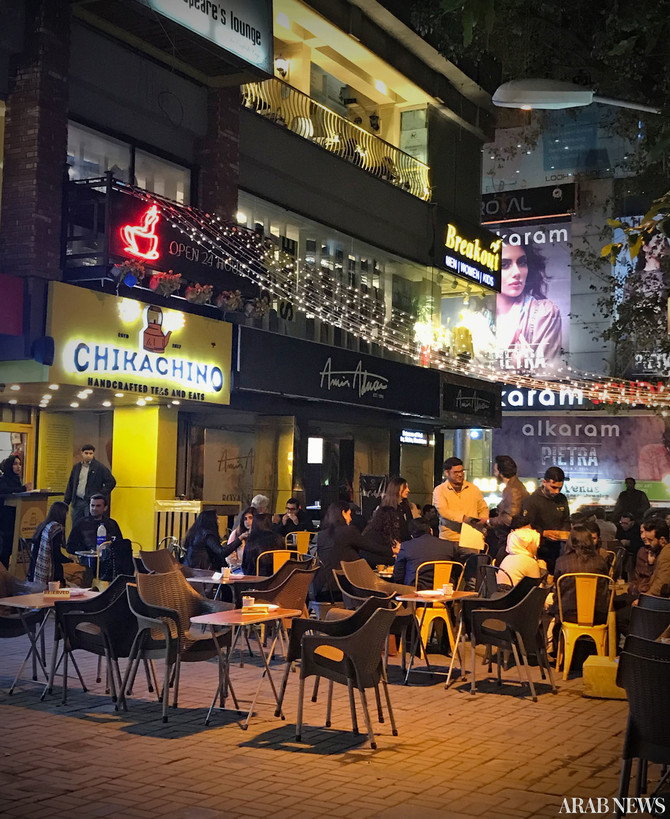
Chikachinos which sits a turn away from Tea O’ Clock is perhaps the most recognizable of the chai shop to open up in the city last year, boasting large crowds and a full capacity most nights. (AN photo)
10 / 17
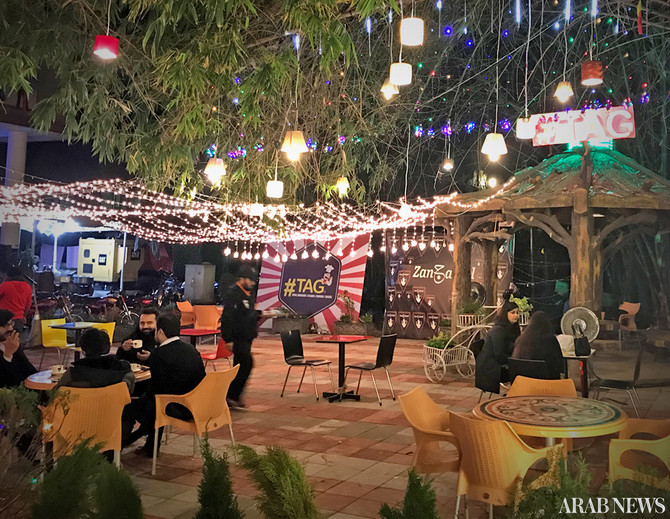
#TAG in F7 which is the sister restaurant to Quetta Tea ‘n Tears in F10 follows the chai decor of choice of brightly lit fairy lights. (AN photo)
11 / 17
Across the way on the island sitting in the center of the bustling market, Quetta Tea ‘n Teas has a light decorated seating area. (AN photo)
12 / 17
Tandoor Chai and Coffee is one of two walk up and order chai tables in front of Jinnah Market’s strip of tech stores in F7. (AN photo)
13 / 17
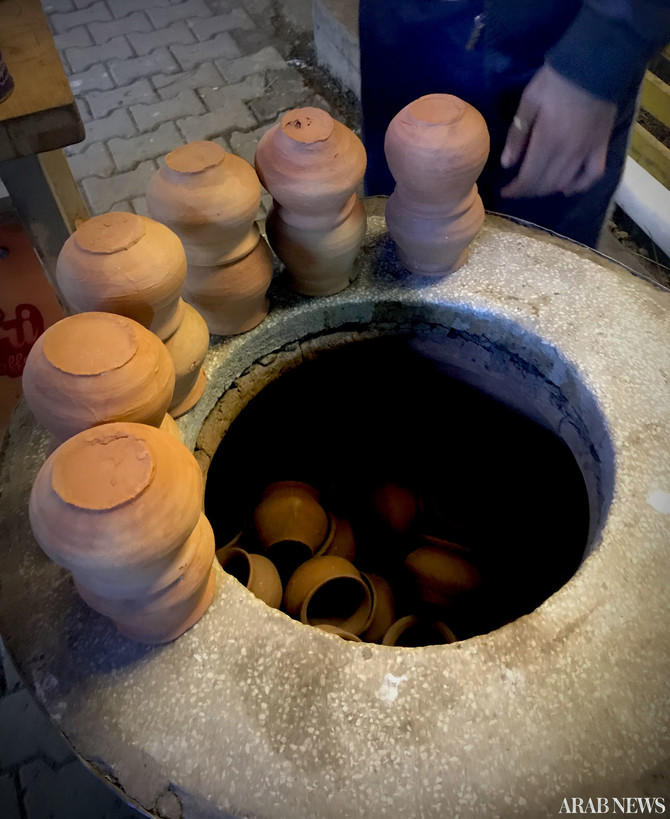
Single serving sized matkas, ideal for cold hands in winter, are warmed up in a tandoor. (AN photo)
14 / 17
Chai is served by pouring the tea in the sizzling matkas, cooled down in a pot and then officially serving them in another matka, safer and easier to hold. (AN photo)
15 / 17
Chai with cardamom from Tandoor Chai and Coffee. (AN photo)
16 / 17
If one is to walk a few meters you would walk right into Tandoori Junction, another chai shop with a matka twist. (AN photo)
17 / 17
Patrons sit on low straw ottoman seating around heaters. (AN photo)
Updated 16 January 2019
Follow

In Pakistan’s upscale capital, a new tea culture blossoms

  • ‘Tea O’ Clock’ is the newest entrant in Islamabad’s growing chai scene
  • Authentic chai cafes replace pricey restaurants as options for the city’s youth

ISLAMABAD: Fairy lights sparkle on trees at a sharp bend in a corner of Islamabad’s upscale Jinnah Market. A stretch of road that was just unattended brush not too long ago now has lines of cars parked along it. A wooden cutout of a teapot announces a new addition to Islamabad’s chai scene: ‘Tea O’ Clock.’ Beyond this is a humble little shack where young people sit snugly on colorful chairs around small tables sipping steaming cups of tea. 
The scene looks like a still from an early 90’s film centered on a group of teens sharing the simple joys of living and forming life-long friendships around a milky elixir of black tea laced with cinnamon, cardamom and cloves. Coal-filled grills provide the necessary relief from Islamabad’s biting chill. On one table, three girls sing old Bollywood songs; on another, a game of Monopoly is in its final moments; on yet another, a group of young boys and girls discuss the semantic features of Urdu poetry. 
Tea O’ Clock is one of five back-to-basics chai shops that have opened up in the upmarket F7 neighborhood recently, all steeped in nostalgia, with simple and unfussy menus aimed at giving the capital’s youth an option other than pricey restaurants and cafes. 
“The response has been overwhelming, we are always crowded and it was surprising,” Tea O’ Clock owner Imran Khan told Arab News. “Even in the cold where I find it so difficult to sit out, it’s always full.”
“It sort of proves people needed a place like this.”
Khan opened up the chai shop on the unassuming strip of land about a year ago so he could have a place to sit, work and relax which wasn’t an upscale cafe or restaurant. 
“I made something for myself which was not very fancy,” Khan said. “And it turned out to be very successful.”
“The youth here, the young crowd, they don’t have much today to do, honestly. All we have is restaurants where you go eat and have to leave,” Khan said as he warmed his hands on a coal heater. “There’s nothing, no place where you can sit for an hour for something social and casual to do.”
He said people came to his chai shop to do office work, play cards, just chat with friends “all over a simple cup of tea.”
Last year, Chik-a-Chinos started a revolution in Islamabad’s restaurant world as an outdoor cafe with (comparatively) low prices, street eats and, yes, chai. 
Quetta Tea ‘n Teas in F10, and it’s sister restaurant, an outdoor dhaba style cafe called #TAG, also opened in F7, both focusing on chais from Quetta and eats to match. Previously home to cellphone stores, an entire strip of the F7 market now boosts of chai vendors that sell a simple cup of tea in a single-serving sized matka, or clay pot. 
The largest of these is Tandoor Junction, sitting on the sidewalk of the corner of Jinnah Market. The menu is simple: six different variations of chai.
“We come and sit here because it’s just easy,” said Javaid Malik, 30, who was at Tandoor Junction with a larger group of friends. “You don’t always want to be in a restaurant, paying a ton of money. This feels more free.”
Another patron, Nida Aziz, said at Quetta Tea ‘n Teas: “I like that I can leave work, come here, easily meet up with other friends and finally have a place outside of home and restaurants to have a conversation. That’s what’s really been lacking here: a place you can go and talk like when we were kids in school.”


Imran Khan not a ‘national security threat,’ ex-PM’s party responds to Pakistan military

Updated 4 sec ago
Follow

Imran Khan not a ‘national security threat,’ ex-PM’s party responds to Pakistan military

  • Pakistan’s military spokesperson on Friday described Khan’s anti-army narrative as a “national security threat”
  • PTI Chairman Gohar Ali Khan says words used by military spokesperson for Khan were “not appropriate”

ISLAMABAD: Former prime minister Imran Khan’s Pakistan Tehreek-e-Insaf (PTI) party on Saturday responded to allegations by Pakistan military spokesperson Lt. Gen. Ahmed Sharif Chaudhry from a day earlier, saying that he was not a “national security threat.”

Chaudhry, who heads the military’s media wing as director general of the Inter-Services Public Relations (ISPR), spoke to journalists on Friday, in which he referred to Khan as a “mentally ill” person several times during the press interaction. Chaudhry described Khan’s anti-army narrative as a “national security threat.”

The military spokesperson was responding to Khan’s social media post this week in which he accused Chief of Defense Forces Field Marshal Asim Munir of being responsible for “the complete collapse of the constitution and rule of law in Pakistan.” 

“The people of Pakistan stand with Imran Khan, they stand with PTI,” the party’s secretary-general, Salman Akram Raja, told reporters during a news conference. 

“Imran Khan is not a national security threat. Imran Khan has kept the people of this country united.”

Raja said there were several narratives in the country, including those that created tensions along ethnic and sectarian lines, but Khan had rejected all of them and stood with one that the people of Pakistan supported. 

PTI Chairman Gohar Ali Khan, flanked by Raja, criticized the military spokesperson as well, saying his press talk on Thursday had “severely disappointed” him. 

“The words that were used [by the military spokesperson] were not appropriate,” Gohar said. “Those words were wrong.”

NATURAL OUTCOME’

Speaking to reporters earlier on Saturday, Pakistan’s Defense Minister Khawaja Asif defended the military spokesperson’s remarks against Khan.

“When this kind of language is used for individuals as well as for institutions, then a reaction is a natural outcome,” he said. 

“The same thing is happening on the Twitter accounts being run in his [Khan’s] name. If the DG ISPR has given any reaction to it, then I believe it was a very measured reaction.”

Khan, who was ousted after a parliamentary vote of confidence in April 2022, blames the country’s powerful military for removing him from power by colluding with his political opponents. Both deny the allegations. 

The former prime minister, who has been in prison since August 2023 on a slew of charges he says are politically motivated, also alleges his party was denied victory by the army and his political rivals in the 2024 general election through rigging. 

The army and the government both deny his allegations.