- Beats Afghanistan, Syria, Somalia, and Iraq
- Index rates document based on the number of countries a citizen can travel to without a visa
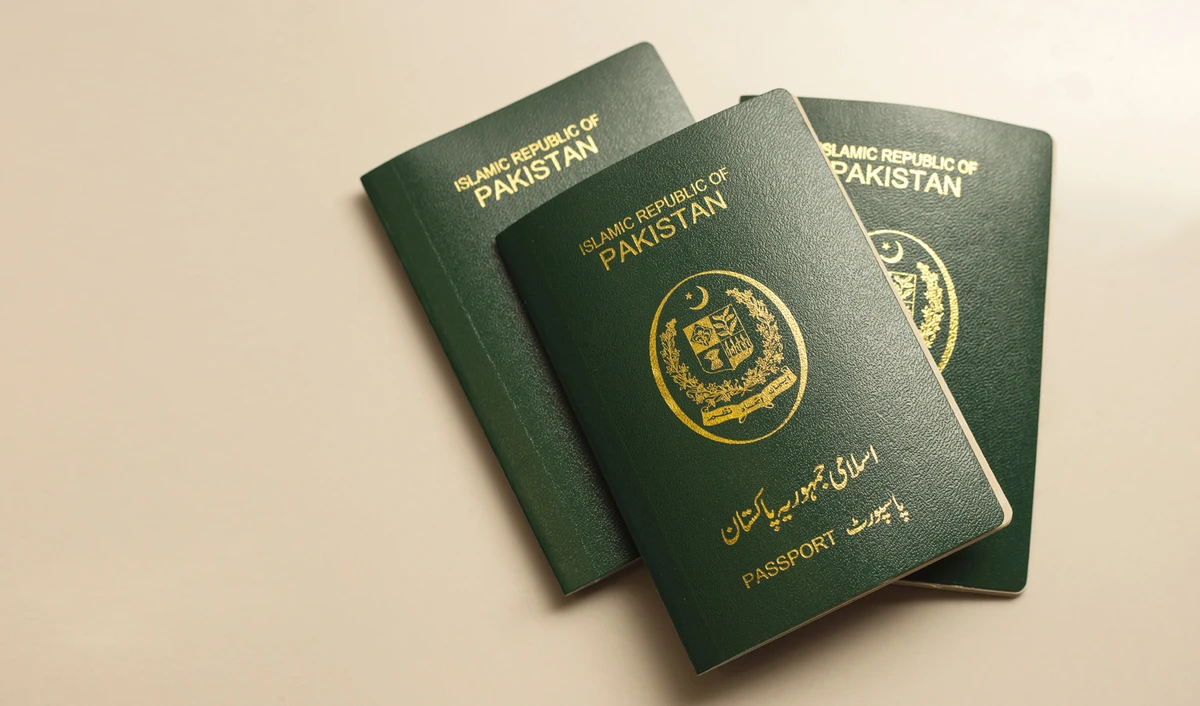
ISLAMABAD: Pakistan’s passport dropped four spots to sit at 102 in the list of countries with the least powerful passport, according to the results of an index filed on Wednesday.
The Henley’s Passport Index, which has been in use for the past 14 years, ranks passports based on the number of countries a citizen can travel to without a visa.
Out of the 106 countries listed in the index, Pakistan’s green passport stood at 102, beating Afghanistan, Syria, Somalia, and Iraq. Pakistanis can travel to 33 countries without a visa while nationals from Afghanistan, Syria, Somalia, and Iraq can visit between 30 and 32.
Meanwhile, Pakistan’s neighbors India, Bangladesh, and Sri Lanka were at the 79th, 95th and 97th positions, respectively.
Last year, Pakistan was placed at 104; Somalia and Syria at 105, while Iraq and Afghanistan were tied at 106. In 2017, Pakistan ranked in at 102, 103 in 2016 and 107 in 2015 — remains a constant feature in the last five passports.
In 2010, Pakistan managed to beat the bottom five ranking by coming in at 90 out of 98, even though it’s worth noting that it was tied with North Korea and Congo at the time.
“The obstacles are the ones we have mostly created by ourselves,” Javed Hafeez, former ambassador, told Arab News.
“In the past, it has unfortunately been used or misused for forgery, with many non-Pakistanis carrying the passport. I’ve seen Afghan nationals, Burmese, and Bangladeshis with our passport. The passport has been degraded due to lax control over the people who can hold the passport. It was once difficult to obtain one with all the scrutiny involved, which has not been the case for the past 30 to 40 years,” he said.
In addition to passport forgery, Hafeez believes that the worldwide issue of human trafficking — which unfortunately has a strong hold in Pakistan — is also to blame. Pakistan is on the tier-2 watch-list of the United Nations’ Refugee Agency and their primary outsource of human slavery is putting people into bonded labor.
“There should be zero tolerance for human smuggling — one of the reasons the Pakistani passport has lost its value is because it was used to smuggle people out of Pakistan. I have served in Oman and Greece, where there was apparent human smuggling from Pakistan. I know the FIA has posted officers abroad, in countries like Greece and Oman, to stop this practice but you know the problem starts from here, from our home, we must stop it here by applying the law on human smugglers,” he said.
The former envoy added that one of the criteria for the strength of a passport is the number of countries you can go to without a visa.
“This reason is not very easy to tackle immediately because the number of countries that you can visit without visas will increase only if Pakistanis stop going abroad illegally and if there is a strict vigilance against human smuggling,” he said.
Pakistanis going abroad and staying beyond their permitted time is a common practice, too.
“The first thing they ask you in a visa interview is whether or not you have a family, children, a career here,” Zara*, a 28-year-old professional living in Islamabad who often travels for work, said.
“I have to prove I have a ton of money in my account just so they know I have something to come back to and that I don’t plan on running as soon as I get out of the country,” she said.
Hafeez says the treatment could also be in response to our own strict visa issuance policies.
“I do wonder why our embassies cannot issue e-visas or people just apply from their homes and then get e-visas through their cards, as is done by so many other countries like Turkey. We should modernize our visa-issuing capacity from the source in Pakistan,” he said.
Though it may take some time, Hafeez is optimistic that Pakistan will achieve a better ranking for its passport in the future.
“Ten to 15 years ago, they launched the machine-readable passports. This is the passport where your photograph is not pasted on the passport but the impression is imprinted on it. This was the biggest issue with forgery. Similarly, other security features such as you can’t change the passport number and other things, this needs to be the standard passport for all Pakistanis,” Hafeez said, adding that the “rating will gradually increase or improve if we take the measures — and with the image of the new government it should definitely improve.”