

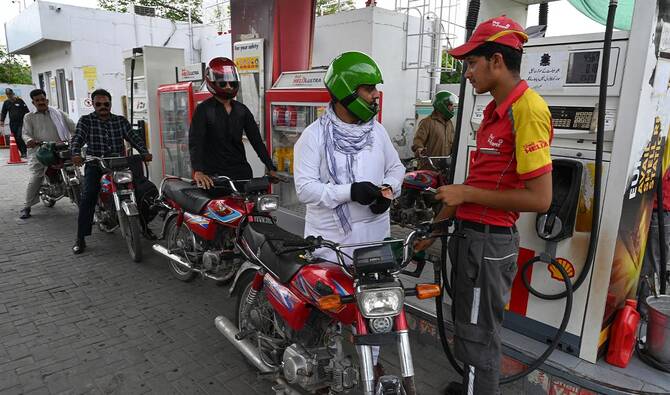

ISLAMABAD: Pakistan is set to unveil an austerity plan tomorrow, Monday, as surging global oil prices, driven by United States and Israeli strikes on Iran, mount pressure on Prime Minister Shehbaz Sharif’s government to curb spending and stabilize the economy, the PM’s office said on Sunday.
The development follows an increase of Rs55 ($0.20) per liter in the prices of petrol and diesel in Pakistan this week as the Strait of Hormuz, which supplies a fifth of the global oil consumption, faces disruptions due to US-Israeli strikes on Iran and Tehran’s counter attacks on US interests in the Gulf region.
Pakistan’s Petroleum Division was directed to submit daily stock reports, while the country’s Oil and Gas Regulatory Authority (OGRA) was tasked with maintaining strict market oversight, officials said this week, as oil rose above $90 a barrel globally, the highest in years.
Sharif on Sunday presided over a meeting to review measures to stabilize the economy amid the Middle East conflict, with officials saying global supply disruptions and price fluctuations may have an impact on Pakistan, according to the prime minister’s office.
“In view of the recent international situation, timely implementation of measures is essential for the country’s economic stability,” Sharif was quoted as saying at the meeting. “The government is constantly monitoring the situation and all necessary decisions will be taken to provide all possible stability to the national economy.”
Earlier in the day, Pakistan’s Finance Minister said that Islamabad was preparing alternative plans to manage the financial impact of rising oil prices.
Speaking at the meeting, Sharif said the austerity measures must protect the interest of the people.
“All government employees and ministers will have to adopt austerity,” he said. “In the current difficult times, it is important to ensure wise use of national resources and as soon as this difficult phase passes and the economy becomes more stable, the government will provide maximum relief to the people.”
Instructions regarding austerity and simplicity will not be applicable to the industry and agriculture sectors so that the country’s production, exports and food security are not affected, according to Sharif’s office.
Several suggestions and recommendations based on austerity and simplicity were presented at the meeting, which were reviewed in detail by participants.
“The briefing was informed that the country has adequate reserves of diesel, petrol and other petroleum products and the government has made advance arrangements to deal with any emergency,” Sharif’s office said.


