MBC plots Netflix-style original content

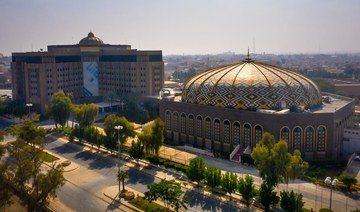
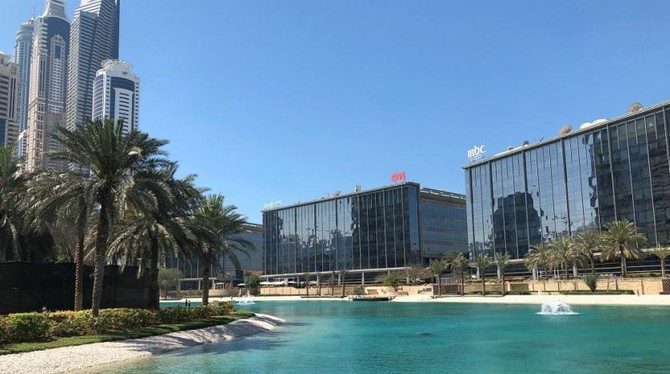
The free-to-air satellite network MBC aims to strengthen its digital footprint across the Middle East. Above, MBC’s headquarters in Dubai. (AP)
Updated 09 January 2019
Follow

MBC plots Netflix-style original content

  • Region’s biggest broadcaster throws down gauntlet to streaming giant Netflix with plans for new-look digital offering
  • Saudi backed-group has hired former Hulu executive Johannes Larcher, who joins as managing director of digital and video on demand

LONDON: MBC Group, the region’s biggest broadcaster, is going head to head with Netflix across the Arab world as it prepares to roll out original shows on demand.
The Saudi backed-group has hired former Hulu executive Johannes Larcher, who joins as managing director of digital and video on demand, with a remit to enhance the group’s entire digital offering.
His focus will be to develop the broadcaster’s “Shahid” and “Shahid Plus” video-on-demand platforms.
It is part of a five-year growth plan for the free-to-air satellite network which aims to strengthen its digital footprint across the Middle East.
But while producing original dramas on a video-on-demand basis draws obvious comparisons with Netflix, Larcher said there were also key differences.
“Netflix is active in the market, but they tend to produce content with global appeal. Shahid will focus on creating originals that are culturally relevant, thus leveraging MBC’s brand equity and long-establish privileged relationships with Arab audiences,” he said in an interview with Arab News.
“It will be interesting to see how this plays out, but we believe we have strong advantages in this area.”


Larcher revealed that there would be a strong focus on Arabic drama soaps in its originally produced content.
With so much free-to-air content available to Arab audiences, paid-for viewing can be more challenging than in other markets. However, the arrival of video-on-demand providers, such as Netflix and Starz Play, is rapidly changing the market.
“While the MENA region has a strong free-to-air TV landscape, led by MBC, and piracy remains an issue, we have found that
with the right offer, large numbers of viewers are willing to subscribe against premium content and special offerings,” said Larcher.
Regional and global broadcasters are being forced to respond to rapidly changing media consumption trends.
Digital news channels are increasingly competing with traditional broadcasters for the attention of audiences who are as likely to get their news from their phones as their televisions.
The Middle East is expected to have 390 million Internet users and six to seven connected devices per household to reach 545 million devices by 2020, primarily from the GCC, according to Deloitte.
“We reach 140 million viewers every day across the Middle East, both through our satellite television channels and online through our video-on-demand service. And as audience habits evolve we are evolving with them,” said MBC Group CEO Sam Barnett.
Netflix, the global number one video-on-demand provider, last February revealed plans for its first Arabic original series, called “Jinn.”

FASTFACTS

140 million - MBC Group’s estimated regional audience.


Western media refute Trump’s claims Iran possesses Tomahawk missiles

Updated 10 March 2026
Follow

Western media refute Trump’s claims Iran possesses Tomahawk missiles

  • Speaking to journalists, Trump suggested Tehran used US-made cruise missile in school attack that killed over 170, calling the weapon ‘very generic’
  • CNN, Sky News and analysts said that ‘neither Israel nor Iran use Tomahawk missiles,’ urged accurate identification to ensure credibility in public discourse

LONDON: Western media outlets and defense analysts have pushed back against claims by US President Donald Trump that Iran possesses Tomahawk cruise missiles, after he raised the possibility while discussing a recent strike on an Iranian school that has drawn international scrutiny.

Speaking to reporters on Monday, Trump suggested Iran may have used Tomahawks in the attack, calling the weapon “very generic” and implying that multiple countries, including Iran, could have access to the system.

However, journalists and weapons experts swiftly disputed that assertion. They noted that Tomahawk missiles are US-manufactured cruise missile systems that Washington supplies only to a small number of close allies, primarily the UK and Australia. There is no credible evidence that Iran has ever obtained the weapon.

CNN anchor Erin Burnett referenced an investigation by correspondent Isobel Yeong that concluded “neither Israel nor Iran use Tomahawk missiles, according to experts.” Sky News and other Western outlets also challenged Trump’s remarks.

Analysts pointed out that Iran has developed its own domestic cruise missile systems, such as the Soumar and Hoveyzeh, which are believed to be based partly on older Soviet-era designs.

While these systems resemble cruise missiles in concept, experts say they differ significantly from the Tomahawk in design, propulsion configuration and operational characteristics.

While Iran has made substantial advances in ballistic and domestically produced cruise missiles over the past two decades, defense analysts said there is no verified evidence that Tehran holds the American-made system.

The episode reflects a broader pattern in which statements about military technology are rapidly scrutinized by open-source investigators and defense experts.

Experts say the distinction is important: accurately identifying the type of missile used in a strike can provide clues about the likely actor responsible, the launch platform involved and the broader geopolitical consequences of a strike.

Analysts also say that accurate identification of military systems remains essential for avoiding misinformation and for maintaining credibility in public discourse surrounding regional security.

Despite the growing body of evidence, the precise circumstances of the school attack nonetheless remain unclear, with investigators hampered by a lack of weapons fragments and limited access to the site.

Norway-based rights group Hengaw said the school was holding its morning session at the time of the reported attack and had at least 168 children and 14 teachers.

Trump said the US was continuing to investigate the incident. “Whatever the report shows, I’m willing to live with that report,” he said.