Residents of Sindh’s Ranikot Fort hang on tight to their fairytale and military might

1 / 17
A view of the “Great Wall of Sindh” from Ranikot’s Sann Gate. (AN photo)
2 / 17
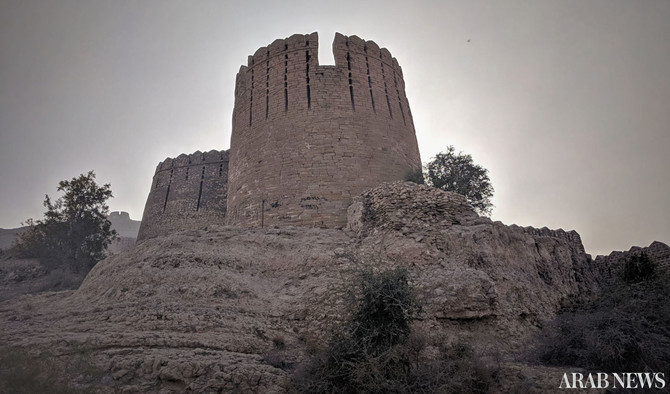
A watchtower at Ranikot’s Sann Gate can be seen in this picture. (AN photo)
3 / 17
A watchtower can be seen on one of the mountains of the Kirthar range which serves as the natural boundary wall of the bowl-shaped Ranikot Fort in Pakistan’s Sindh province. (AN photo)
4 / 17
A watchtower can be seen on one of the mountains of the Kirthar range which serves as the natural boundary wall of the bowl-shaped Ranikot Fort in Pakistan’s Sindh province. (AN photo)
5 / 17
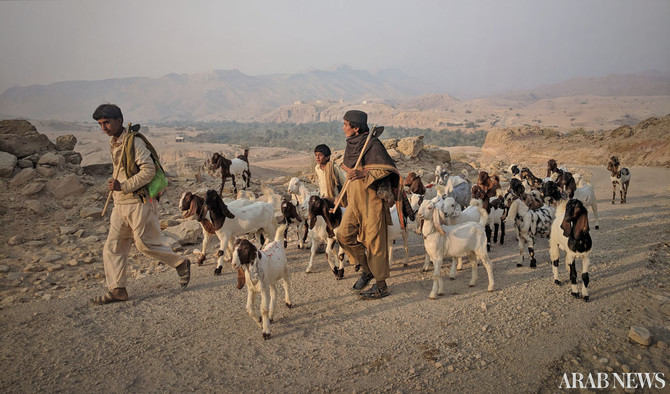
The dwellers of Ranikot Fort earn their livelihood through farming and maintaining their livestock. (AN photo)
6 / 17
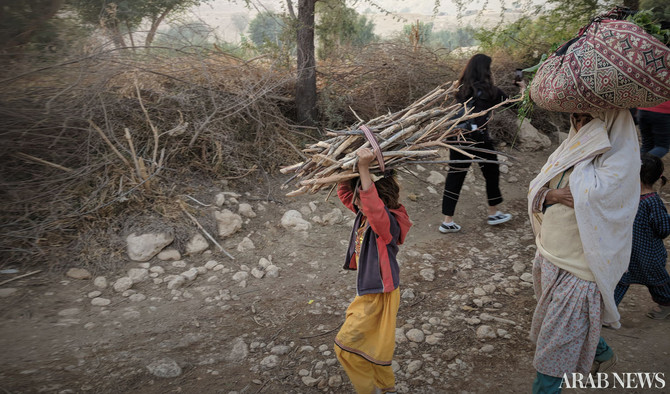
A local family is bringing wood and collard greens from its fields to cook dinner at the Ranikot Fort in Pakistan’s Sindh province. (AN photo)
7 / 17
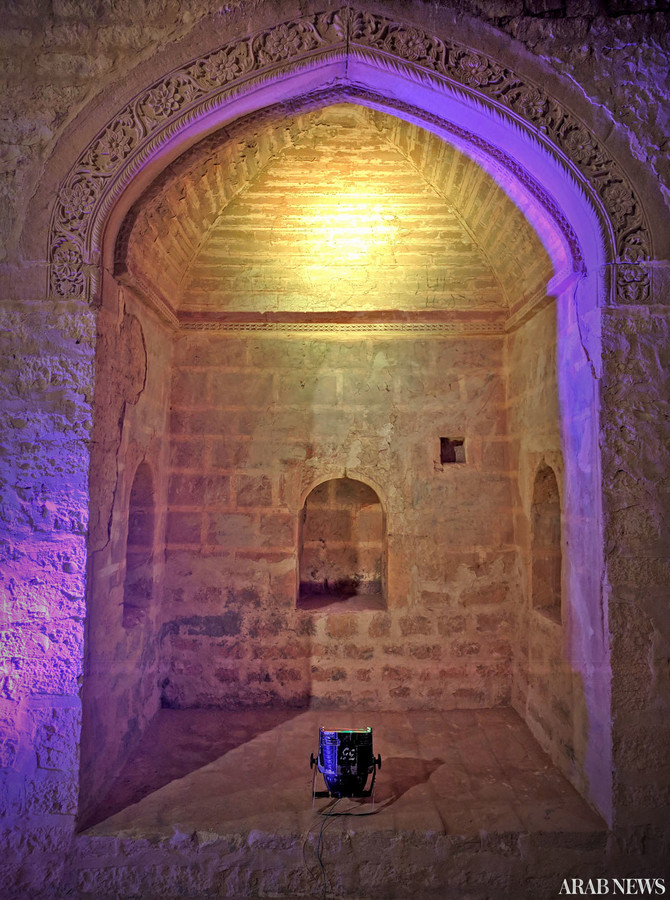
A view of the Mirikot fortress at night: Sindh’s Cultural and Tourism Department held the New Year night here on Monday. (AN photo)
8 / 17
Sher Garh is the other fortress built inside the Ranikot Fort in Pakistan’s Sindh province. (AN photo)
9 / 17
The last sunset of 2008, as seen from the Ranikot Fort. (AN photo)
10 / 17
The pond inside the fort where, locals believe, fairies come to drink water in the wee hours of the day. (AN photo)
11 / 17
The pond inside the fort where, locals believe, fairies come to drink water in the wee hours of the day. (AN photo)
12 / 17
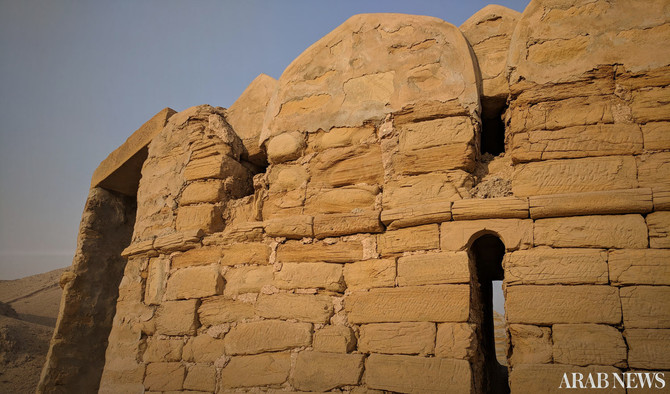
The main gate of the Mirikot fortress. (AN photo)
13 / 17
Two gorgeous carvings at the double-gate entrance of the Mirikot fortress, with scroll of pomegranates, sunflowers and peacock. (AN photo)
14 / 17
With this double-gate entrance, the Mirikot fortress is divided into six compartments. Three of them are residential portions with seven rooms that have slanting roofs. (AN photo)
15 / 17
A drama depicting the local culture was staged on the New Year Eve by Sindh’s Cultural and Tourism Department at Mirikot on December 31. (AN photo)
16 / 17
A singer is performing at Sindh’s Cultural and Tourism Department’s New Year Night show held at the Mirikot fortress December 31. (AN photo)
17 / 17
This picture captures the fireworks at the Mirikot fortress to celebrate the New Year Eve. (AN photo)
Updated 02 January 2019
Follow

Residents of Sindh’s Ranikot Fort hang on tight to their fairytale and military might

  • Huge structure has 36 watchtowers and two fortresses
  • 12 km long surrounding wall is often referred to as “The Great Wall of Sindh”

KARACHI: Residents of the historic Ranikot Fort in Pakistan’s Sindh province have told the same stories to their children for centuries — that the mountains surrounding the citadel are home to fairies who descend from the skies to drink water from a pool – known as “Paryun Jo Tar” (fairies’ pond) in the wee hours of the day.
So popular is the myth that it is narrated in great detail by all the families — hailing from the Gabol, Khosa, and Rustamani tribes — who live in the Ranikot Fort area which, according to some accounts, was used by Cyrus the Great as his military garrisons.
“Once upon a time, an elder of the Gabol tribe noticed that some exceptionally beautiful creatures came down from the mountains at the break of dawn, drank water, and flew right back into the highlands,” Syed Gayoor Abbas, an official of the culture department who mans the Fort, told Arab News on Wednesday, adding that the pond in the area got its name after the incident.
The huge fort, with a circumference of approximately 32 kilometers, 36 watchtowers, two fortresses, and a gushing spring, connects several mountains of the Kirthar range, the official said, adding that: “The history of this fort has always been a mystery. There are several different and contending narrations.”
“It is built of sandstones and limestones,” he continued, “which have been held together by lime and gypsum plaster that has, with a passage of time, made the structure much harder.”
The fort has four gates: the Sann Gate is the main road entrance; the Shah Per Gate; Amri Gate; and Mohan Gate that faces the famous Mohenjo-Daro historical sites.
The Mirikot fortress, located in the heart of Ranikot, was apparently designed as the administrative center and royal residence, Abbas said, adding that the other small fortress was called Sher Garh, which was built in the mountains.
Its periphery, he added, measured 1,434 feet, with five bastions and a double gate entrance. The stronghold has two arched vaults of sandstone containing gorgeous carvings with a scroll of pomegranates, sunflowers, and peacocks. The fortress was divided into six areas, including three with residential portions that have seven rooms with slanting roofs. “The three flat-roof rooms belong to the British period,” he said.


PIA denies social media claim its entire flight crew went missing abroad

Updated 10 sec ago
Follow

PIA denies social media claim its entire flight crew went missing abroad

  • Airline says the allegation emerged from ‘anti-Pakistan quarters’ to defame both the national carrier
  • Some social media posts recently said a PIA flight crew had gone missing during a layover in Toronto

ISLAMABAD: Pakistan International Airlines (PIA) on Sunday dismissed as “fake news” a social media claim that the entire crew of one of its flights had disappeared overseas, saying the post was circulated to defame both the national carrier and the country.

The statement came after social media posts said a PIA flight crew had gone missing during a layover in Toronto, Canada.

Previously, there have been reports that individual crew members have used layovers to remain abroad, often linked by analysts to economic conditions at home and perceived asylum opportunities under Canada’s immigration policies. However, PIA has adopted measures such as holding passports with station managers and assigning older crew to Canada routes to curb the trend.

“A tweet, circulated by certain anti-Pakistan quarters, claiming that the whole crew of a particular #PIA flight is missing, is entirely baseless,” the airline announced in a post on X, adding that the purpose of the message “seems to malign PIA and #Pakistan.”

“There has been no such incident, and the news is fake,” it said.

According to local media reports, the information had been circulated by an “Afghan and anti-Pakistan account.”

“The misleading tweet is part of a well-conceived plan based on hostility toward Pakistan and is aimed at damaging the reputation of the national airline and the country,” Pakistan’s English-language broadsheet, Dawn, quoted the airline spokesperson as saying.

Pakistan has been striving to privatize PIA along with other state-owned enterprises under an International Monetary Fund (IMF) loan program.

The airline was banned from operating in Britain and Europe, though those restrictions have been removed more recently.