Classical piano soothes old elephants at Thai sanctuary

1 / 7
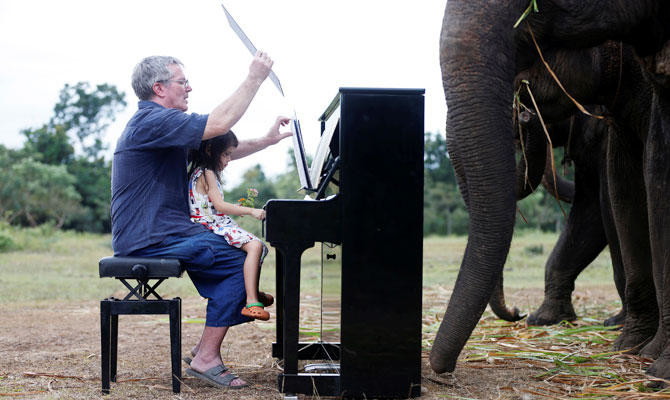
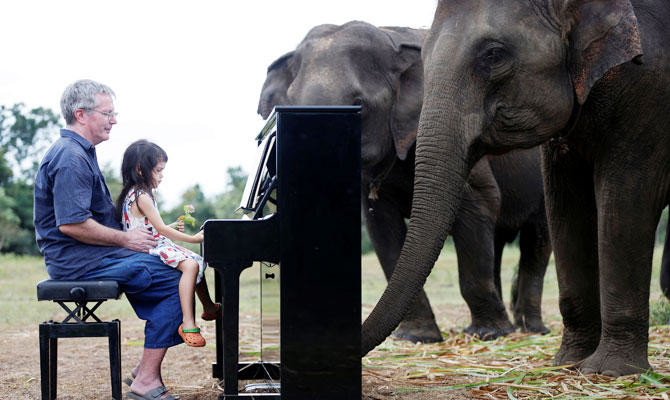
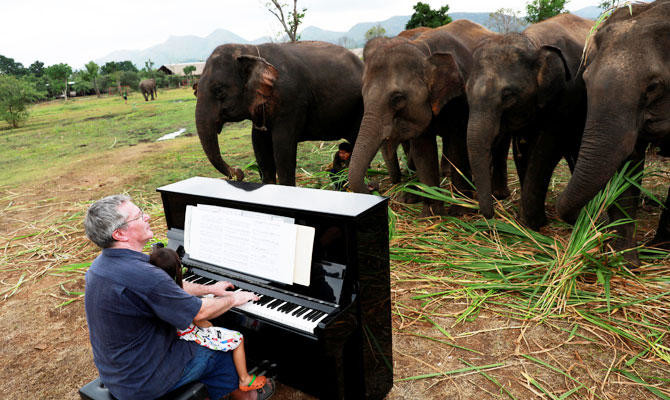
British volunteer Paul Barton and his daughter Emily Barton, 4, play piano for sick, abused, retired and rescued elephants in sanctuary along Thailand-Myanmar border in Kanchanaburi, Thailand, December 9, 2018. (REUTERS)
2 / 7
British volunteer Paul Barton and his daughter Emily Barton, 4, play piano for sick, abused, retired and rescued elephants in sanctuary along Thailand-Myanmar border in Kanchanaburi, Thailand, December 9, 2018. (REUTERS)
3 / 7
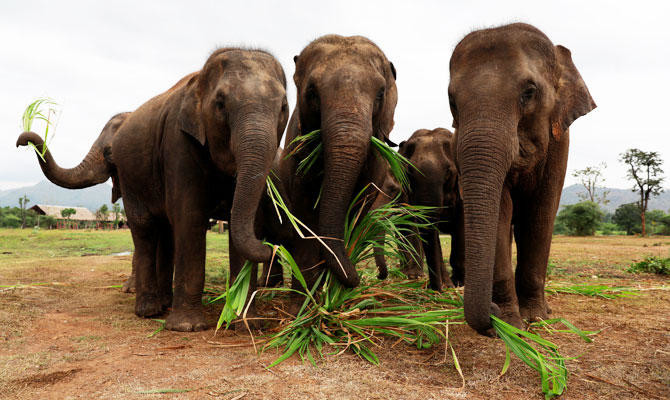
Elephants eat their breakfast as they listen British volunteer Paul Barton plays piano for sick, abused, retired and rescued elephants in sanctuary along Thailand Myanmar border in Kanchanaburi, Thailand, December 9, 2018. (REUTERS)
4 / 7
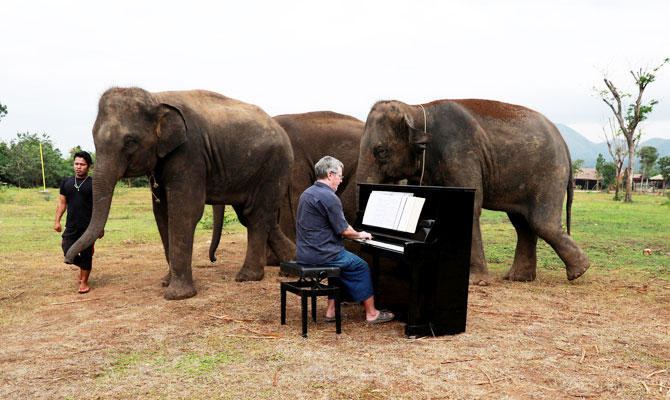
British volunteer Paul Barton plays piano for sick, abused, retired and rescued elephants in sanctuary along Thailand-Myanmar border in Kanchanaburi, Thailand, December 9, 2018. (REUTERS)
5 / 7
British volunteer Paul Barton plays piano for sick, abused, retired and rescued elephants in sanctuary along Thailand-Myanmar border in Kanchanaburi, Thailand, December 9, 2018. (REUTERS)
6 / 7
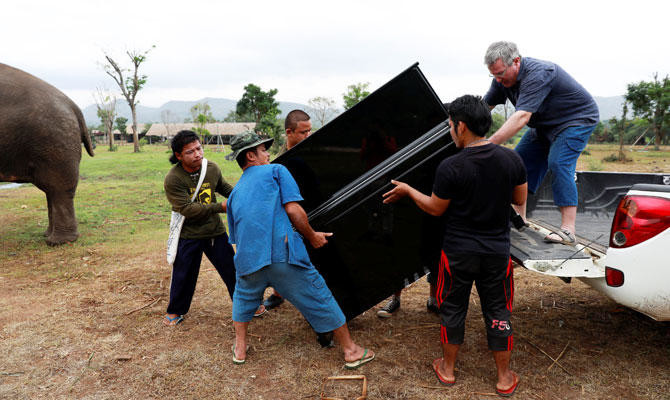
British volunteer Paul Barton unloads his piano before he plays for sick, abused, retired and rescued elephants in sanctuary along Thailand-Myanmar border in Kanchanaburi, Thailand, December 9, 2018. (REUTERS)
7 / 7
British volunteer Paul Barton plays piano for sick, abused, retired and rescued elephants in sanctuary along Thailand-Myanmar border in Kanchanaburi, Thailand, December 9, 2018. (REUTERS)
Updated 14 December 2018
Follow

Classical piano soothes old elephants at Thai sanctuary

  • At another music session, several elephants seemed to move their heads and move about in front of the piano as the notes flowed

KANCHANABURI, Thailand: Lam Duan, a 65-year-old, blind Thai elephant is enjoying her lunch, listening to Silent Night being played on a piano.
For eight years, pachyderms like Lam Duan — old, overworked and sometimes disabled — have been rehabilitated with music at Elephants World, a retirement sanctuary for the animals in the western Thai province of Kanchanaburi.
Almost 80 percent of about 3,000 elephants at tourist venues in Thailand, Cambodia, India, Laos, Nepal and Sri Lanka, endure poor living conditions and diets and are overworked, according to the animal welfare group World Animal Protection.
The animals at Elephants World get good food and treatment for their physical ailments, but the music is an extra, special treat they appear to love.
Several times a week, British classical pianist Paul Barton, 57, sets up a piano against a backdrop of forested slopes and plays for his four-legged friends.
“Maybe some of these blind elephants get a little bit of comfort from hearing pieces of soothing classical music occasionally,” says Barton, who studied at London’s Royal Academy of Arts.
Lam Duan approached Barton as he began to play and she appeared to calm down and focus on the music.
At another music session, several elephants seemed to move their heads and move about in front of the piano as the notes flowed.
The owner of the sanctuary, Samart Prasithpol, 44, said the music seemed to provide the elephants with some special comfort.
“We work here to rehabilitate the elephants physically,” Smart told Reuters.
“The use of music has been useful in rehabilitating their soul,” he said.


Thai coffee chains cut default sugar content in coffee and tea drinks in a new health push

Updated 11 February 2026
Follow

Thai coffee chains cut default sugar content in coffee and tea drinks in a new health push

  • The Health Department says Thais consume 21 teaspoons of sugar daily, far exceeding the World Health Organization’s recommended six teaspoons
  • Officials warn this increases obesity and diabetes risks. A survey found iced coffee and bubble tea contain high sugar levels

BANGKOK: For many Thais, a meal doesn’t feel complete without an iced coffee or tea so sugary it could pass for dessert. The government, concerned about the health consequences, wants them to dial it back.
Starting Wednesday, nine major coffee chains across the country have pledged to cut the default sugar content in some of their drinks by half in a government initiative aimed at tackling excessive sugar consumption.
According to the Health Department, Thais consume an average of 21 teaspoons of sugar per day, more than three times the World Health Organization’s recommended limit of six teaspoons. Health officials warn that such high intake increases the risk of obesity, diabetes and other diseases.
The initiative is the first significant step to change consumers’ sugar consumption behavior, said Amporn Benjaponpitak, the director general of the department.
Pakorn Tungkasereerak, the department’s deputy, said 2025 data show that about 45 percent of Thais aged 15 and older are obese, while 10 percent of the population has diabetes.
A survey by the Bureau of Nutrition found that a 22-ounce (650-milliliter) iced coffee contains an average of nine teaspoons of sugar, while a 10-ounce (300-milliliter) serving of bubble milk tea — an iced milk tea with tapioca pearls known as boba — can contain as much as 12 teaspoons.
Sirinya Kuiklang, an office worker, said she approves of the changes. She already orders her drinks at just 25 percent of the standard sugar level, but she is aware that many others consume too much sugar.
“It’s good for Thai people,” she said.
Another office worker, Porwares Tantikanpanit, said he has enjoyed his non-coffee beverages at their current sugar levels but is willing to adjust if shops reduce the sweetness.
However, putting the policy into practice may prove challenging. Officials have said each brand can apply the initiative as they see fit.
Some customers have expressed confusion in response to social media posts promoting the initiative, asking how to order drinks with the level of sweetness that they prefer. Several brands said that the reduction applies only to certain menu items.