A vital waterway: Why the Red Sea matters to Saudi Arabia

1 / 11
2 / 11
3 / 11
4 / 11
5 / 11
6 / 11
7 / 11
8 / 11
9 / 11
10 / 11
11 / 11
Updated 15 December 2018
Follow

A vital waterway: Why the Red Sea matters to Saudi Arabia

JEDDAH: The Red Sea Project is an ultra-luxury destination that brings together a beautiful landscape, adventure and cultural heritage. The project’s plan is to position the Kingdom on the global tourism map, create investment opportunities for the local private sector and develop the Kingdom’s tourism industry while preserving the nation’s cultural and environmental heritage.

In July of 2017, the Red Sea project was launched by Crown Prince Mohammed bin Salman, PIF deputy chairman. The luxury and sustainable international tourist destination on the west coast of the Kingdom is one of three major PIF projects. 

As part of the domestic investment strategy, PIF created three Saudi giga projects, one of which is the Red Sea Project. Located between the cities of Umluj and al-Wajh, the project covers an area of 34,000 sq km, about 500 km north of Jeddah and at the crossroads of the Middle East, Europe, Asia and Africa.

A team from the Red Sea Development Company led by John Pagano, its CEO, delivered a visual presentation on the master plan of the Red Sea Project at AQRA Palace in Riyadh with a detailed brief about its economic and development objectives to become a global destination in the luxury tourism sector.

Research published by Abu Dhabi-based ADCB this week highlighted the importance of developing Red Sea tourism for the non-oil economy in the Kingdom.

“New mega projects to develop tourism have been announced this year, including the ulta-luxurious Amaala tourist resort on the Red Sea and the Wadi Al-Disah project, which will extend across several archaeological sites,” said ADCB in its “Saudi Arabia: Weather watching as the winds change” report. “These projects should help to diversify the tourism mix in the country.”

“The PIF is expected to kick-start many of these projects as an anchor and seed investor with international and private sector partners likely to be sought once momentum builds.”

“The destination will provide a unique sense of place for visitors and offer nature lovers, adventurer, cultural explorers and guests looking to escape and rejuvenate, a wide range of exclusive experiences, combining luxury, tranquility, adventure and beautiful landscapes,” said Pagano during the initiation of the project in 2017. 

The project’s progress report comes in after an agreement with six countries bordering the Red Sea and the Gulf of Aden to establish an entity of cooperation. Representatives from Egypt, Djibouti, Somalia, Sudan, Yemen and Jordan gathered in Riyadh to discuss the initiative.

“This new maritime alliance is coming at a critical time in the history of the relations between the Arabian Peninsula and all lands west of the Red Sea area including the Gulf of Aden,” said Dr. Theodore Karasik, senior advisor at Gulf State Analytics in Washington DC.

“These straits, gulfs, and ports around the Red Sea region are now filled with an increasing number of bases from land to sea to protect maritime shipping but also to safeguard littoral coast lines. The geopolitical picture is beginning to show the growing importance of the Red Sea and surrounding environs in order to safeguard transit zones and that a regional grouping is necessary.  

“Coastal development projects that boost not only the Saudi economy but other regional countries as well are important to the development of the Red Sea. Red Sea tourism projects are increasing and it is important to guarantee the safety and security of these commercial, water-front zones in a changing security environment. Ultimately, NEOM is also at the center of this effort given its trans-border plans.” 

“Importantly, the creation of the maritime zone is to continue to build strong connections with the Horn of Africa states that guarantees a coordinating mechanism as ports and economic projects expand. A key point is helping land-locked Ethiopia further develop its links to blue waters. Only through such an organization can deconfliction issues be resolved as all countries in the region work more closely together.”

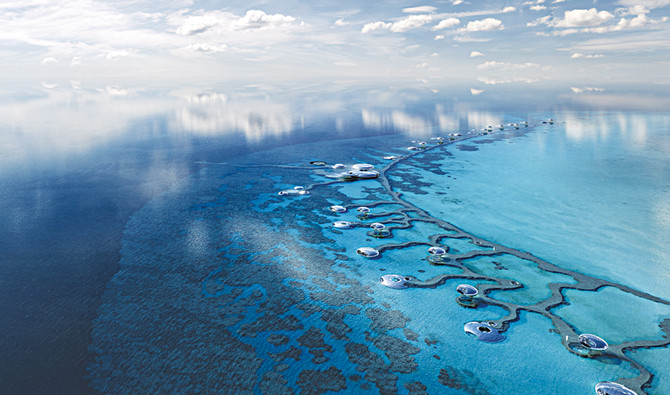
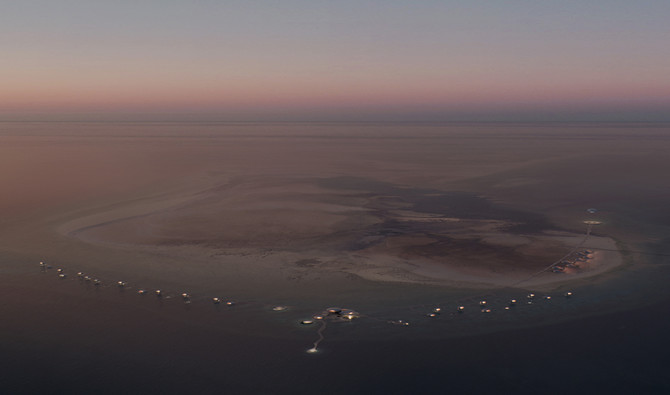
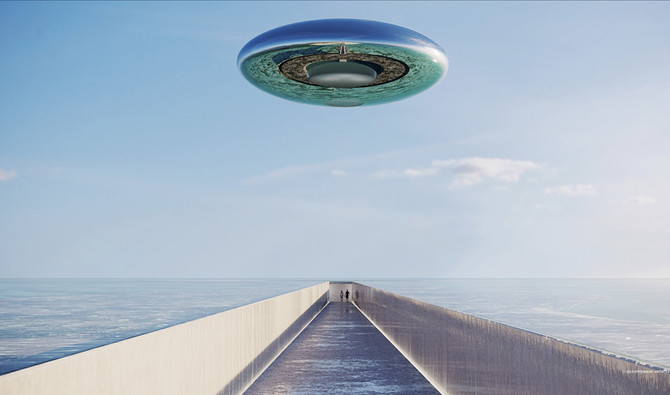
The Red Sea Project destination will be developed around several geographical treasures: 200km of coastline; over 50 untouched, pristine islands with stunning coral reefs; historical sites; dormant volcanoes and nature reserves. 

The first phase of the project, scheduled for completion in the first quarter of 2022, will include up to 3,000 hotel rooms, an airport to serve the destination, and yacht marinas, as well as residential properties and recreational facilities. 

By completion of all stages of the project, there will be 22 developed islands of more than 90 islands, and 70,000 jobs created. The project will play a significant role in driving economic diversification in Saudi Arabia by attracting nearly 1 million visitors every year, and achieving a contribution of SR22 billion to the Kingdom’s GDP.

Dr. Hamdan Al-Shehri, an international affairs scholar based in Riyadh, said: “Among Saudi Arabia’s objectives is to combine all efforts and ensure joint efforts are made to secure navigation in the Red Sea, address threats that may affect its security and stability, and prevent other states, such as Iran, from using the terrorist groups in these countries. 

“The difference between Saudi Arabia and Iran is that Iran uses those terrorist militias against these countries and against the region’s security while Saudi Arabia does not use this scheme. The Kingdom aims to deal with states that have security and stability problems to make them realize the importance of security and stability in their countries, therefore motivating joint action in clearing the region of any threat that harms the security of the Red Sea. This way, all parties will benefit from future projects in which everyone is welcome to participate. 

“Thus, it is important that everyone partners in securing the Red Sea so that common goals are achieved quickly and efficiently, and then everyone can benefit from achieving these goals in investment and economic fields that serve all parties.”


‘I feel seen,’ says Saudi storyteller Noura Alashwali

Saudi visual storyteller Noura Alashwali’s debut graphic novel began as a way to process grief in private. (Supplied)
Updated 6 sec ago
Follow

‘I feel seen,’ says Saudi storyteller Noura Alashwali

  • Ministry of Culture-backed incubator helped Jeddah local create her first graphic novel

JEDDAH: Visual storyteller Noura Alashwali is one of a generation of Saudi artists whose personal journeys mirror the Kingdom’s cultural transformation, meaning their creative impulses are increasingly backed by public institutions and have an audience ready to listen.

“Creative expression was never just a hobby for me; it was a need,” Alashwali, 37, told Arab News. “From a young age, whether through writing or drawing, creativity felt like a part of who I was. And it still is.”

It was her education at Dar Al-Hekma University, where she obtained a degree in graphic design, that gave structure and language to an instinct she had carried since childhood. 

Saudi visual storyteller Noura Alashwali’s debut graphic novel began as a way to process grief in private. (Supplied)

“My earliest memory of drawing with pen and paper is when I was four years old, and I still have those drawings,” she said. Like many artists, she experimented with various mediums as she grew older. Eventually, she found her way to a Saudi art center that she described as “a very popular and wonderful place to learn art.”

At university, Alashwali’s work turned digital. “When I learned about the major, I immediately felt that I belonged. Graphic design is about visual communication. It’s not just about creating art, but about communicating ideas, thoughts, and stories.”

Those ideas would take on a personal weight in 2023 with “Deema and the Old Letters,” her debut graphic novel.

When an idea comes to me (now), I take it more seriously. I honor it and commit to it. I say, ‘Thank you for choosing me. I’m going do my best to manifest you.’

Noura Alashwali, Saudi storyteller

“It was a way for me to process my grief after my mother passed away in 2023,” Alashwali explained. “I was simply writing and drawing while processing very heavy emotions.” 

Noura Alashwali's creativity was supported by the Literature, Publishing and Translation Commission's Authors’ Incubator Program in 2024. (Supplied)

What transformed that intimate archive into a published work was institutional support. In early 2024, Alashwali came across an open call from the Ministry of Culture’s Literature, Publishing and Translation Commission for its Authors’ Incubator program. 

The inclusion of graphic novels and comics among the supported genres caught her attention. She assembled her materials into a PDF, applied, and was accepted.

For the six-month Riyadh-based program she was paired with a mentor, Dr. Hanan Al-Ghadi from Princess Nourah University, and supported logistically. By November 2024, she had signed with Rashm, a publishing house collaborating with the commission.

Alashwali contrasts the protagonist’s depression with the warmth of Jeddahwi landscapes. (Supplied)

Beyond the mentorship and funding, the experience reshaped her sense of self.

“It felt like a dream. Because of institutional support from the Ministry of Culture, I feel validated. I feel seen,” she said. “It encouraged me to take my practice seriously — not just as self-expression, but as something that contributes to the Saudi cultural scene.”

Initiatives such as the incubator program do not merely teach skills; they signal that deeply personal stories of grief, love and memory have a place in the public cultural sphere.

Alashwali contrasts the protagonist’s depression with the warmth of Jeddahwi landscapes. (Supplied)

While Alashwali hopes her work will be translated into English, publishing in Arabic for Saudi readers was the natural choice. “It’s great to contribute to the local scene with an Arabic graphic novel,” she said.

“Deema and the Old Letters” traces a young woman’s journey through pain and grief, using moonlit symbolism and visual poetry to explore art as a means of self-discovery and healing.

“I wanted it to feel intimate and personal. So ‘Deema’ is also designed like a journal,” Alashwali noted.

The protagonist’s depression is juxtaposed with the warmth of Jeddahwi landscapes. 

“Jeddah is home. And when you are home, you’re being your most authentic self,” Alashwali said. “It’s a very kind and happy city; very welcoming and down-to-earth.”

The literature commission’s incubator also expanded Alashwali’s creative world, connecting her to artists from across the Kingdom, including Riyadh, Baha, and the Eastern Province. 

“We have lots of beautiful cultures and stories in Saudi Arabia,” she said. “I have developed close friendships which contributed to my creative practice and personal growth.”

This sense of cross-regional exchange reflects a shift: Artists who once worked in silos are now being given room to meet, collaborate and be heard. 

“What I enjoy most about being a storyteller in Saudi Arabia is that the scene is still fresh. People notice new work and genuinely connect with it,” Alashwali said. “It doesn’t feel overcrowded and overwhelming.”

Besides the literature commission, she has worked with the Visual Arts Commission and the Heritage Commission, including a workshop on creating eyeglass frames using Saudi craft techniques, created in collaboration with Italian gallery Moi Aussi and the Saudi Artisanal Company. 

At Hayy Jameel in December, as part of the three-day “Soul of Palestine” program, Alashwali led a visual storytelling workshop where participants created digital illustrations to celebrate Palestinian heritage and culture.

Earlier in 2025, she participated in the Jeddah Book Fair and the Riyadh International Book Fair. In Jeddah, she worked with younger audiences on transforming emotions into short comics. In Riyadh, the focus shifted to books and artistic practice. 

Across these settings, her metric for success remains emotional rather than technical. “It’s when I feel the participants have opened their hearts and try to transform their emotions into a comic, regardless of the drawing skills,” she explained.

Alashwali’s next project is inspired by conversations with her five-year-old daughter. “One day, after smelling a vanilla perfume she loves, she told me: ‘Mama, I think this is the smell of my heart.’ She believed it completely,” she said. “That idea stayed with me — the thought that the world might be kinder if we could smell hearts. So, the project will take the form of a directory of heart scents.”

Her plans for 2026 are modest. “I hope to dedicate more time and energy to my art,” she said. “If that doesn’t happen, publishing my next book will be enough.”

Underpinning it all is a philosophy she returns to — one espoused in one of her favorite books, “Big Magic,” in which Elizabeth Gilbert writes about ideas as living entities searching for someone to bring them into the world.

“As a Muslim, I believe these ideas are created by God,” said Alashwali. “When an idea comes to me now, I take it more seriously. I honor it and commit to it. I say, ‘Thank you for choosing me. I’m going do my best to manifest you.’”