DHAKA: Rohingya refugees have told Arab News they fear going back to Myanmar after a government minister made derogatory remarks about Islam.
Myanmar’s Minister for Religious Affairs and Culture Thura Aung Ko also made comments about the Muslim minority group, which has been subjected to a military crackdown described by the United Nations as a textbook example of ethnic cleansing.
Ko alleged that Rohingya youths in refugee camps across the border in Bangladesh were being brainwashed to “truly march toward Myanmar” and referred to the Rohingya as Bengalis, a term used by Naypyidaw to paint the group as illegal immigrants.
In another video, released by Radio Free Asia, Ko alleged that Myanmar’s Buddhist population was under threat.
“While we Buddhists practice monogamy and have only one or two children, an extreme religion encourages having three or four wives and giving birth to 15 to 20 children. After three, four, five decades in this Buddhist country, the Buddhist community will certainly become the minority,” he said in the video.
The Rohingya have faced severe discrimination in Myanmar and been the target of violence for years, notably in 2017.
Thousands were killed and more than 720,000 fled their homes following a Myanmar military crackdown purportedly aimed at militants, according to rights group.
Myanmar refuses to recognize the Rohingya as a legitimate native ethnic minority and they are denied citizenship and other rights.
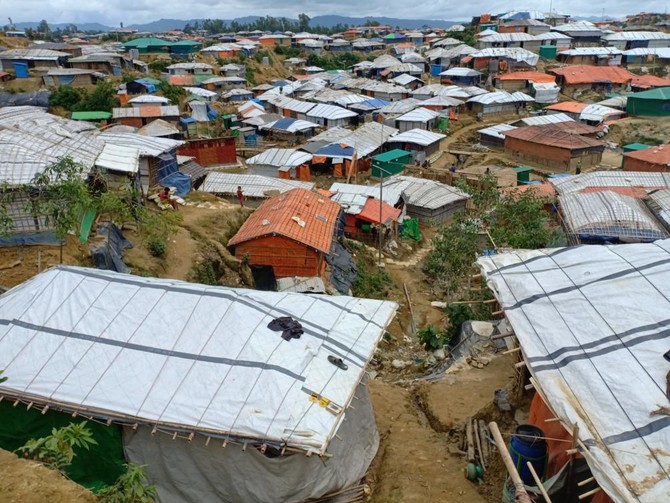
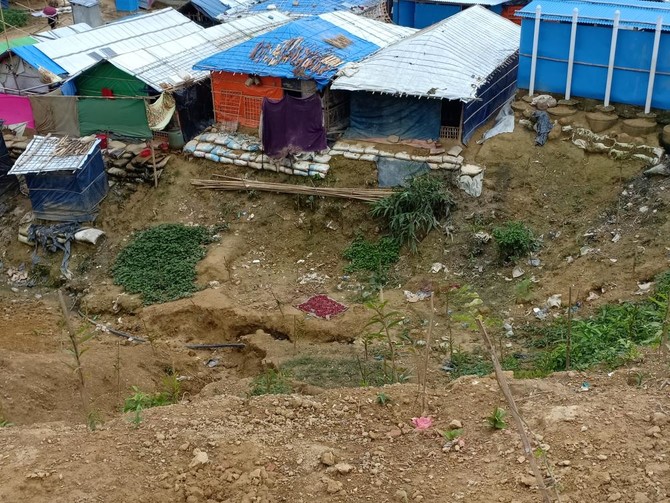
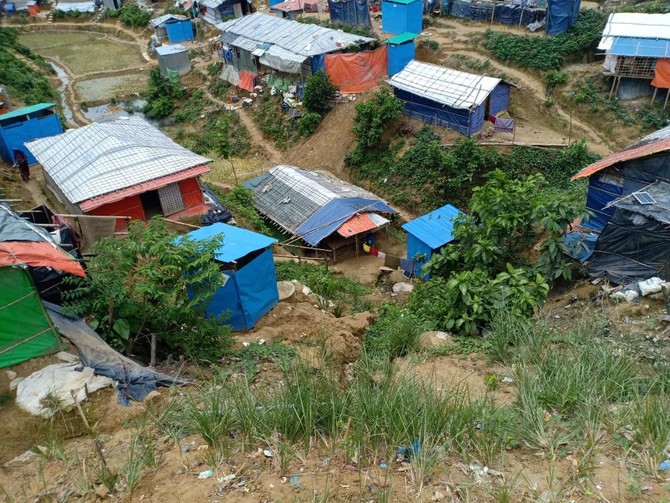
“We were living in a highly hostile environment, in many cases that were backed by the state. Now the world witnessed it once again after the religious affairs minister’s comments,” Daud Ali told Arab News, a 47-year-old living in the Kutapalang refugee camp in the southeastern city of Cox’s Bazar.
Another refugee at the same camp, 27-year-old Sayed Alam, said the Rohingya had always been treated as second class citizens.
“Our movements were highly restricted even in Rakhine,” he told Arab News, referring to the western Myanmar state where the majority of the Rohingya live, “so it’s no wonder that a minister of (Aung) Suu Kyi’s government makes derogatory remarks about Muslims.”
Bangladesh protested Ko’s remarks, summoning Myanmar’s Ambassador Lwin Oo to the Foreign Ministry in Dhaka on Wednesday.
Delwar Hossain, from the Foreign Ministry, said Bangladesh had conveyed its displeasure.
“We consider that these types of comments are unacceptable and disgraceful. Bangladesh has strongly objected and made its position clear. In the entire conversation, Myanmar’s envoy did not utter any words in defense of his country and only assured to convey Dhaka’s message to Naypyidaw,” Hossain told Arab News.
Ko, a former Myanmar army general, was appointed in 2016 by Suu Kyi after her party came to power in a general election landslide victory.
“Myanmar does not seem interested in Rohingya [refugees] repatriation,” former Bangladesh Ambassador to the United States Humayun Kabir told Arab News.
Myanmar would not be making negative remarks about Bangladesh if it were genuinely interested in creating a conducive environment for repatriation, he added.
“Actually Bangladesh has no other option to move forward with the repatriation issue except for creating more diplomatic pressure from the international community.”
An attempt to repatriate Rohingya refugees last month failed because of their refusal to go of their own accord.
They had a list of demands before any repatriation including safety and security in Rakhine, citizenship guarantee and freedom of movement.
The UNHCR is helping Bangladesh with the repatriation process to ensure it is voluntary.
One official report from humanitarian agencies said more than 15,000 Rohingyas had entered Bangladesh since January 2018.
“It is very clear that Myanmar’s government is not willing to repatriate us and that’s why they are constantly spreading negative comments about Rohingyas,” said Mohammad Ashraf, a 38-year refugee from Balukhali camp. “How can we return to Myanmar amid such an unpleasant situation and hatred?”


![]()
![]()
![]()
![]()
![]()


Rohingya refugees wary after Myanmar minister’s hostile remarks

Rohingya refugees wary after Myanmar minister’s hostile remarks
- Myanmar ambassador summoned by Dhaka
- Crackdown on Rohingya was ‘ethnic cleansing’ said UN


Afghans mourn villagers killed in Pakistani strikes
- Afghans gathered around a mass grave Sunday to bury villagers killed in overnight air strikes by Pakistan, which said its military targeted militants
BIHSUD: Afghans gathered around a mass grave Sunday to bury villagers killed in overnight air strikes by Pakistan, which said its military targeted militants.
The overnight attacks killed at least 18 people and were the most extensive since border clashes in October, which left more than 70 dead on both sides and wounded hundreds.
“The house was completely destroyed. My children and family members were there. My father and my sons were there. All of them were killed,” said Nezakat, a 35-year-old farmer in Bihsud district, who only gave one name.
Islamabad said it hit seven sites along the border region targeting Afghanistan-based militant groups, in response to suicide bombings in Pakistan.
The military targeted the Pakistani Taliban and its associates, as well as an affiliate of the Daesh group, a statement by the Ministry of Information and Broadcasting said.
Afghan government spokesperson Zabihullah Mujahid said “people’s homes have been destroyed, they have targeted civilians, they have committed this criminal act” with the bombardment of Nangarhar and Paktika provinces.
Residents from around the remote Bihsud district in Nangarhar joined searchers to look for bodies under the rubble, an AFP journalist said, using shovels and a digger.
“People here are ordinary people. The residents of this village are our relatives. When the bombing happened, one person who survived was shouting for help,” said neighbor Amin Gul Amin, 37.
Nangarhar police told AFP the bombardment started at around midnight and hit three districts, with those killed all in a civilian’s house.
“Twenty-three members of his family were buried under the rubble, of whom 18 were killed and five wounded,” said police spokesperson Sayed Tayeeb Hammad.
Strikes elsewhere in Nangarhar wounded two others, while in Paktika an AFP journalist saw a destroyed guesthouse but there were no immediate reports of casualties.
- ‘Calculated response’ -
Afghanistan’s defense ministry said it will “deliver an appropriate and calculated response” to the Pakistani strikes.
The two countries have been locked in an increasingly bitter dispute since the Taliban authorities retook control of Afghanistan in 2021.
Pakistani military action killed 70 Afghan civilians between October and December, according to the UN mission in Afghanistan.
Several rounds of negotiations followed an initial ceasefire brokered by Qatar and Turkiye, but they have failed to produce a lasting agreement.
Saudi Arabia intervened this month, mediating the release of three Pakistani soldiers captured by Afghanistan in October.
The deteriorating relationship has hit people in both countries, with the land border largely shut for months.
Pakistan said Sunday that despite repeated urging by Islamabad, the Taliban authorities have failed to act against militant groups using Afghan territory to carry out attacks in Pakistan.
The Afghan government has denied harboring militants.
Islamabad launched the strikes after a suicide blast at a Shiite mosque in Islamabad two weeks ago and other such attacks more recently in northwestern Pakistan.
The Daesh group had claimed responsibility for the mosque bombing, which killed at least 40 people and wounded more than 160 in the deadliest attack in Islamabad since 2008.
The militant group’s regional chapter, Islamic State-Khorasan, also claimed a deadly suicide bombing at a Kabul restaurant last month.
The overnight attacks killed at least 18 people and were the most extensive since border clashes in October, which left more than 70 dead on both sides and wounded hundreds.
“The house was completely destroyed. My children and family members were there. My father and my sons were there. All of them were killed,” said Nezakat, a 35-year-old farmer in Bihsud district, who only gave one name.
Islamabad said it hit seven sites along the border region targeting Afghanistan-based militant groups, in response to suicide bombings in Pakistan.
The military targeted the Pakistani Taliban and its associates, as well as an affiliate of the Daesh group, a statement by the Ministry of Information and Broadcasting said.
Afghan government spokesperson Zabihullah Mujahid said “people’s homes have been destroyed, they have targeted civilians, they have committed this criminal act” with the bombardment of Nangarhar and Paktika provinces.
Residents from around the remote Bihsud district in Nangarhar joined searchers to look for bodies under the rubble, an AFP journalist said, using shovels and a digger.
“People here are ordinary people. The residents of this village are our relatives. When the bombing happened, one person who survived was shouting for help,” said neighbor Amin Gul Amin, 37.
Nangarhar police told AFP the bombardment started at around midnight and hit three districts, with those killed all in a civilian’s house.
“Twenty-three members of his family were buried under the rubble, of whom 18 were killed and five wounded,” said police spokesperson Sayed Tayeeb Hammad.
Strikes elsewhere in Nangarhar wounded two others, while in Paktika an AFP journalist saw a destroyed guesthouse but there were no immediate reports of casualties.
- ‘Calculated response’ -
Afghanistan’s defense ministry said it will “deliver an appropriate and calculated response” to the Pakistani strikes.
The two countries have been locked in an increasingly bitter dispute since the Taliban authorities retook control of Afghanistan in 2021.
Pakistani military action killed 70 Afghan civilians between October and December, according to the UN mission in Afghanistan.
Several rounds of negotiations followed an initial ceasefire brokered by Qatar and Turkiye, but they have failed to produce a lasting agreement.
Saudi Arabia intervened this month, mediating the release of three Pakistani soldiers captured by Afghanistan in October.
The deteriorating relationship has hit people in both countries, with the land border largely shut for months.
Pakistan said Sunday that despite repeated urging by Islamabad, the Taliban authorities have failed to act against militant groups using Afghan territory to carry out attacks in Pakistan.
The Afghan government has denied harboring militants.
Islamabad launched the strikes after a suicide blast at a Shiite mosque in Islamabad two weeks ago and other such attacks more recently in northwestern Pakistan.
The Daesh group had claimed responsibility for the mosque bombing, which killed at least 40 people and wounded more than 160 in the deadliest attack in Islamabad since 2008.
The militant group’s regional chapter, Islamic State-Khorasan, also claimed a deadly suicide bombing at a Kabul restaurant last month.
Latest updates


© 2026 SAUDI RESEARCH & PUBLISHING COMPANY, All Rights Reserved And subject to Terms of Use Agreement.