



BUENOS AIRES: G20 powers open two days of summit talks in crisis-hit Argentina on Friday after a stormy buildup dominated by US President Donald Trump’s consensus-bucking campaign to realign world trade.
Shortly before the summit kicks off, Trump’s “America First” charge will bear fruit with the signing in Buenos Aires of a successor to the North American free trade pact NAFTA.
The revamped accord, called the US-Mexico-Canada Agreement (USMCA), looks a lot like the one it replaces. But enough has been tweaked for Trump to declare victory on behalf of the US workers he claims were cheated by NAFTA.
Yet, underlining that the new deal may not be quite the game-changer he professes, the signing will be executed by senior trade negotiators from the three countries rather than their leaders attending the G20.
After imposing punishing tariffs on Chinese goods and threatening more to come in January, Trump also has China in his sights as he prepares to meet President Xi Jinping on the G20 margins.
Following the USMCA signing, and once Argentina’s President Mauricio Macri has opened the first of the summit’s two days, a mass protest is planned for central Buenos Aires Friday afternoon.
Argentines are grappling with soaring inflation and unemployment caused by an economic crisis, which has led to a deeply unpopular bailout from the International Monetary Fund.
“There’s a lot of people who don’t have houses and don’t have work. They are not focusing on the people who have needs,” barber Ariel Villegas, 47, said at one protest Thursday outside the Argentine Congress building.
The government is vowing zero tolerance of violence as it hosts its biggest ever international gathering, and says it has won promises from the protest organizers to keep the streets calm.
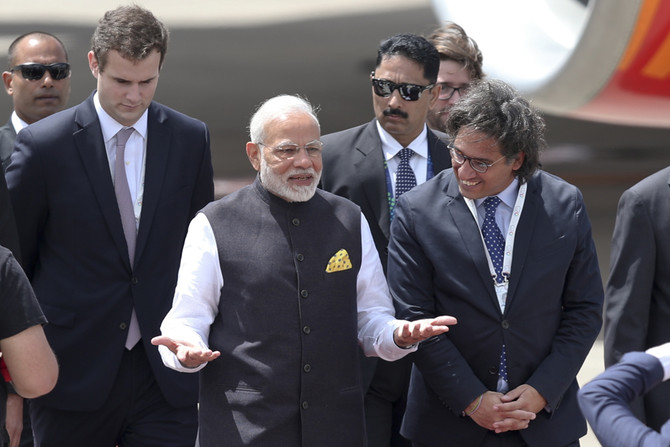
The G20 summit will be accompanied by an array of diplomatic initiatives with several bilateral meetings by the leaders attending, including Russian President Vladimir Putin, Japanese Prime Minister Shinzo Abe and Indian Prime Minister Narendra Modi.
German Chancellor Angela Merkel is one of the leaders due to sit down with Trump on Friday. But she will miss the summit’s opening after her plane was forced to make an emergency landing in Cologne due to a technical problem.
Her temporary absence could complicate French President Emmanuel Macron’s attempts to build a European front against Trump at a meeting of EU leaders attending the G20 on Friday morning.
But late on Thursday, Macron was defiant as he rejected those who wish to confront economic challenges by being “bellicose, isolationist and closing down borders,” praising instead the poverty-slashing benefits accrued under the globalization of recent decades.
<b>Climate change</b>
The French leader also defended the Paris Agreement on climate change, which is under assault by Trump and by Jair Bolsonaro, the incoming, far-right president of G20 member Brazil.
G20 sources said climate change was emerging as the biggest stumbling block to agreement on a joint communique in Buenos Aires when the summit concludes on Saturday.
Trump has yanked the United States out of the Paris pact, and his opposition to collective action stands in defiance of scientists’ increasingly urgent warnings that the planetary threat needs policy redress now.
But with a major UN meeting on climate change starting next week in Poland straight after the G20, UN chief Antonio Guterres said in Buenos Aires that “this is a make-it-or-break-it moment.”
Two major summits this year, of the Group of Seven democracies and the Asia-Pacific Economic Cooperation forum, ended without the once-routine statements, with Trump refusing to go along with the G7 due to a feud with his host, Canadian Prime Minister Justin Trudeau.
“Will we even have a communique? It really is an open question,” said former Canadian negotiator Thomas Bernes, a senior fellow at the Ontario-based Center for International Governance Innovation.


