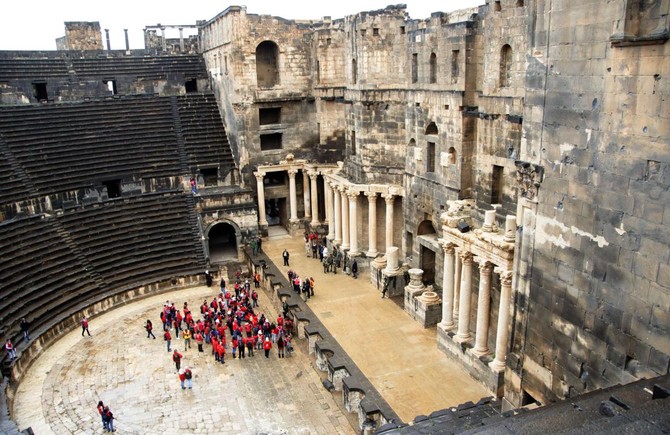
BOSRA, Syria: Mobile phone in hand, student Abdelaziz Al-Aswad bounds up the steps of an UNESCO-listed Roman theater in southern Syria, elated that the heritage site has survived seven years of civil war.
The second-century theater stands tall in the ancient city of Bosra, which the United Nations cultural body designated as under threat after Syria’s conflict broke out.
Al-Aswad was among dozens to visit and take pictures of the theater under grey skies on Friday, as part of an organized trip to the area sanctioned by the tourism ministry.
“I traveled 700 kilometers (430 miles) from northern Syria to see the theater after hearing so much about it,” said the 23-year-old, who hails from the northern city of Aleppo.
Regime forces retook full control of the surrounding province of Daraa in July, for the first time in six years.
Rebels had overrun parts of Bosra in 2012, and then took it over completely in 2015.
“I thought I’d find it destroyed, but it seems to have survived this vicious war,” said Al-Aswad, dressed in a red hoody and matching headband, both bearing the words “I am Syrian.”
Dozens of visitors, including some armed with umbrellas to fend off drizzle, hiked up the dark stone steps of the semi-circular theater for a better view of the stage below.
Around them the ancient auditorium appeared largely unscathed, except for a hole blown into the steps, a small pit on the stage, and shell pockmarks on columns.
In ancient times, Bosra was the capital of the Roman province of Arabia, and an important stopover on the ancient caravan route to Makkah, UNESCO says.
The archaeological site — which was once a bustling city of some 80,000 people — also contains early Christian ruins and several mosques.
Khaled Nawaylati, one of the trip’s organizers, said he was overjoyed to find Bosra’s theater in one piece on his first visit in ten years.
“You can’t imagine my happiness after I saw the site was safe and sound,” he said.
According to Wafi Al-Dous, head of the local civil council, no more than five percent of the theater has been damaged.
Hundreds of archaeological sites have been destroyed, damaged or looted in Syria’s conflict, with all sides blamed for the pillaging.
Before the war, tourism was an essential source of foreign currency for Syria’s economy, second only to oil exports.
But after the brutal repression of anti-government protests in 2011 spiralled into civil war, the fighting kept foreign visitors at bay.
With clashes and bombardment raging across the country, internal tourism also plummeted.
“Internal tourism completely stopped in 2011, and visitors have since stayed away,” said Dous, who fled Bosra when the rebels fully overran it three years ago.
He has only recently returned, but with the government back in control, he is optimistic.
Restoration will soon get underway, Dous said, and a festival that once saw Lebanese singer Fairuz perform in the ancient city will be revived.
Syrians on the organized tour on Friday were delighted just to be able to visit a landmark of their country’s history.
In the middle of the Roman stage, 30-year-old Manal posed for a picture with her seven-month-old daughter after making the day trip with her husband from Damascus.
“We can’t travel outside Syria, so we’re starting to visit our own country again,” she said.
“There are so many beautiful places” to see, she added.


![]()
![]()

In southern Syria, Roman theater survives civil war intact
In southern Syria, Roman theater survives civil war intact


Latest updates


Recommended


© 2026 SAUDI RESEARCH & PUBLISHING COMPANY, All Rights Reserved And subject to Terms of Use Agreement.