ISLAMABAD: Prime Minister Imran Khan arrived in Abu Dhabi, on Sunday, on a one-day visit to the United Arab Emirates.
Imran Khan was received by Sheikh Mohammed bin Zayed bin Sultan Al-Nahyan, the Crown Prince of Abu Dhabi and Deputy Supreme Commander of the UAE’s Armed Forces, at Presidential Palace, the PM office said in statement.
Earlier on arrival Prime Minister Imran Khan was received by Sultan bin Jaber Minister of State/ CEO of ADNOC at the Presidential Apron, Abu Dhabi Airport.
This is Imran Khan’s second visit to UAE time in two months.
Economists say he plans to seek financial assistance to help overcome Pakistan’s balance of payments crisis.
The Foreign Office said on Saturday that Khan will meet with the ruler of Dubai Sheikh Mohammad bin Rashid Al-Maktoum, Vice President and Prime Minister of the UAE, among others during his stay in the Emirates.
Khan was invited to visit the UAE by Sheikh Mohammed bin Zayed Al-Nahyan, Crown Prince of Abu Dhabi and Deputy Supreme Commander of the UAE Armed Forces.
“Matters of bilateral, regional and global interest will be discussed in the meeting between the Prime Minister and the Crown Prince,” the foreign office said in a statement.
The premier is accompanied by a high-level delegation including the ministers of foreign affairs, finance, petroleum, and power, as well as the adviser to the prime minister on commerce, the PM Office said.
Khan’s visit to the UAE comes just days ahead of the conclusion of the International Monetary Fund team’s visit to Islamabad, in regard to which the government has tried to negotiate a bailout package, but a deal has yet to be finalized.
Foreign Minister Shah Mahmood Qureshi is already in the UAE, attending the Sir Bani Yas Forum. Speaking to media in Islamabad last month, he said Pakistan has requested a “Saudi Arabia-like financial package” from the UAE.
Saudi Arabia agreed in September to provide $3 billion as balance of payment support for one year, along with a deferred payment for the same amount for oil payments to Pakistan.
A high-level UAE delegation comprising senior officials from major companies including Mubadala Petroleum, Etisalat, Dubai Investment Authority, Emaar, and the Abu Dhabi Fund for Development visited Islamabad in October and held meetings with Khan, among others.
Senior economist Dr. Athar Ahmed said that the government wanted to seek financial assistance from the UAE before committing to a bailout package from the IMF.
“The government wants to borrow (as little as) possible from the IMF and that’s why it is seeking financial assistance from friendly countries like the UAE,” he told Arab News.


![]()
![]()

PM Khan arrives in UAE on day-long visit
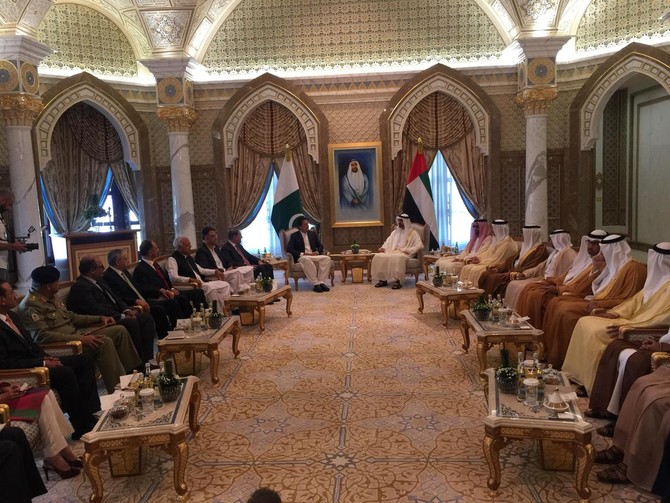
PM Khan arrives in UAE on day-long visit
- Pakistan seeks financial assistance from UAE
- Saudi Arabia pledged $6 billion to Islamabad in September, Khan hopes UAE will offer similar
Latest updates


© 2026 SAUDI RESEARCH & PUBLISHING COMPANY, All Rights Reserved And subject to Terms of Use Agreement.