PORT MORESBY: China and the United States traded heated barbs Saturday ahead of an APEC summit, lashing out at each other over protectionism, trade tariffs and “chequebook diplomacy” in the region.
In duelling back-to-back speeches at a pre-APEC business forum, China’s President Xi Jinping and US Vice President Mike Pence pulled few punches, laying out sharply contrasting visions for the region of 21 countries.
Xi lashed out at “America First” trade protectionism and in a thinly veiled swipe at Washington stressed that global trade rules should not be applied “with double standards or selfish agendas.”
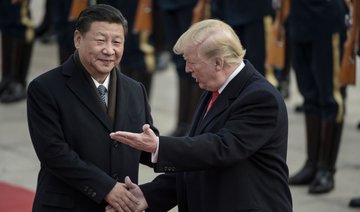
The world’s top two economies have been embroiled in a spiralling trade war, imposing tit-for-tat tariffs on each other’s goods in a confrontation that experts warn could torpedo the global economy.
Xi urged the world to “say no to protectionism and unilateralism,” warning it was a “short-sighted approach and it is doomed to failure.”
For his part, a combative Pence warned that US tariffs would remain in place unless Beijing “changes its ways.”
“We’ve put tariffs on $250 billion in Chinese goods and that number could more than double,” he told CEOs from around the region.
“We hope for better, but the United States will not change course until China changes its ways.”
President Donald Trump decided to skip the summit in Papua New Guinea, leaving the door open for Xi who arrived two days earlier for a state visit and has been the undoubted star of the show.
The APEC summit of leaders from 21 countries across the region has developed into a tussle for influence between an increasingly assertive China and a more withdrawn US.
In contrast to Trump, Xi arrived before the summit, opening a new road and a school in Port Moresby and holding talks with Pacific Island leaders.
Papua New Guinea rolled out the red carpet for the Chinese leader, with dozens of people from various tribes serenading him sporting parrot feathers, possum pelts and seashell necklaces.
In his speech, Pence lashed out in unusually strong terms at China’s Belt-and-Road initiative that sees China offering loans to poorer countries in the region to improve infrastructure.
The vice president encouraged Pacific nations to embrace the United States, which, he said, did not offer a “constricting belt or a one-way road.”
He said the terms of China’s loans were “opaque at best” and “too often, they come with strings attached and lead to staggering debt.”
As if pre-empting the criticism, Xi defended the plan amid attacks that it is akin to “chequebook diplomacy” to further Chinese interests in the region.
He denied there was a “hidden geopolitical agenda... nor is it a trap as some people have labelled it.”
And the Chinese leader warned that no one would gain from heightened tensions between the US and his emerging superpower.
“History has shown that confrontation — whether in the form of a cold war, hot war or trade war — will produce no winners,” he said.
Pence too stressed that Washington wanted a “better relationship” with Beijing.
“China has an honored place in our vision of a free and open Indo-Pacific, if it chooses to respect its neighbors’ sovereignty, embrace free, fair, and reciprocal trade, and uphold human rights and religious freedom,” he said.
He added that the United States would join forces with Australia in the development of a new naval base to be built in PNG’s Lombrum Naval Base on Manus island, in what is seen as a move to curb China’s influence in the Pacific.
Officially, the 21 leaders will discuss improving regional economic cooperation under the theme of “embracing the digital future” but the punchy speeches laid the ground for a tense gathering.
Foreign ministers meeting ahead of the summit were unable to publish a joint statement, apparently due to differences over language on World Trade Organization reform.
In the absence of Trump and Russian President Vladimir Putin, the summit itself has been relatively low-key and the focus has turned to the venue Port Moresby.
The capital of Papua New Guinea has been ranked as one of the least liveable cities for expatriates, with a high level of crime, often perpetrated by feared street gangs known as “raskols.”
Delegates have been advised not to venture out alone — especially after dark — and officials and journalists have been hosted on massive cruise ships moored in the harbor due to safety issues and a dearth of hotel rooms.
The run-up to the summit was also overshadowed by the purchase of 40 luxury Maserati cars that sparked anger in the poverty-hit country, which suffers from chronic health care and social problems.


![]()

US, China in feisty clash on trade, influence at APEC
US, China in feisty clash on trade, influence at APEC
- The world’s top two economies have been embroiled in a spiralling trade war, imposing tit-for-tat tariffs on each other’s goods
- The APEC summit of leaders from 21 countries across the region has developed into a tussle for influence between an increasingly assertive China and a more withdrawn US

Latest updates


© 2026 SAUDI RESEARCH & PUBLISHING COMPANY, All Rights Reserved And subject to Terms of Use Agreement.