BANGKOK: Thousands of child boxers compete in Thailand’s traditional martial art with dreams of belts, glory and prize money — but the death of a 13-year-old has lit up a sensitive debate over whether competitors start too young.
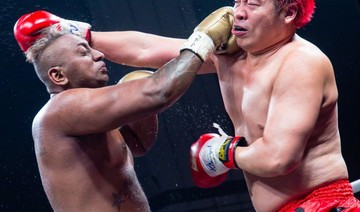
Centuries-old Muay Thai — known as the art of eight limbs for the different ways opponents can strike each other with knees, fists, kicks, and elbows — is the country’s de facto national sport and remains a source of immense pride.
But new research within Thailand suggests that the earlier Muay Thai boxers begin, the more prone they are to a range of injuries.
Lawmakers under the country’s military leaders have also drafted revamped legislation that would bar children under 12 from competing in the contact sport.
The push has gathered new momentum in light of the death of 13-year-old Anucha Tasako, who died from a brain hemorrhage after his similarly aged opponent struck him with multiple blows to the head at a Saturday charity fight near Bangkok.
Anger erupted on social media where footage of the critical moments of the bout was uploaded.
Deputy prime minister Prawit Wongsuwan instructed the sports ministry to review the legislation, which also requires parental consent for those between 12 and 15 and “physical safety measures.”
“The competitions must have appropriate, protective gear from the arena manager,” Prawit said according to a spokesperson.
It is common for Muay Thai fighters to start young and Anucha embarked on his career when he was eight years old.
He grew up in the northeastern province of Kalasin and after his parents parted ways, he spent time with a relative who had a Muay Thai gym.
Gripped by the sport, Anucha moved to Bangkok to stay with an uncle and train.
By the time he got to the charity match in Samut Prakan on Saturday he had fought 170 times, according to local media reports.
Critics point to alleged child exploitation as gamblers bet on bouts or promoters shave off prize money.
But it is the unseen health consequences that have received the most attention.
A five-year study from 2012 by the Child Safety Promotion and Injury Prevention Center at Ramathibodi Hospital carried out MRI scans on the brains of 335 child boxers and compared them with 252 non-boxers of the same ages.
Hospital director Adisak Plitponkarnpim said it was “clear” that child boxers suffered more brain cell damage and ruptures, and also had lower IQs.
“Their young age increases the damage because their skull and muscles are not yet fully developed.”
He said that accumulative injuries could put them at higher risk for Alzheimer’s and Parkinson’s diseases as adults.
Coaches, gym owners and older fighters have mixed feelings about the draft legislation.
Thailand’s champions who have climbed out of Muay Thai and into success in western boxing circles also honed their skills as youngsters.
Wanheng Menayothin, the WBC minimumweight champion who surpassed Floyd Mayweather’s 50-0 record this year, moved to Bangkok at age 12 to train.
Tawee Umpornmaha also started fighting at 12 and went on to win a 1985 Olympic silver medal.
Some also feel the discussion around Muay Thai unfairly stigmatizes a sport that is easier to access for the South East Asian nation’s impoverished youth than more expensive sports such golf or tennis.
“For a lot of children, Muay Thai is a path out of poverty,” said a Muay Thai gym owner who did not want to be named because of the sensitivity of the issue.
Besides giving children a sense of purpose, the owner said it also offers them “the chance to dream of a future far beyond the sport.”
The tensions are embodied in Anucha’s coach, Somsak Deerujijaroen, who runs a gym and trains his son.
“If the laws fully prevent child boxing, Thailand will not have Muay Thai masters. It will be the end of it. We will pass on the championships to foreigners,” he said at the funeral for Anucha, adding that rules on protective headgear for youth made more sense.
But he feels conflicted after the incident on Saturday and blames himself.
“I don’t want do the boxing gym anymore,” Somsak said, standing near Anucha’s coffin, where the young boxer’s favorite black-and-red boxing shorts were slung over a chair.
“One of my own kids who is eight years old has also been trained. But after this, I don’t want him to do it anymore.”


![]()

Thai child fighting culture sparks debate after 13-year-old’s death
Thai child fighting culture sparks debate after 13-year-old’s death
- Centuries-old Muay Thai is the country’s de facto national sport and remains a source of immense pride
- New research within Thailand suggests that the earlier Muay Thai boxers begin, the more prone they are to a range of injuries

Latest updates



© 2026 SAUDI RESEARCH & PUBLISHING COMPANY, All Rights Reserved And subject to Terms of Use Agreement.